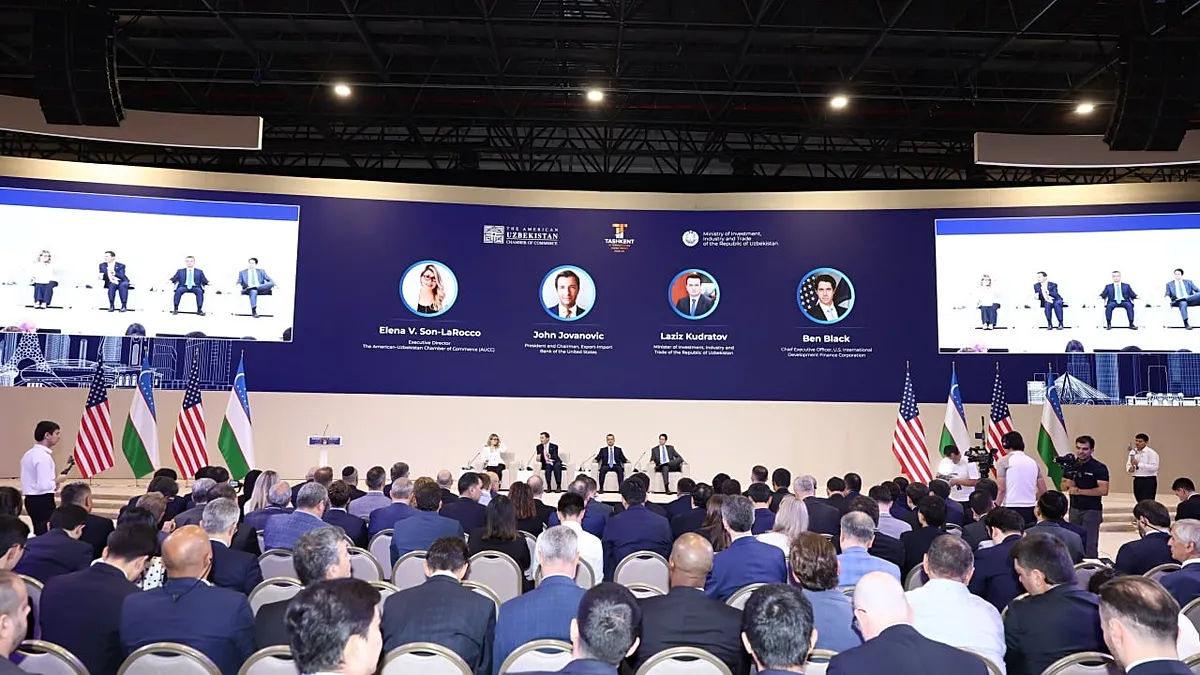
Tashkent International Investment Forum Kicks Off with Global Partnerships and Strategic Discussions
Tashkent International Investment Forum opens amid – The fifth edition of the Tashkent International Investment Forum (TIIF) commenced in Uzbekistan’s capital, drawing a diverse assembly of foreign dignitaries, corporate leaders, and financial institutions. The event, set to span a week, serves as a critical platform for exploring investment opportunities, fostering economic alliances, and advancing diplomatic ties. As the forum unfolds, its agenda reflects Uzbekistan’s growing role in attracting international capital and positioning itself as a hub for innovation and trade.
Diplomatic Engagement and Bilateral Agreements
Amid the backdrop of high-level diplomatic activity, the TIIF coincides with a series of strategic meetings that underscore the nation’s commitment to global partnerships. The forum’s opening day featured conversations spanning investment, infrastructure, technology, and access to capital, with participants emphasizing the need for collaborative frameworks to drive economic growth. These discussions align with broader diplomatic efforts, including the upcoming visit of German President Frank-Walter Steinmeier, scheduled to begin on Wednesday, which will focus on trade, industrial collaboration, green technologies, and logistics.
President Shavkat Mirziyoyev has been actively engaging with visiting leaders and business delegations, highlighting the importance of international cooperation. A standout moment on the first day was the inaugural summit between Uzbekistan and Albania, where leaders from both nations outlined plans to deepen ties in trade, green energy, tourism, and digital sectors. The dialogue specifically addressed the potential of Albania’s Port of Durrës as a strategic logistics gateway for Uzbek exports targeting Southern Europe and Mediterranean markets. This partnership aims to create a new intergovernmental commission to oversee economic and investment initiatives, marking a significant step in bilateral relations.
Focus on U.S.-Uzbek Business Collaborations
A key highlight of the opening day was the American-Uzbek Business Forum, which showcased the strong interest from U.S. firms in Uzbekistan’s market. Investment Minister Laziz Kudratov highlighted the presence of 193 American companies at the TIIF, stating,
“Today, 193 American companies are represented at the Tashkent International Investment Forum. This signals that American business views Uzbekistan not only as a market but also as a long-term investment partner.”
The forum also included a roundtable hosted by President Mirziyoyev, where executives from major American entities like Boeing, Visa, JP Morgan, Meta, Air Products, and Franklin Templeton shared insights. The discussions centered on projects involving critical minerals, energy, artificial intelligence, and industrial development, with a particular emphasis on leveraging Uzbekistan’s resources for global markets.
Separate sessions with the U.S. Export-Import Bank and the U.S. International Development Finance Corporation delved into financing strategies for infrastructure, energy upgrades, and technology ventures. These included exploring the viability of data centers and logistics facilities as key infrastructure components. The meetings concluded with the signing of cooperation agreements between Uzbek and American stakeholders, solidifying commitments to joint ventures in sectors like renewable energy and digital innovation.
Investment Themes and Policy Insights
As the forum progressed, attendees examined the factors influencing international investment decisions. A recurring theme was the need for transparent governance and predictable regulations to build investor confidence. Political risk, blended finance, and the role of export credit agencies were identified as critical tools for mobilizing funds for large-scale projects. Additionally, the discussions emphasized the growing significance of environmental, social, and governance (ESG) principles in shaping investor priorities.
Special attention was given to the potential of special economic zones as catalysts for growth, alongside responsible business standards that ensure sustainable development. Participants noted that Uzbekistan, while boasting nearly 40% of its entrepreneurs as women, faces challenges in securing equal funding for female-led enterprises. This disparity was highlighted as a key financing gap, prompting calls for policy reforms to support gender-inclusive economic growth.
Global Trends and Future Directions
Looking beyond immediate collaborations, the TIIF’s programme explored broader economic trends shaping the global landscape. Sessions addressed the expansion of Islamic finance as an alternative funding source, the competition between cities to attract investment and talent, and the transformative impact of women-owned businesses on economic development. These topics reflect Uzbekistan’s efforts to align with international standards while fostering local innovation.
One of the most anticipated discussions centered on artificial intelligence and its intersection with energy. Digital Technologies Minister Sherzod Shermatov remarked to Euronews that Uzbekistan seeks to integrate renewable energy capacity with digital infrastructure, stating,
“With AI, you need compute. For compute, you need energy. Instead of exporting energy as raw energy, we would like to export it in the form of AI data centre services.”
This vision underscores the country’s strategy to position itself at the forefront of technology-driven economic growth. Similar themes emerged in sessions on industrial development, with a focus on building the infrastructure necessary for future expansion.
Capital markets were another central topic, with experts analysing the role of financial instruments in supporting long-term projects. The forum also touched on the importance of addressing regional disparities in access to capital, ensuring that emerging markets like Uzbekistan can compete effectively on the global stage. By bringing together a wide array of stakeholders, the TIIF aims to create a conducive environment for sustainable investment and economic advancement.