The City of International Solidarity and Kitsch: A 48-Hour Skopje Guide
A History of Resilience and Cultural Identity
The city of international solidarity and kitsch – Skopje, the capital of North Macedonia, is a city that embodies both international solidarity and a distinct kitsch aesthetic. Its history is marked by seismic upheavals that have repeatedly transformed its landscape, with the 1963 earthquake being a pivotal moment. Over 80% of the city was reduced to rubble, yet the response from global nations like the US and USSR during its reconstruction solidified its reputation as a symbol of collective resilience. This era also gave rise to the iconic “City of International Solidarity” nickname, reflecting its role as a hub for cross-border cooperation.
Fast-forward to the 2010s, and Skopje underwent another dramatic shift with the Skopje 2014 project. Aimed at restoring the city’s 1963-era appearance, this initiative introduced a blend of neo-classical facades, hundreds of statues, and three artificial galleons along the Vardar River. While the project celebrated historical continuity, its eclectic mix of styles has also drawn criticism, earning Skopje the reputation of being the “capital of kitsch.” These contrasting images of solidarity and kitsch now define the city’s evolving identity.
Architectural Symbolism and Historical Narratives
The city’s skyline is a testament to its layered history, with landmarks that bridge centuries. The Vardar River divides Skopje into old and new districts, each reflecting different eras. The Stone Bridge, a remnant of Ottoman rule, stands as a relic of the past, while the Art Bridge and Bridge of Civilisations, products of the 2014 project, showcase modern ambitions. These structures, adorned with statues and artworks, create a visual dialogue between tradition and innovation.
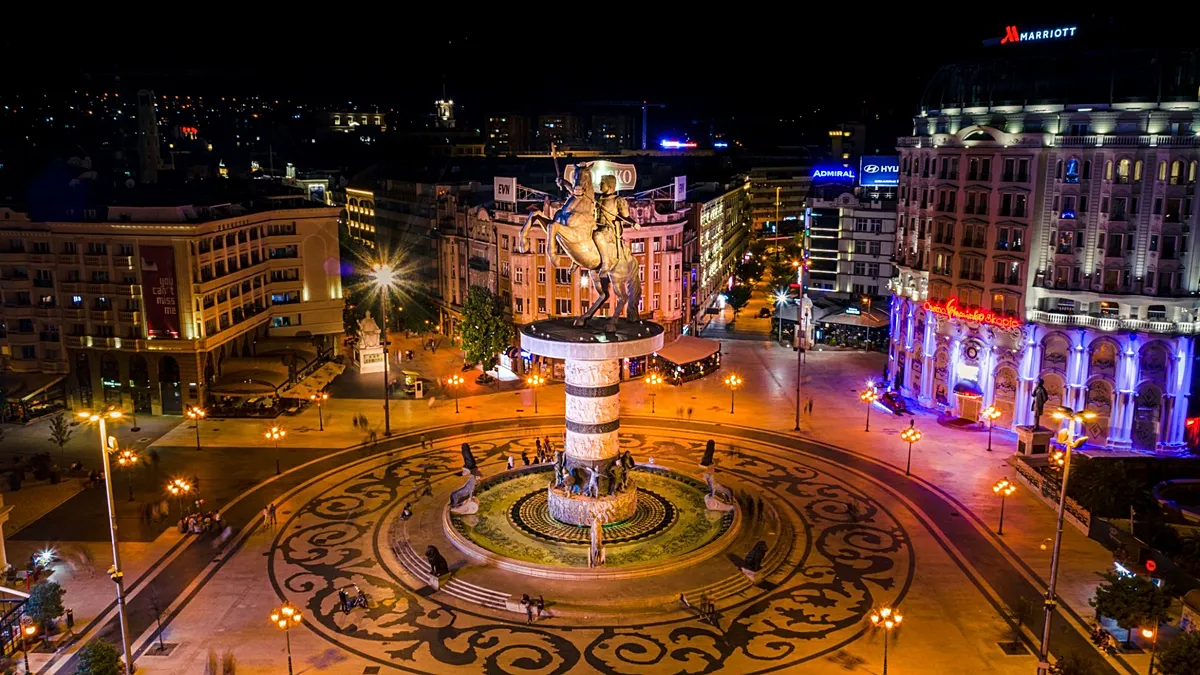
At the heart of Skopje’s cultural core is Macedonia Square, where the Skopje 2014 project’s influence is most evident. The towering 12-metre bronze statue of Alexander the Great, perched atop a 10-metre pedestal, is a striking focal point. Despite being officially named “Warrior on a Horse,” the statue’s resemblance to the ancient conqueror underscores the city’s complex relationship with its historical narrative. A plaque at its base notes Alexander’s ties to ancient Hellenic civilization, subtly acknowledging the 2018 Prespa Agreement that resolved the country’s naming dispute with Greece.
“Alexander belongs to ancient Hellenic history and civilisation,” reads the plaque, a reminder of how Skopje’s identity intertwines with broader geopolitical stories.
Exploring the Old Bazaar and Museum of the City
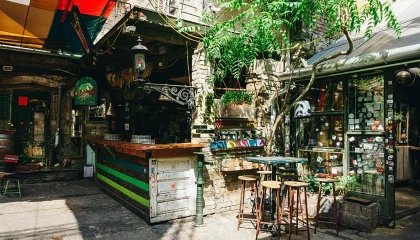
For a deeper dive into Skopje’s heritage, the Old Bazaar offers a vibrant glimpse into its medieval past. This 12th-century district, shaped by Byzantine and Ottoman influences, houses a mix of historic buildings and modern adaptations. Structures once serving as mosques and caravanserais now house the National Gallery, which occupies the former Daut Pasha Baths, and the Kapan Han, a restaurant offering traditional Macedonian cuisine. The bazaar’s labyrinthine alleys and colorful stalls provide a sensory experience that contrasts with the city’s more polished, modern face.
The Museum of the City of Skopje, housed in the Old Railway Station, serves as a chronological window into the nation’s evolution. One of the few buildings to survive the 1963 earthquake, the station’s clock, which stopped at 5:17 am, remains a poignant symbol of the city’s resilience. Inside, the museum traces Skopje’s journey from ancient settlements to its present-day form, with exhibits covering archaeology, ethnology, and art history. These displays highlight the city’s role in shaping Balkan history, from Ottoman resistance to its wartime experiences.
Brutalist Elements and Modernist Aesthetics
While Skopje’s new architecture often overshadows its older structures, the brutalist remnants still hold a special place in the city’s identity. These stark, functional designs, though initially criticized, have become emblematic of Skopje’s unique character. Alongside the 2014-era neo-classical facades, brutalist buildings add a layer of contrast to the city’s curated historical narrative. This juxtaposition of styles invites reflection on how Skopje balances its heritage with contemporary aspirations.
Visitors to Skopje can navigate its architectural contrasts by exploring key landmarks. The old and new districts, separated by the Vardar River, offer a tangible representation of the city’s dual legacy. From the Ottoman-era Stone Bridge to the modernist galleons, each structure tells a story of transformation. This blend of past and present not only defines Skopje’s visual identity but also underscores its status as a city shaped by both international collaboration and creative reinvention.