
Iran threatens Gulf energy facilities after Israeli attack on its largest gasfield
Iran threatens Gulf energy facilities after Israeli attack on its largest gasfield
Following Israeli strikes on Iran’s main gasfield, the nation has vowed to retaliate by targeting energy infrastructure in the Gulf. This marks the first direct assaults on Iran’s fossil fuel production since the conflict escalated. The Revolutionary Guards have issued warnings about imminent counterstrikes on key facilities in Saudi Arabia, the UAE, and Qatar, aiming to disrupt regional energy operations.
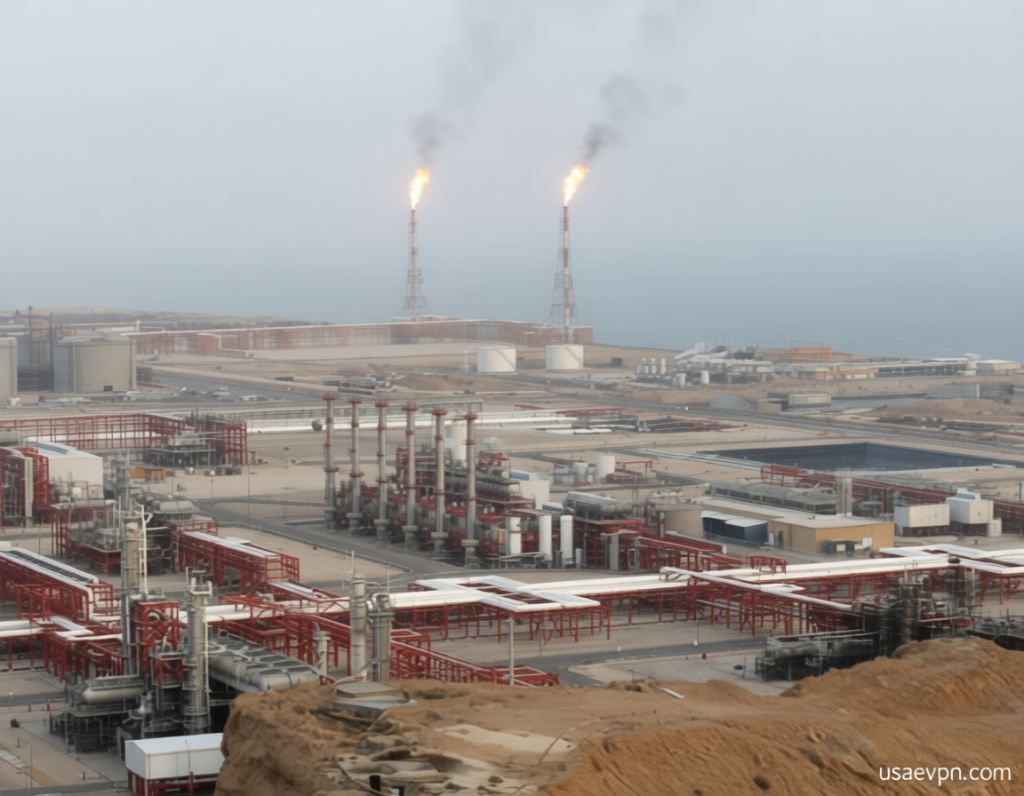
State media reported that missiles hit Iran’s South Pars gasfield, a shared resource with Qatar and the world’s largest reserves. Israeli outlets suggested the strikes were authorized by the US, intensifying tensions between Washington and Tehran. The assault on this critical infrastructure signals a significant shift in the war’s trajectory, moving toward broader economic consequences.
Global markets react to rising risks
Oil prices surged past $110 a barrel on Wednesday, reflecting fears of supply disruptions as attacks on Gulf facilities grow. Europe’s gas prices also climbed sharply, rising over 7.5% to nearly €55.50 per megawatt hour. These increases highlight the growing threat to energy stability, compounded by the ongoing blockade of the strait of Hormuz.
“These centres have become direct and legitimate targets and will be targeted in the coming hours. Therefore, all citizens, residents, and employees are requested to immediately leave these areas and move to a safe distance without any delay,” the warning stated.
Iran’s state media listed several facilities under threat, including Saudi Arabia’s Samref refinery and Jubail petrochemical complex, the UAE’s al-Hosn gasfield, and Qatar’s Mesaieed petrochemical complex. The attack underscores a strategic move to cripple the Gulf’s energy networks, with regional neighbors now facing production cuts due to damaged pipelines and storage limits.
Escalation and economic fallout
Eskandar Pasalar, governor of Asaluyeh in southern Iran, criticized the US-Israeli alliance as “political suicide,” claiming the war has shifted to a full-scale economic battle. A Qatari official, Majid al-Ansari, warned that targeting energy sites jeopardizes global supply chains and regional safety.
Earlier in the conflict, Iranian strikes hit the UAE’s Shah natural gasfield and Iraq’s Majnoon oilfield, alongside Fujairah, the UAE’s major port. Despite these blows, Iran’s own hydrocarbon infrastructure has largely avoided damage, allowing it to maintain crude shipments through the strait of Hormuz. This has kept oil prices volatile, with the benchmark reaching $116 a barrel earlier this week—a peak since May 2022.