
VPN vs. Proxy: What’s the Difference & Which to Use?
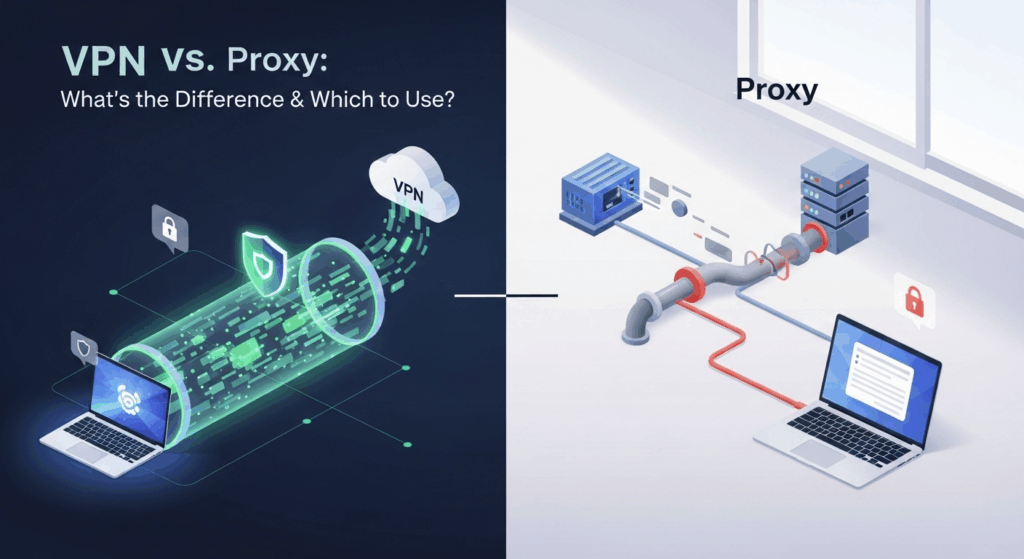
In today's digitally interconnected world, safeguarding your online privacy and freedom is no longer a luxury—it's a necessity. As you navigate the vast expanse of the internet, you'll inevitably encounter two terms that promise to be your shield: VPN and Proxy. They both act as intermediaries, masking your IP address and rerouting your traffic, but they operate in fundamentally different ways. For anyone looking to enhance their digital security, understanding the nuances of vpn vs proxy what is the difference is more critical than ever. This guide will demystify these technologies, helping you choose the right tool for your specific needs, whether it's for securing sensitive data, bypassing geo-restrictions, or simply browsing with a touch more anonymity.
What is a VPN? A Deep Dive into Virtual Private Networks
A Virtual Private Network, or VPN, is a sophisticated service that creates a secure, encrypted connection between your device and the internet. Think of it as creating a private, armored tunnel for all your online activity. When you connect to a VPN, your device first establishes a connection with a remote server operated by the VPN provider. All your internet traffic—from your web browser, gaming applications, email clients, and more—is then routed through this server. This process effectively shields your data from prying eyes, including your Internet Service Provider (ISP), government agencies, and malicious actors on public Wi-Fi networks.
The core strength of a VPN lies in its encryption. Modern VPNs use advanced encryption protocols like OpenVPN and WireGuard, combined with AES-256 encryption standards (the same level used by banks and militaries). This end-to-end encryption means that even if someone were to intercept your data, it would be scrambled and unreadable without the correct decryption key. A VPN operates at the operating system level, meaning it captures and protects all traffic leaving your device, not just the traffic from a single application. This comprehensive coverage is what sets it apart as a premier tool for digital privacy and security.
This robust framework provides a multitude of benefits. Beyond the ironclad security, VPNs are masters of geo-spoofing. By connecting to a server in a different country, you can make it appear as if you are browsing from that location. This allows you to access content libraries on streaming services like Netflix, Hulu, or BBC iPlayer that are normally restricted to specific regions. It is also an essential tool for individuals living in or traveling to countries with heavy internet censorship, allowing them to access a free and open internet. Ultimately, a VPN is a holistic solution for anyone who values their online privacy and freedom.
How VPNs Work: The Encryption Tunnel
To truly grasp a VPN's power, you need to understand the "tunneling" process. When you activate your VPN client, it initiates a process called authentication to verify your device with the VPN server. Once authenticated, the VPN client on your device begins to encapsulate every data packet you send and receive within an outer packet. This process is known as tunneling. This outer packet is then encrypted before it leaves your device.
This encrypted tunnel extends from your device all the way to the VPN server. Your ISP can see that you are connected to a server and can see the amount of data being transferred, but it cannot see the contents of that data or its final destination. Once your traffic reaches the VPN server, it is decrypted and sent on to its intended destination—be it a website, a game server, or an online service. The website, in turn, sees the request as originating from the VPN server's IP address, not your personal one. This two-way process effectively anonymizes your location and protects your data from man-in-the-middle attacks, especially on insecure networks.
Key Features and Benefits of a VPN
A quality VPN service offers more than just a changed IP address. Its feature set is designed for comprehensive protection and an enhanced online experience. Understanding these features further clarifies its superiority in the security domain.
Here are the primary benefits you can expect from a reputable VPN:
- Robust Encryption: Utilizes military-grade AES-256 encryption to make your data unreadable to third parties.
- IP Address Masking: Hides your real IP address and replaces it with the IP address of the VPN server, anonymizing your location and identity.
- Bypassing Geo-Restrictions: Unlocks censored content and region-locked media libraries by allowing you to connect to servers around the globe.
- Security on Public Wi-Fi: Protects your sensitive information (passwords, banking details) from hackers when using unsecured networks in cafes, airports, and hotels.
- ISP Throttling Prevention: Prevents your ISP from slowing down your internet speed for certain activities, such as streaming or torrenting, because they cannot see what you are doing.
- Kill Switch: An essential security feature that automatically disconnects your device from the internet if the VPN connection drops, preventing any unencrypted data from leaking.
- No-Logs Policy: Reputable VPNs adhere to a strict no-logs policy, meaning they do not track, store, or share any information about your online activities.
What is a Proxy? Understanding the Intermediary
A proxy server, much like a VPN, acts as a gateway between you and the internet. When you use a proxy, your internet requests are first sent to the proxy server, which then forwards the request to the target website on your behalf. The website processes the request and sends the data back to the proxy server, which in turn relays it to you. Throughout this process, the website only sees the IP address of the proxy server, not your own. This makes a proxy an effective tool for masking your IP address and bypassing simple content filters or IP-based blocks.
However, the key distinction lies in what a proxy doesn't do. Most importantly, a standard proxy server does not encrypt your traffic. Your data is sent "in the clear" between your device and the proxy server. This means that while the destination website can't see your IP, your ISP, your network administrator, or any malicious actor positioned between you and the proxy can still intercept and read your data. This lack of encryption makes proxies fundamentally less secure than VPNs for any activity involving sensitive information.
Furthermore, proxies operate at the application level, not the operating system level. This means you must configure each application (like your web browser, torrent client, or a specific program) individually to use the proxy. Any application not configured to use the proxy will connect to the internet directly using your real IP address, leaving a significant gap in your privacy shield. Because of their simpler nature and lack of encryption overhead, proxies can sometimes be faster than VPNs, making them suitable for low-stakes, speed-sensitive tasks.
How Proxy Servers Function
Think of a proxy server as a personal courier. You give the courier a letter (your web request) with instructions on where to deliver it. The courier takes the letter to the destination, gets the reply, and brings it back to you. The recipient of the letter only sees the courier's address, not your home address. This is a proxy in its most basic form. It fetches web pages for you.
Technically, when you configure your browser to use a proxy, any URL you type is sent directly to that proxy server. The server then makes a new request to the website using its own IP address. Because of this, proxies are particularly useful for tasks like web scraping, where a user needs to make many requests to a single website without getting their own IP banned, or for managing multiple social media accounts from a single device. The process is quick and effective for its intended, narrow purpose.
Common Types of Proxy Servers
Not all proxies are created equal. They come in several flavors, each with different capabilities and levels of anonymity. Understanding them is key to deciding if a proxy is right for you.
- HTTP/HTTPS Proxies: These are the most common types of proxies. They are designed specifically for web traffic (HTTP and HTTPS). You configure them in your web browser, and they will only handle traffic for websites you visit. While an HTTPS proxy can handle encrypted web traffic, it doesn't add its own layer of encryption to the connection between you and the proxy itself.
- SOCKS5 Proxies: A SOCKS (Socket Secure) proxy is more versatile than an HTTP proxy. It works at a lower level and can handle any kind of internet traffic, not just web traffic. This makes SOCKS5 proxies popular for activities like torrenting, streaming, and online gaming. They are generally more secure and flexible than HTTP proxies and can offer authentication for an added layer of security, but they still typically lack the end-to-end encryption of a VPN.
- Transparent Proxies: You have likely used a transparent proxy without even knowing it. These are often set up by organizations like companies, schools, or public Wi-Fi providers to monitor and filter internet usage. They intercept your connection without requiring any configuration on your device. Their primary purpose is content filtering and user monitoring, not user privacy.
The Core Differences: VPN vs. Proxy Head-to-Head
While both tools reroute your traffic through an intermediary server, their underlying technology, scope of protection, and security implications are vastly different. A VPN is a comprehensive privacy suit, while a proxy is more like a simple mask. Misunderstanding this difference can lead to a false sense of security. The core of the debate is not just about hiding an IP address but about the level of protection offered to your entire digital footprint.
This head-to-head comparison table breaks down the fundamental distinctions, providing a clear, at-a-glance overview to help you decide which tool aligns with your objectives. For anyone serious about online security, grasping these differences is the most important step.
| Feature | VPN (Virtual Private Network) | Proxy Server |
|---|---|---|
| Encryption | Strong, end-to-end encryption (e.g., AES-256) on all traffic. | Typically no encryption. Your data is vulnerable between your device and the proxy server. |
| Scope of Protection | System-wide. Protects all internet traffic from your entire device (all apps and services). | Application-specific. Must be configured for individual applications (e.g., a web browser or torrent client). |
| Data Security | High. Protects against ISP spying, government surveillance, and hackers on public Wi-Fi. | Low. Does not protect against ISP monitoring or man-in-the-middle attacks. |
| Performance | Can have a slight speed reduction due to encryption overhead, but premium VPNs are highly optimized. | Can be faster than VPNs due to the lack of encryption, but free proxies are often slow and unreliable. |
| Logging | Reputable paid VPNs have strict no-logs policies. | Free proxies are notorious for logging user data and selling it to third parties. |
| Cost | Typically requires a paid subscription for reliable and secure service. | Many free options are available, but they come with significant security and privacy risks. Paid proxies are also available. |
| Primary Use Case | Comprehensive privacy, security, bypassing censorship, and secure streaming/torrenting. | Basic IP masking, bypassing simple geo-blocks, and managing multiple online accounts. |
The Encryption Divide: The Biggest Differentiator
The single most important difference between a VPN and a proxy is encryption. A VPN is designed with security as its primary function. It wraps your entire internet connection in a layer of powerful encryption, creating a secure tunnel that is virtually impenetrable. This means everything you do online—from sending emails, logging into your bank account, to video chatting with family—is scrambled and protected from eavesdroppers.
In stark contrast, a proxy server's primary function is to be a simple intermediary. It relays traffic but does not secure it. Using a standard proxy is like sending a postcard through the mail; the mailman (the proxy) knows where it's from and where it's going, and anyone along the route can read its contents. While the recipient doesn't see your home address, the message itself is exposed. This makes proxies wholly unsuitable for handling any kind of sensitive or personal information.
Scope of Connection: System-Wide vs. Application-Specific
Another crucial distinction is the scope of protection. A VPN client operates at the operating system (OS) level. Once you connect to the VPN, it captures and secures 100% of the internet traffic leaving your device. This includes your web browsers, background applications, software updates, gaming clients, and any other program that connects to the internet. This all-encompassing protection ensures there are no leaks and that your entire digital identity is consistently shielded.
A proxy, on the other hand, works at the application level. You must manually configure each specific program you want to use the proxy with. For example, you can set up a proxy in your Chrome browser, but your Firefox browser, your Spotify app, and your Windows Update service will all continue to use your regular internet connection and expose your real IP address. This selective approach can be convenient for certain tasks but leaves you exposed and is far from a complete privacy solution.
Performance, Speed, and Reliability
Historically, the encryption process made VPNs slower than proxies. However, modern VPN technology has largely closed this gap. Premium VPN services use lightweight protocols like WireGuard and maintain vast, high-speed server networks to minimize latency and speed loss. For most users, the speed difference is now negligible and well worth the immense security benefits.
Conversely, while proxies can theoretically be faster due to the lack of encryption, their real-world performance is often poor, especially with free services. Free proxy servers are frequently overcrowded, slow, and unreliable, suffering from frequent disconnects and frustratingly high latency. Paid proxies and SOCKS5 proxies can offer better performance, but they still don't match the stability, security, and global server access provided by a top-tier VPN service.

Use Cases: When to Use a VPN and When to Use a Proxy
The choice between a VPN and a proxy ultimately comes down to your specific goal. There is no single "best" tool for everyone; the right choice depends on the task at hand. Using a powerful, encrypted VPN for a low-stakes task might be overkill, while using an unencrypted proxy for a sensitive activity could be a disastrous mistake. Understanding the ideal scenarios for each will help you make an informed decision and deploy the right tool for the job.
This section provides clear, practical examples of when to leverage the comprehensive security of a VPN and when the simple IP-masking function of a proxy will suffice. By matching the tool to the threat model, you can optimize both your security and your online experience.
Scenarios Demanding a VPN
A VPN is the tool of choice whenever security, privacy, and confidentiality are priorities. Its powerful encryption and system-wide coverage make it essential for a wide range of activities.
You should always use a VPN in the following situations:
- Using Public Wi-Fi: When you connect to an unsecured network at a coffee shop, airport, or hotel, you are a prime target for hackers. A VPN encrypts your connection, making it impossible for them to steal your passwords, credit card numbers, or other personal data.
- Online Banking and Financial Transactions: Any activity involving financial information requires the highest level of security. A VPN ensures that your session with your bank's server is completely private and secure.
- Torrenting or P2P File Sharing: P2P networks expose your IP address to everyone else in the torrent swarm. A VPN hides your real IP address and encrypts your traffic, protecting you from copyright trolls and preventing your ISP from monitoring your activity.
- Bypassing Censorship and Surveillance: For journalists, activists, or anyone living in a country with an oppressive internet regime, a VPN is a lifeline. It allows access to blocked websites and communication channels while shielding your identity from government surveillance.
- Accessing Geo-Restricted Streaming Content: If you want to watch the US Netflix library from Europe or stream BBC iPlayer from outside the UK, a VPN is the most reliable way to do it.
Situations Where a Proxy Suffices
A proxy is best suited for low-stakes tasks where the primary goal is to quickly change your IP address and encryption is not a concern. It's a simple tool for simple jobs.
Consider using a proxy for these scenarios:
- Bypassing Simple Content Filters: If you need to access a website that is blocked by your school or office network's basic firewall (e.g., a social media site), an HTTP proxy can often get the job done.
- Controlling Internet Caching: Some proxies can cache frequently accessed web pages, which can speed up browsing for multiple users on the same network (a common use in corporate environments).
- Scraping Web Data: If you are a developer or researcher who needs to make a large number of requests to a website, using a pool of proxies can prevent your main IP from being rate-limited or banned.
- Managing Multiple Social Media Accounts: Marketers who manage several accounts for different regions can use proxies to make it appear as if they are logging in from those specific locations.
Security & Privacy Implications: A Critical Comparison
When you use an online privacy tool, you are placing your trust—and your data—in the hands of a service provider. The security and privacy implications of your choice between a VPN and a proxy are profound. A VPN is fundamentally designed to protect your privacy, whereas many proxies, especially free ones, are designed to exploit it. The business model behind the service often dictates its trustworthiness.
A reputable, paid VPN service has a clear business model: you pay them a subscription fee, and in return, they provide you with a secure, private connection. Their reputation and business depend on their ability to protect your data. They invest heavily in secure server infrastructure, advanced encryption protocols, and regular third-party audits to prove their no-logs claims. Their entire purpose is to be a shield for your data.
Conversely, the world of free proxies is fraught with danger. If a service is free, you are not the customer; you are the product. These services have to make money somehow, and they often do it by monitoring your traffic, injecting ads into your browsing sessions, or, in the worst cases, harvesting your personal data and selling it to advertisers or even malicious entities.
The Dangers of Free and Untrustworthy Proxies
Using a free proxy server is one of the riskiest things you can do online. The entity running the proxy server has the ability to see and manipulate all unencrypted traffic that passes through it. This creates a massive security vulnerability.
Here are some of the specific risks involved:
- Data Logging and Selling: The proxy owner can log every website you visit, every search you make, and even intercept usernames and passwords sent over unencrypted connections. This data is a valuable commodity that can be sold to data brokers.
- Malware Injection: A malicious proxy owner can inject malware or adware directly into the web pages you visit. You might find your browser suddenly filled with pop-up ads, or worse, your device could be infected with spyware or a keylogger.
- Identity Theft: By intercepting session cookies and login credentials, a malicious proxy can be used to hijack your online accounts, leading to identity theft and financial loss.
- False Sense of Security: The biggest danger is that a proxy gives you a false sense of security. You may think your IP is hidden and you are anonymous, but in reality, you have just routed all your traffic through a server that is actively spying on you.
VPN Logging Policies: Why They Matter
Even in the world of VPNs, not all providers are created equal. The most critical feature to look for in a VPN provider, beyond its technical specifications, is a strict and verified no-logs policy. A no-logs policy is a promise from the VPN provider that they will not keep any records of your online activity. This includes your browsing history, connection timestamps, IP addresses, or bandwidth usage.
This policy is your ultimate privacy guarantee. If a VPN provider doesn't keep logs, they have no data to provide to law enforcement agencies, governments, or copyright holders, even if they are legally compelled to do so. The best VPNs go a step further by subjecting their policies and infrastructure to independent, third-party audits. These audits verify that the provider is actually adhering to their no-logs promise, giving users verifiable proof that their privacy is in good hands. When choosing a VPN, always prioritize one with a publicly audited no-logs policy.
FAQ: Answering Your Top Questions
Q: In the VPN vs. Proxy debate, which is better for streaming?
A: A VPN is almost always better for streaming. Streaming services like Netflix, Hulu, and Disney+ are very effective at detecting and blocking proxy servers. VPNs are more robust and have dedicated resources to maintain access to these platforms. Furthermore, a VPN encrypts your traffic, preventing your ISP from throttling your speed when it detects high-bandwidth streaming activity.
Q: Can I use a VPN and a Proxy at the same time?
A: Yes, you can chain a VPN and a proxy, a technique known as "double-hopping." For example, you could connect to a VPN first and then configure your browser to use a proxy. Your traffic would go from your device -> VPN server -> Proxy server -> destination website. This adds another layer of anonymization but can significantly slow down your connection and is generally overkill for most users. It's a technique reserved for those with extreme security needs.
Q: Is a SOCKS5 proxy as good as a VPN for torrenting?
A: No. While a SOCKS5 proxy is better than an HTTP proxy for torrenting because it can hide your IP address within the torrent client, it does not offer encryption. This means your ISP can still see that you are using a P2P protocol and can throttle your connection or send you warnings. A VPN encrypts your traffic and hides your IP, providing both anonymity and security, making it the superior choice for safe torrenting.
Q: Are free VPNs safe to use?
A: Most free VPNs are not safe and carry many of the same risks as free proxies. They often have weak encryption, slow speeds, restrictive data caps, and, most importantly, they may log and sell your data to make a profit. If you are serious about privacy, it is always worth investing in a reputable, paid VPN service. The small monthly fee is a price worth paying for true digital security.
Conclusion: Making the Right Choice for Your Digital Life
The debate of VPN vs. Proxy: What's the Difference & Which to Use? boils down to a single, critical factor: security.
A proxy server is a simple tool for a simple job. It's an effective way to mask your IP address for low-stakes activities like bypassing a basic content filter or managing regional web accounts. However, its lack of encryption and application-specific nature make it a poor choice for anything involving privacy or sensitive data. Using a free proxy, in particular, is a dangerous gamble that can expose you to more threats than it protects you from.
A VPN, on the other hand, is a comprehensive security and privacy solution. By creating an encrypted, system-wide tunnel for all your internet traffic, a VPN protects your entire digital footprint from your ISP, hackers on public Wi-Fi, and government surveillance. It is the essential tool for anyone who wants to secure their financial transactions, protect their identity, bypass censorship, and enjoy a free and open internet without compromise.
For the vast majority of users, the answer is clear: invest in a reputable, paid VPN. The robust security, complete privacy, and peace of mind it offers are well worth the modest cost. A proxy has its niche uses, but for true online freedom and protection, a VPN is the undisputed champion.
***
Article Summary
This article provides an in-depth comparison of VPNs and proxy servers to help users understand their differences and choose the right tool. It explains that while both technologies mask a user's IP address by routing traffic through an intermediary server, they differ fundamentally in security and scope. A VPN (Virtual Private Network) offers robust, system-wide protection by creating an encrypted tunnel for all internet traffic from a device, making it ideal for security, privacy, bypassing censorship, and safe streaming. In contrast, a proxy server typically lacks encryption and operates on an application-by-application basis, making it suitable only for low-stakes tasks like bypassing simple content filters. The article highlights the significant dangers of free proxies, which often log and sell user data. Ultimately, it concludes that for any user serious about their digital privacy and security, a reputable, paid VPN is the superior and essential choice.