China’s Experiment with AI Robot Cleaners in Urban Homes
China tests AI robot cleaners in homes – In a quiet Beijing neighborhood, a 56-year-old housekeeper named Lin Meiqiong shares her experience working with an AI-powered robot during a routine cleaning task. The trial, part of a broader initiative by 58.com in collaboration with X Square, has introduced the first generation of domestic robots designed to assist with household chores. While the machine’s presence has made certain aspects of the job marginally easier, Lin notes that its performance still requires constant human supervision. This marks a significant step in China’s push to integrate artificial intelligence into everyday life, blurring the lines between automation and traditional labor.
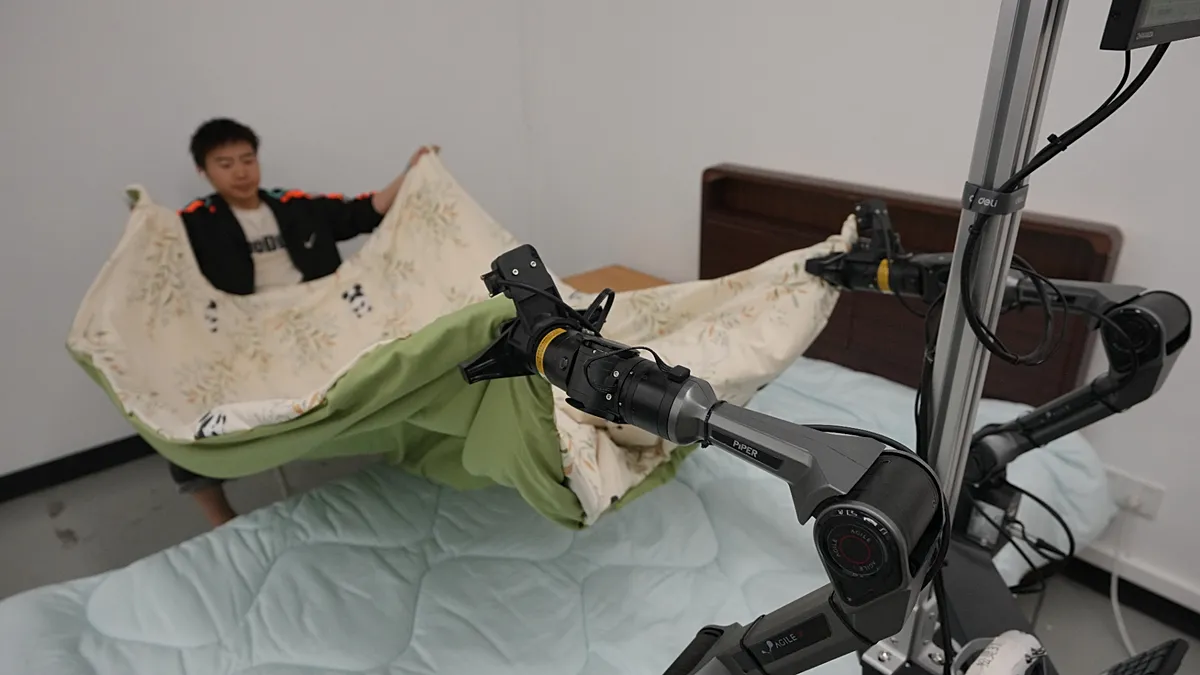
The robot’s design combines advanced cameras with mechanical arms, enabling it to detect messes and perform tasks like picking up debris and folding clothes. Engineers involved in the project emphasize that the focus is on refining the robot’s ability to adapt to dynamic environments, a key challenge in domestic settings. Unlike fully autonomous systems, this prototype operates as a semi-independent unit, relying on human input for complex decisions. Its current capabilities are limited to basic movements, though developers claim it can identify clutter in real time through machine learning algorithms.
The pilot program, launched in March, has seen approximately 200 households in Beijing and Shenzhen participate. Each session costs 149 yuan for three hours of service, a price point that reflects both the novelty of the technology and the cost of human oversight. Residents report mixed reactions, with some praising the robot’s efficiency and others expressing concerns about its limitations. “It’s helpful, but I still have to guide it,” Lin says, highlighting the robot’s dependence on human intervention. Despite this, the initiative is gaining traction as a testing ground for future advancements in embodied AI.
A Collaborative Effort Between 58.com and X Square
The partnership between 58.com, a leading online marketplace for services, and X Square, a tech firm specializing in robotics, has been pivotal in bringing this innovation to life. By combining their expertise, the companies aim to create a scalable model for AI-assisted domestic work. The robot’s development has been influenced by China’s growing demand for smart home solutions, driven by its aging population and increasing urbanization. “We’re not just building a machine; we’re training it to understand human routines,” explains an engineer involved in the project. This dual focus on functionality and adaptability is central to the initiative’s design.
Behind the robot’s functionality lies a sophisticated system of sensors and algorithms. Its cameras, equipped with depth perception, allow it to map the home environment and recognize objects like dust, dirt, and misplaced items. Mechanical arms, though less flexible than human hands, are engineered for precision in repetitive tasks. The system also includes voice recognition and motion tracking, enabling it to respond to simple commands from users. However, the robot’s performance remains inconsistent in unpredictable scenarios, such as handling fragile objects or navigating uneven surfaces. This highlights the ongoing challenge of bridging the gap between programmed tasks and real-world unpredictability.
Testing in Real-World Environments
Unlike laboratory simulations, the robots are being evaluated in actual homes, where they face the complexities of daily life. This hands-on approach allows researchers to gather critical data on user behavior, environmental variables, and the robot’s adaptability. “Real-world testing is essential because it reveals how the system interacts with humans and its surroundings,” says a lead engineer. The results from these trials will inform future iterations, aiming to enhance the robot’s ability to operate independently while maintaining safety and reliability.
The initiative has sparked interest among both developers and consumers, though challenges persist. One major hurdle is the robot’s current lack of dexterity, which limits its capacity to handle intricate tasks like sorting laundry or cleaning delicate surfaces. Engineers are working to improve this by integrating more advanced sensors and refining the control systems. Another concern is the robot’s reliance on Wi-Fi and power sources, which could be problematic in areas with unreliable connectivity. Despite these setbacks, the program is seen as a crucial step toward creating AI systems that can seamlessly blend into domestic environments.
Cost and Accessibility of the Service
The 149-yuan fee for three hours of service is a small price for the convenience it offers, but its accessibility depends on factors like location and availability. In densely populated cities like Beijing and Shenzhen, where the pilot is underway, the demand for such technology is expected to grow. However, rural areas may lag due to higher costs of installation and maintenance. This pricing model also reflects the balance between automation and human labor, as the robot’s performance is still dependent on the expertise of its human counterparts. “The goal isn’t to replace workers but to augment their abilities,” says a spokesperson for 58.com, emphasizing the robot’s role as a tool rather than a competitor.
Participants in the trial have provided valuable insights, with many acknowledging the robot’s efficiency in straightforward tasks. For instance, it can quickly clear small messes and organize items in designated areas, reducing the time spent on repetitive work. Yet, users also highlight the robot’s limitations, such as its struggle to handle irregularly shaped objects or recognize specific items without clear visual cues. These observations are being documented to identify areas for improvement, ensuring that the technology evolves in response to real-world needs. The trial’s success will determine whether the service can be expanded to a larger audience, potentially transforming household labor across China.
Training Embodied AI for Everyday Use
Developers behind the AI robot cleaners stress that the trial is a milestone in training embodied AI—systems that integrate physical movement with cognitive functions. This approach is intended to prepare the technology for complex environments beyond controlled settings. “The more data we collect from real-world interactions, the closer we get to creating truly autonomous systems,” says a researcher involved in the project. The robots are essentially learning to mimic human behavior through continuous feedback, a process that could eventually lead to more advanced applications in healthcare, education, and other sectors.
The concept of embodied AI is gaining momentum as China accelerates its technological development. By deploying these robots in homes, the initiative serves as a microcosm for future AI integration into daily routines. For example, the same principles applied to robot cleaners could be used in elderly care, where AI systems might assist with medication management or mobility support. However, the current focus remains on refining the robot’s ability to perform basic cleaning tasks, with broader applications planned for the long term.
Challenges in Widespread Adoption
Despite its potential, the robot cleaner faces hurdles that could slow its adoption. Safety concerns are a primary issue, as the system must navigate crowded spaces without causing harm. Privacy also plays a role, with some residents worried about the robot’s cameras capturing personal moments. “I’m not comfortable with the idea of a machine watching me all day,” one participant mentions, underscoring the psychological impact of AI presence. These concerns are compounded by the current skill gap between humans and robots, which limits the technology’s ability to fully replace manual labor.
Experts note that while the robot represents a significant leap in automation, its effectiveness hinges on continued advancements in dexterity and adaptability. For instance, improving the mechanical arms to handle more delicate tasks could enhance its utility. Additionally, integrating AI with existing smart home systems might streamline its operation, making it more intuitive for users. As the project progresses, these challenges will be addressed through iterative design and user feedback, ensuring the technology meets practical and ethical standards.