US Treasury Secretary launches Operation Economic Outcast
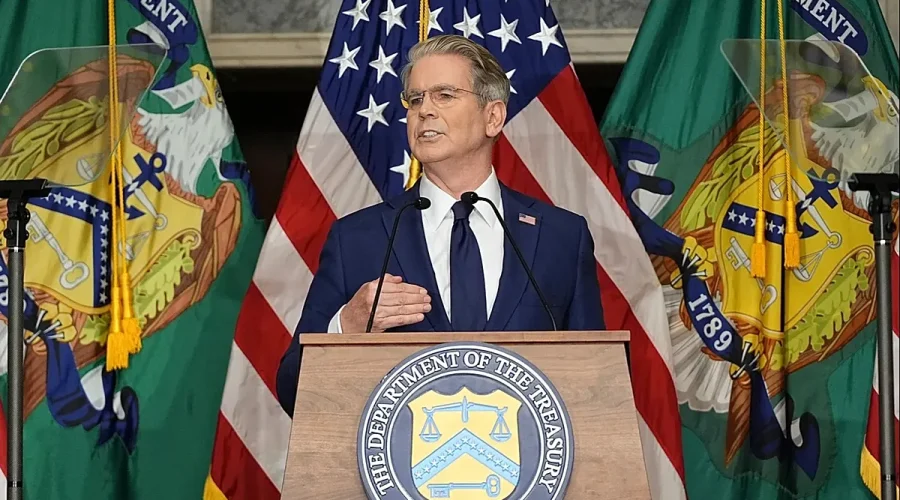
Usagevpn.com – The US Treasury Secretary launches Operation Economic Outcast, a sweeping financial campaign designed to sever Iran’s remaining lifelines to global trade and dollar-based commerce. Treasury Secretary Scott Bessent unveiled the initiative at a Monday press briefing, describing it as an all-out effort to starve both the Iranian state and the Islamic Revolutionary Guard Corps of the revenue they depend on. The timing is no accident: the operation arrives roughly six months after American and Israeli strikes ignited the current regional war, a conflict the Trump administration says is necessary to ensure Tehran never obtains a nuclear weapon.
Targeting Every Facilitator in the Chain
Rather than aiming solely at Tehran’s own institutions, the campaign zeroes in on the sprawling network of banks, shipping companies, trading houses, and intermediaries that have kept Iranian oil flowing to world markets despite layered sanctions. Bessent laid out the scope with blunt language, insisting that Treasury has identified every node and every conduit through which Iran moves value.
“Treasury has mapped every node, every facilitator, and every network that Iran has used to smuggle oil and evade sanctions.”
The secretary stressed that the operation’s reach crosses borders. Any foreign entity caught laundering money for Iran’s benefit, he warned, will be cut off from the US dollar clearing system — a penalty that, for most international traders, effectively ends cross-border business overnight.
“Any entity that facilitates money laundering on behalf of Iran will be removed from the US dollar system.”
Five Industries Hit Simultaneously
In parallel with the broad sanctions architecture, the Treasury Department issued formal determinations against five specific sectors Tehran relies on to prop up a faltering domestic economy: digital assets, technology, gold, aviation, and shipping. Each represents a channel through which Iranian officials and affiliated entities have historically moved value, acquired hard currency, or sidestepped export controls. By designating them individually, Washington signals that the pressure will be surgical as well as systemic.
The move also carries a diplomatic edge. Bessent disclosed that President Donald Trump has been contacting leaders around the world directly, urging them to halt commercial dealings with Iran. The implicit message: continued trade with Tehran will now carry a cost in the bilateral relationship with Washington.
Isolation or Reintegration: The Ultimatum
With the financial architecture now in place, Bessent presented Tehran with what he called “a very clear choice.”
“Complete global isolation and a subsistence economy, or a path back to normalcy, with an opportunity to rejoin the global economy.”
The framing positions the economic siege not as a permanent condition but as leverage — a mechanism intended to force concessions at the negotiating table or, failing that, to degrade the regime’s capacity to fund its military and domestic programs.
Background: A War Stuck in Stalemate
The operation lands at a moment when the military conflict that began six months ago has calcified into a stalemate. Negotiations between Washington and Tehran have stalled, and a sharp dispute over the Strait of Hormuz has emerged as the central sticking point. That narrow waterway — the critical transit chokepoint linking the Persian Gulf to the Gulf of Oman and, beyond it, the Arabian Sea — carries roughly a fifth of the world’s seaborne oil and gas. Both sides now claim operational control over the passage, and neither has blinked.
For ordinary Iranians, the economic consequences of the stalemate have been severe. Inflation has eroded purchasing power, foreign-currency reserves have thinned, and the rial has slid against major trading currencies. The new Treasury determinations against gold, digital assets, and shipping are expected to compound those pressures by closing off the very workarounds that have allowed the economy to limp along under sanctions.
Frequently Asked Questions
What exactly does “Operation Economic Outcast” target? It targets the full ecosystem of banks, shipping firms, trading houses, and intermediaries that enable Iranian oil exports and sanctions evasion, as well as five domestic sectors: digital assets, technology, gold, aviation, and shipping.
What happens to foreign companies that help Iran move money? According to Bessent, any entity facilitating money laundering on Iran’s behalf will be excluded from the US dollar clearing system, effectively barring it from most international trade.
How does this relate to the ongoing military conflict? The operation was announced roughly six months after US and Israeli strikes began the current war. The administration frames the economic pressure as complementary to military action, aiming to degrade Iran’s capacity to fund its war effort and domestic programs.
Is there a path for Iran to end the sanctions? Bessent described a binary choice: complete global isolation and a subsistence economy, or a negotiated path back to normalcy and reintegration into the global economy. The implicit condition is concession at the negotiating table.