
Supreme Court: Roles, Powers, and Impact Explained
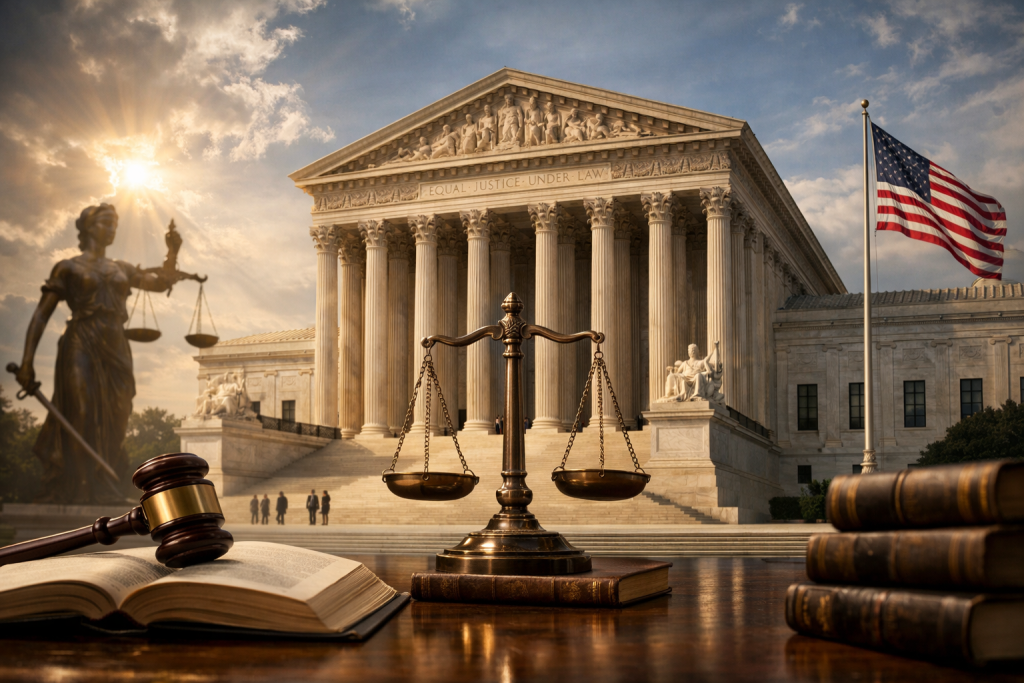
The supreme court is the highest judicial authority within a country’s legal system. It serves as the final interpreter of the constitution and the ultimate arbiter of legal disputes. When lower courts disagree or when constitutional questions arise, the supreme court delivers decisions that are binding nationwide. Its rulings often shape public policy, civil rights, and the balance of power between branches of government.
Understanding how the supreme court operates clarifies why it holds such a central role in democratic systems. It does not create laws in the legislative sense, but it determines how laws are applied and whether they comply with constitutional principles. Through this power, it influences legal standards that affect millions of citizens. Its authority extends beyond individual cases to long-term legal and social impact.
What Is a Supreme Court?
A supreme court is the highest court in a country’s judicial hierarchy. It reviews decisions from lower courts and ensures that legal interpretations remain consistent with the constitution. In many nations, it functions as the court of last resort, meaning no further appeal is possible after its ruling.
The structure of a supreme court varies by country, but it typically consists of a panel of senior judges or justices. These justices are often appointed through a constitutional process involving the executive and legislative branches. Their tenure may be fixed for a term of years or last until retirement age, depending on the system.
In federal systems, the supreme court also resolves disputes between regional governments and the national government. It ensures that federal and state authorities operate within their constitutional boundaries. This function is critical in maintaining legal stability and institutional balance.
Core Roles of the Supreme Court
The primary role of the supreme court is to interpret the law. When legal language is ambiguous or conflicting, the court clarifies its meaning through authoritative decisions. These interpretations become binding precedents for lower courts.
Another central role is constitutional review. In many countries, the supreme court determines whether laws or government actions violate constitutional provisions. If a law is found unconstitutional, it can be invalidated, preventing its enforcement.
The court also ensures uniformity in legal standards. By resolving conflicting rulings from lower courts, it maintains consistency in how laws are applied. This promotes fairness and predictability within the legal system.
In addition, the supreme court often addresses cases of significant public importance. These may include disputes involving civil liberties, elections, executive authority, or fundamental rights. Its decisions in such matters frequently influence national debates.
Judicial Powers and Authority
The powers of a supreme court are defined by a country’s constitution and statutory framework. One of its most significant powers is judicial review, the authority to examine laws and government actions for constitutional compliance. Judicial review ensures that no branch of government exceeds its legal limits.
Another major power is the ability to set binding precedents. When the supreme court interprets a legal principle, lower courts must follow that interpretation. This doctrine of precedent strengthens legal coherence across jurisdictions.
The court may also have original jurisdiction in certain cases. For example, it might hear disputes between states or cases involving high-ranking public officials. In such situations, the case begins directly before the supreme court rather than being appealed from a lower court.
In some systems, the supreme court has advisory authority, allowing it to provide legal opinions on constitutional questions referred by the executive branch. Although these opinions may not always be binding, they carry substantial legal weight.
Appointment and Independence of Justices
The legitimacy of a supreme court depends heavily on judicial independence. Justices must be free from political pressure to ensure impartial decisions. Constitutional safeguards, such as secure tenure and protected salaries, help preserve this independence.
Appointment processes vary. In some countries, the executive nominates justices and the legislature confirms them. In others, judicial councils or special committees play a role in selection. The method of appointment can influence public perception of neutrality.
Tenure arrangements also differ. Some justices serve for life or until a mandatory retirement age, while others have fixed terms. Longer tenure often strengthens independence by reducing external influence.
Ethical standards and transparency further reinforce institutional integrity. Codes of conduct, disclosure requirements, and clear recusal rules protect the court’s credibility. Public trust is essential for the supreme court to function effectively.
Impact on Society and Governance
The supreme court significantly shapes societal norms through its decisions. Landmark rulings on issues such as freedom of speech, equality, and due process often redefine legal and cultural standards. These decisions may expand or restrict rights in lasting ways.
Its impact also extends to political governance. By reviewing executive orders and legislative acts, the court acts as a check on governmental power. This reinforces the principle of separation of powers within democratic systems.
Economic and regulatory policies can also be affected by supreme court rulings. Decisions involving taxation, business regulation, or labor law influence market behavior and administrative practices. Legal clarity from the court provides stability for institutions and citizens alike.
At times, supreme court decisions generate public debate or controversy. Because its rulings are final, they can prompt legislative reforms or constitutional amendments. Even so, the authority of the supreme court ensures that disputes are resolved within a structured legal framework rather than through political conflict.
Differences Across Countries
While the concept of a supreme court is widespread, its structure and powers vary globally. In some nations, a separate constitutional court handles constitutional review, while the supreme court focuses on ordinary appeals. In others, the supreme court combines both roles.
The number of justices differs as well. Some courts operate with a small panel, while others include larger benches to handle caseloads. Procedural rules, case selection methods, and decision-making processes also vary.
Despite these differences, common principles remain. Most supreme courts serve as final interpreters of law, protect constitutional order, and ensure uniform legal standards. Their authority reflects a commitment to the rule of law.
Conclusion
The supreme court stands at the apex of the judicial system, entrusted with interpreting laws, safeguarding constitutional principles, and maintaining balance among branches of government. Through judicial review, binding precedent, and authoritative rulings, it shapes legal standards that influence society, politics, and governance. Its independence and final authority make it a cornerstone of constitutional democracy.
FAQ
Q: What does the supreme court do? A: The supreme court interprets laws, reviews lower court decisions, and determines whether laws or government actions comply with the constitution.
Q: Can the supreme court overturn laws? A: Yes, if a law is found unconstitutional, the supreme court can invalidate it and prevent its enforcement.
Q: How are supreme court justices appointed? A: Appointment methods vary by country but typically involve nomination by the executive branch and confirmation by the legislature or a judicial body.
Q: Why are supreme court decisions final? A: The supreme court is the highest judicial authority, so its rulings cannot be appealed to a higher court within the same legal system.
Q: Does every country have a supreme court? A: Most countries have a highest court, often called a supreme court, though its structure and powers may differ depending on the legal system.