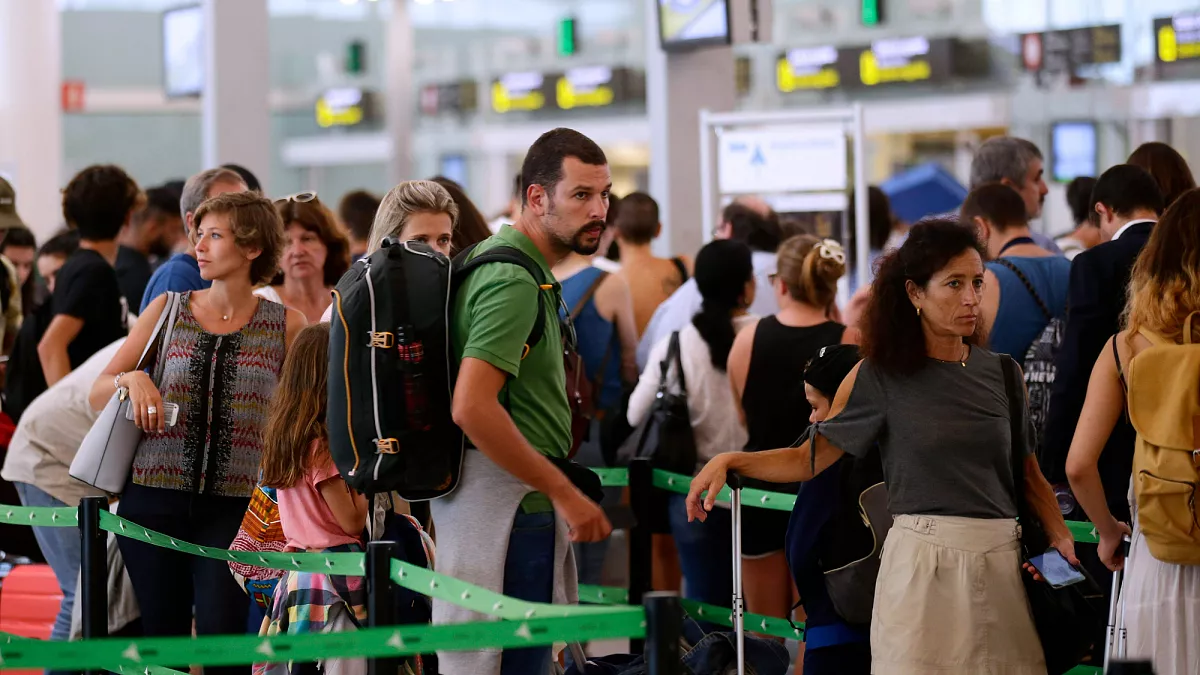
‘Very worried’: Rome Airports Could Pause EES Border Checks Amid Summer Travel Concerns
Very worried – Rome’s major airports are bracing for potential disruptions as their operator’s leader warns of the need to halt the EU’s new Entry/Exit System (EES) to prevent a logistical nightmare during the summer travel season. Marco Troncone, CEO of Aeroporti di Roma, revealed in a recent interview with The Financial Times that Fiumicino and Ciampino may have to temporarily bypass biometric checks to ease congestion. The EES, which was launched on 10 April, has already sparked debates about its effectiveness, with some calling for a pause in its operations due to operational challenges.
The EES System and Its Implementation Hurdles
The EES aims to modernize border controls by replacing traditional passport stamps with digital records of entries and exits. It also requires biometric data, including facial images and fingerprints, to be captured from all travelers. While the system is designed to streamline procedures and enhance security, its rollout has been anything but smooth. Airports across the EU have reported long wait times and staffing issues, raising concerns about its readiness for peak travel periods.
Troncone emphasized that the EES’s current setup struggles to handle the volume of passengers expected during the summer. “The process proves to be incompatible with the peak volumes that we are going to face. So the only way is to open up the valve. There is no way that we can deliver 100% of the enrolment,” he said. This statement underscores the growing pressure on Rome’s airports to adapt quickly to the system’s demands, which have already tested their capacity.
Growing Fears of Summer Travel Disruptions
With more travelers expected to use the EES, fears of widespread delays are intensifying. The system’s biometric requirements have added complexity to the check-in process, particularly for non-EU visitors. Troncone described his level of concern as “very worried for the summer,” placing it at “eight or nine” on a scale from one to 10. This level of anxiety highlights the potential consequences of the EES not being fully optimized before the busiest travel season of the year.
Rome is not alone in its apprehension. Portugal announced plans to deploy hundreds of public security police officers at its airports starting in July to assist with border control. Meanwhile, Greece initially considered suspending EES checks for British citizens but later withdrew the decision, citing lack of evidence for targeted exemptions. These measures reflect a broader trend of European airports adjusting strategies to manage the new system’s challenges.
Frontex and the Biometric Data Challenge
Frontex, the European Border and Coast Guard Agency, has acknowledged that the collection of biometric data is a significant barrier to the EES’s success. Uku Särekanno, a deputy executive director at Frontex, noted that obtaining fingerprints from non-EU travelers during their first entry into the Schengen Area was “probably the most challenging part” of the rollout. “We expect the situation will stabilise in one or two years because the most challenging part is the first enrolment,” Särekanno stated during a speech at ABTA’s event in London.
The EU has also recognized the system’s early difficulties, with officials suggesting it could take up to two years to fully integrate. This timeline implies that the current phase of implementation is a critical test, with the potential for widespread bottlenecks if the system doesn’t adapt to high passenger volumes. Frontex’s admission highlights the importance of refining procedures to ensure seamless operations.
Industry Reactions and Support for the EES
Despite the challenges, some industry leaders remain optimistic about the EES’s long-term benefits. Stefan Schulte, President of Airports Council International Europe (ACI Europe) and head of Frankfurt Airport, called the concerns “what keeps me and many other airport CEOs across Europe awake at night.” However, he acknowledged that the system’s initial phase requires careful management to avoid disruption.
Industry groups like ABTA have expressed support for the EES, though they noted the temporary setbacks. The association’s chief executive, Mark Tanzer, described the warnings from Rome as “very painful,” suggesting that while the system is essential for the future, its current implementation needs improvements. These mixed reactions underscore the balance between innovation and practicality in border control.
As the EES continues to be tested, its success will depend on addressing technical and logistical issues. Airports must find ways to manage the increased workload without compromising security or passenger satisfaction. The EES’s ability to handle summer traffic will be a key indicator of its viability as a long-term solution for EU border management. For now, Rome’s airports are preparing for the possibility of temporary adjustments to ensure smooth operations during the peak season.