Central Asia’s First Paragliding World Cup Unfolds in Kazakhstan
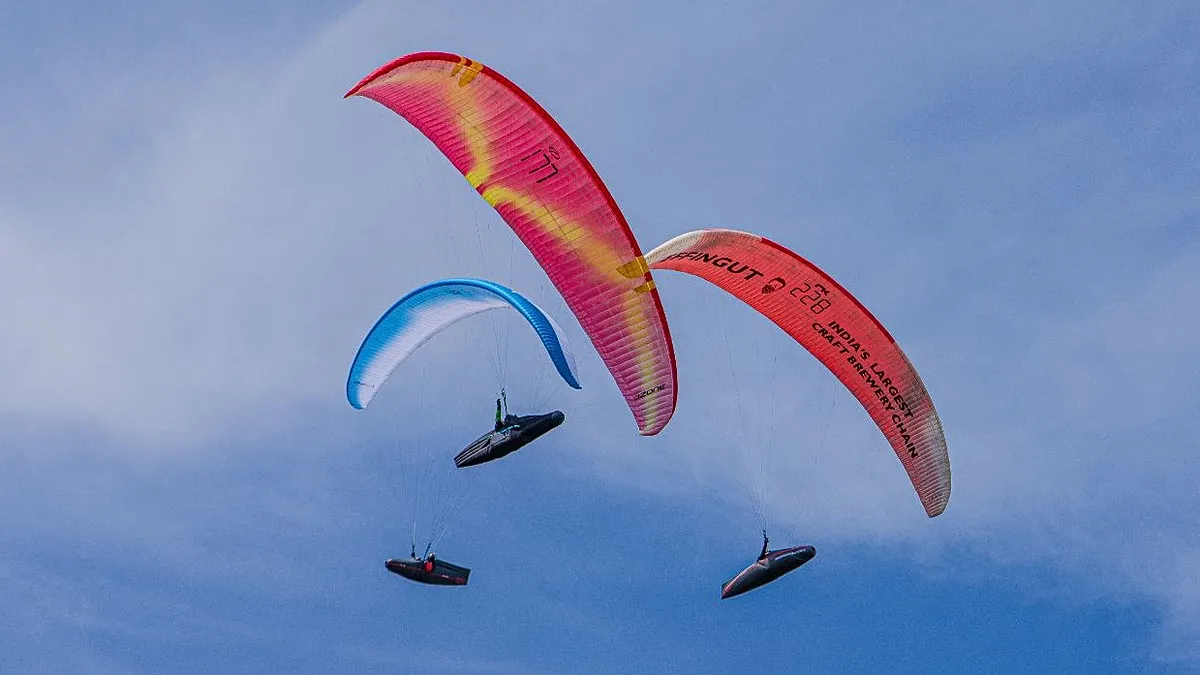
Central Asia s first Paragliding World – This summer, the skies of Kazakhstan’s Zhetysu region are buzzing with activity as the nation prepares to host its inaugural Paragliding World Cup. Located in the southwestern part of the country, the area has long been a favored spot for aviation enthusiasts, but its status is now evolving beyond recreational use. The event marks a significant milestone, as Kazakhstan transitions from a mere tourist destination to a hub for competitive paragliding, attracting global attention and talent.
The Virshki Family’s Legacy in Paragliding Development
Behind the scenes of this high-profile event is a family deeply rooted in the sport’s growth. The Virshki family, with over a decade and a half of dedication, has played a pivotal role in establishing paragliding as a serious pursuit in Kazakhstan. Igor Virshki, the family’s patriarch, founded the Tau Zhetysu tourism complex near the city of Tekeli, transforming it into a renowned launch site for paragliders. Over time, the location has become synonymous with excellence, drawing competitors from across the globe.
Now, the spotlight has shifted to Igor’s son, David Virshki, who has not only inherited the family’s passion but also earned international acclaim as a Paragliding World Champion. David shared his pride in welcoming the World Cup to the region, where his journey began. “This site is more than just a place for flight—it’s where I was born and where I first learned to soar,” he said. “It’s been a dream to see it recognized as a competitive venue, especially because it meets the strict criteria of the paragliding commission, which evaluates sites for their potential and safety.”
A Unique Setting for Competitive Flight
Zhetysu’s natural landscape offers ideal conditions for paragliding competitions. The region’s rugged terrain, including mountains, hills, and vast valleys, creates a dynamic environment that challenges pilots while providing breathtaking views. Stable thermals—rising air currents that help paragliders stay aloft—add to the area’s appeal, allowing for extended flights. Additionally, the open terrain ensures better visibility and safer landing zones, which are critical for long-distance cross-country events.
David emphasized that the region’s untouched wilderness is a key attraction for competitors. “Kazakhstan’s nature feels raw and unspoiled, unlike the developed landscapes of Europe,” he noted. “There are coffee shops and hotels every few kilometers there, but here, the land is wild and open, offering a sense of freedom that’s hard to match.” This contrast highlights why the region is gaining traction as a premier location for extreme sports.
Global Participation and Local Impact
The World Cup has already drawn a diverse group of participants, with pilots representing 33 countries. This international turnout underscores the region’s growing reputation. Among them is Jimmy Giroux, a Canadian athlete whose story is closely tied to Zhetysu. Giroux recounted how his first visits to the area coincided with a personal low after a serious accident left him unable to move his leg. “I trained in Europe, but an accident shattered my confidence,” he said. “A surgeon in Taldykorgan saved my life, and the serenity of this place helped me regain my strength and return to the sport.”
Today, Giroux sees Kazakhstan as more than a competition site—it’s a place of healing and renewal. He praised the region’s safety, noting that the lack of dense tree cover makes it easier for beginners to land without risk. “The open spaces here are a stark contrast to the crowded landscapes of Europe. It’s not just about flying; it’s about finding a place where the environment supports both sport and recovery,” he added.
Building a Sustainable Future for Extreme Sports
Local authorities are equally enthusiastic about the event’s potential. Yersin Ibrashev, head of the Zhetysu region’s tourism department, highlighted the competition as a catalyst for growth. “The fact that participants from Canada, Australia, the U.S., and across Europe are flocking here is a strong indicator of our region’s appeal,” he said. “We aim to build on this momentum, expanding our capacity to host large-scale events and solidifying Kazakhstan’s position in the global paragliding calendar.”
Preparations for the World Cup began over a year ago, involving rigorous assessments by international experts. These evaluations focused on factors such as flying conditions, safety protocols, infrastructure, and logistical readiness. Goran Dimishkovski, president of the Paragliding World Cup Association, noted the difficulty of finding such sites. “It’s rare to find a location that balances natural advantages with the ability to organize world-class events,” he said. “Kazakhstan’s Zhetysu region has proven itself to be a unique opportunity, with its pristine environment and growing expertise in managing extreme sports.”
Looking Beyond Zhetysu
While the World Cup in Zhetysu is a major step, Kazakhstan isn’t resting on its laurels. Officials are already exploring similar projects in other regions, including the scenic Lake Balkhash. “We’re testing the waters for acro paragliding over the lake,” Ibrashev explained. “Although it lacks mountains, the flat terrain and vast open spaces could create a highly visual and exciting format for competitions.”
Such initiatives reflect Kazakhstan’s broader ambition to diversify its sporting and tourism offerings. By leveraging its natural assets and investing in infrastructure, the country aims to become a leader in extreme sports across Central Asia. The success of the World Cup could also inspire future events, further boosting the local economy and promoting the region’s unique charm to a global audience.
The competition, which runs through 28 June, is more than a sporting spectacle—it’s a testament to the region’s potential and the collaborative efforts of its people. From the Virshki family’s long-term vision to the support of local officials, every element contributes to a narrative of growth and innovation. As pilots take to the skies, they carry with them not just the thrill of competition but also a growing appreciation for Kazakhstan’s natural beauty and its emerging role in the world of extreme sports.
A New Era for Central Asian Aviation
With the World Cup’s arrival, Zhetysu is poised to redefine what’s possible in Central Asia. The event’s success could set a precedent for other regions, encouraging investment in paragliding infrastructure and training. As David Virshki put it, “This is a chance to show the world that Kazakhstan isn’t just a place for tourists—it’s a place where athletes can push their limits and achieve greatness.”
For the global paragliding community, the event represents a new frontier. It’s a celebration of the sport’s evolution and a recognition of Kazakhstan’s commitment to fostering excellence. As the skies of Zhetysu fill with activity, the country steps into the spotlight, proving that its landscapes are not only breathtaking but also capable of supporting world-class competition. This shift marks the beginning of a legacy that could inspire generations of pilots and solidify Kazakhstan’s place in the annals of paragliding history.