
Explainer: Who is Mojtaba Khamenei and how did he succeed his father?
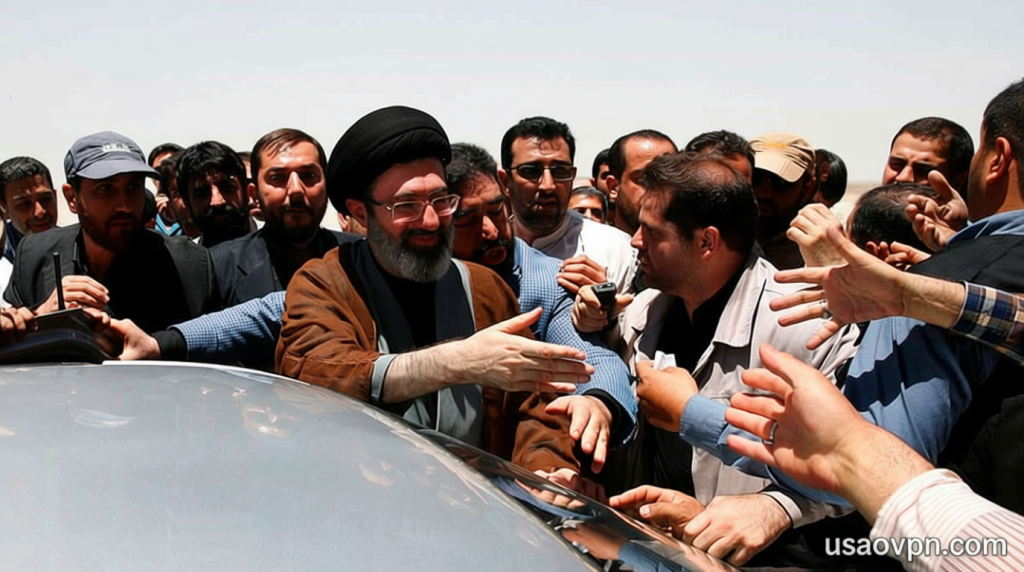
Explainer: Who is Mojtaba Khamenei and how did he succeed his father?
The Islamic Republic’s Assembly of Experts officially confirmed Mojtaba Khamenei’s ascension to the role of Supreme Leader, following the death of his father, Ali Khamenei, in an Israeli attack on March 8. This event marked a pivotal moment, as the 56-year-old Mojtaba became the third to hold the title, stepping into a position of immense influence amid rising tensions in the region.
Early Life and Strategic Path
Mojtaba Khamenei was born in 1969 in Mashhad, a city central to Iran’s religious and political landscape. His journey began with early exposure to military service, as he joined the Iran-Iraq War’s frontlines in his teenage years. This experience, combined with his later involvement in the Islamic Revolutionary Guard Corps (IRGC), laid the foundation for his close ties with the country’s security apparatus.
Unlike his older brother Mostafa, who focused on cultural roles, or his younger siblings Masoud and Meysam, Mojtaba carved a distinct path. While his brothers remained within the administrative framework of their father’s office, Mojtaba’s engagement with covert power structures and key security institutions positioned him as a figure of significant political leverage.
Brothers and Public Role
Analysts note that Mojtaba diverged from the traditional role of “supreme leader’s son.” His brothers, though connected to the leadership, were largely confined to cultural and administrative duties. Mojtaba, however, gained notoriety for his involvement in sensitive sectors, making him a central player in Iran’s governance.
“What distinguishes Mojtaba from his older brother Mostafa and younger siblings is his move beyond the conventional role of ‘the supreme leader’s son’.” — Political observers
The question of his wealth has sparked interest among Western media, with some labeling him a “billionaire” linked to extensive property holdings in London and Vienna. Yet, the exact control of these assets remains unclear due to the opacity of Iran’s financial systems.
War Experience and Institutional Ties
During the mid-1980s, Mojtaba was deployed to the frontlines of the Iran–Iraq War as a teenager. He served in the Habib ibn Mazaher Battalion, part of the 27th Mohammad Rasulullah Division, a unit known for attracting ideologically driven fighters. This time in the military deepened his bonds with IRGC commanders, who later held key positions in the Islamic Republic.
Though his tenure was brief, the relationships formed during the conflict proved instrumental in shaping his later influence. Participation in the war also symbolized a legacy of sacrifice, a narrative many leaders of his era used to legitimize their authority.
Education and Clerical Foundations
After completing studies at the Alavi School in Tehran, Mojtaba entered Qom seminary, where he trained under influential clerics such as Mohammad-Taghi Mesbah-Yazdi and Mahmoud Hashemi Shahroudi. His father, Ali Khamenei, also mentored him, further embedding him in the country’s religious hierarchy.
His education emphasized theological rigor, which analysts suggest prepared him for leadership. However, his impact on economic networks is viewed as a result of political alliances rather than personal business ventures, highlighting his role as a bridge between state institutions and the IRGC.
Political Orientation and Ideological Ambiguity
Mojtaba’s political stance remains enigmatic. His minimal public commentary on major policies has led to differing interpretations: some see him as a hardliner aligned with security-focused factions, while others argue his ideological direction is still undefined without a clear executive record.
Despite his prominence, Mojtaba has not been publicly referred to as a businessman or billionaire within Iran. Instead, his authority is attributed to his strategic positioning within the leadership and his familial connections, which have been pivotal in securing his role as Supreme Leader.