
The ‘back door’ migrant route into Britain: Immigration crackdown as people smuggling gangs exploit soft border between UK and Ireland
The ‘Back Door’ Migrant Route into Britain: Immigration Crackdown Targets People Smuggling Gangs Exploiting Soft Border
Typically centered on the challenges posed by small boat arrivals from France, illegal immigration has taken on a new dimension with the emergence of a hidden pathway through Britain’s Common Travel Area (CTA) with Ireland. Law enforcement agencies are intensifying efforts to address this alternative route, which has become a favored method for criminal networks to bypass traditional border controls.
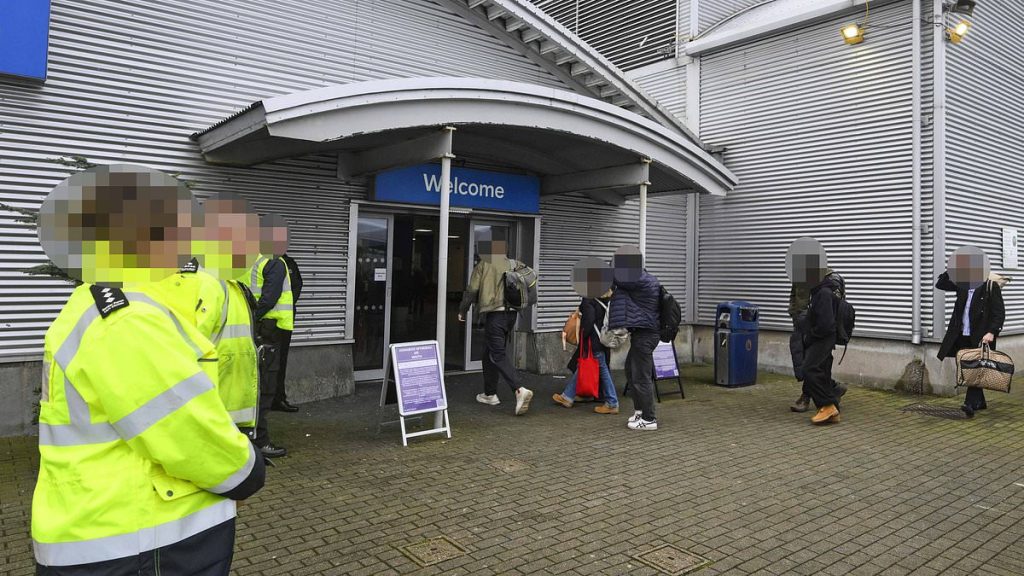
The CTA, allowing seamless movement of British and Irish citizens between the two nations, is now being leveraged by smugglers as a covert entry strategy. Authorities have launched a coordinated operation to tighten security, resulting in the arrest of 32 individuals linked to immigration offenses at key UK-Ireland ports and airports.
Operation Unfolds at Holyhead: Technology and Tackling Stowaways
In Holyhead, the crackdown was visible as ferry passengers were scanned using live facial recognition systems. This technology cross-referenced travelers against a database of known offenders, aiming to identify illicit entries. Meanwhile, lorries entering the port were subjected to thorough inspections for hidden migrants and contraband, with additional checks conducted along a motorway nearby.
“The Common Travel Area is exploited by criminal gangs as a back-entry route into the UK, so our operation is about making our borders as robust as they can be,” said DCC Wendy Gunney, leader of the Domestic Organised Immigration Crime taskforce.
Gunney highlighted the growing threat of organized crime through the CTA, emphasizing that while small boat arrivals are prominent, all entry points must be secured. The taskforce, working with Immigration Enforcement, Border Force, and local police, has prioritized intelligence gathering to combat these activities.
Facial recognition technology operates by capturing facial features via cameras and analyzing measurements like eye spacing. This data is then matched against a watchlist, with officers verifying potential hits. Critics argue this marks a significant expansion of the surveillance state, but Gunney defended its use, stating it is a reliable and proven tool.
During the three-day operation, arrests included a Lesotho national without valid UK entry documents, who was promptly handed over to Irish authorities for a domestic violence charge. In Birmingham, four Pakistani men arriving from Belfast were discovered to have invalid visas and pending asylum claims, leading to the withdrawal of their applications after breaching reporting conditions.
Further actions in North Wales resulted in the detention of an Indian man found to be a visa overstayer with a failed asylum case. He was also suspected of working illegally for a delivery firm, with deportation and possible fines under consideration. Earlier in 2024, 14 Albanians were intercepted inside a livestock wagon that had crossed into the UK from Northern Ireland.
Gunney noted the taskforce’s role in enhancing intelligence, ensuring the UK’s borders remain secure against both people and goods being smuggled through the CTA. The crackdown underscores a shift in strategy to address the evolving nature of immigration challenges.