
Ceasefire or no ceasefire, the Middle East’s reshuffling is not yet done
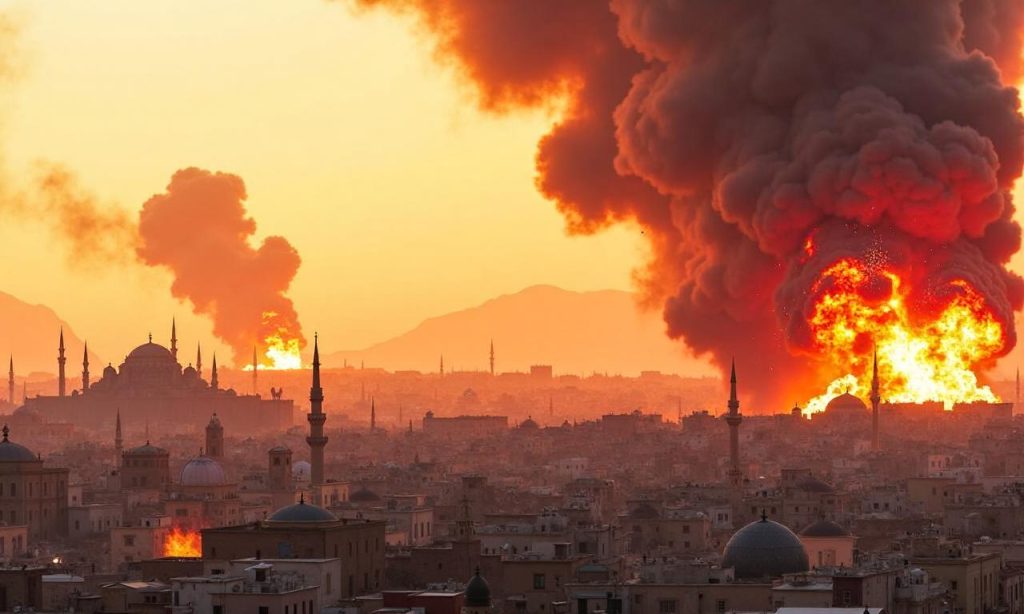
Ceasefire or no ceasefire, the Middle East’s reshuffling is not yet done
Despite ongoing efforts to broker a truce in Pakistan, the conflict in the region shows no signs of slowing down. Both the United States and Iran, key players in the war, have their own strategic goals, but the path to peace remains fraught with challenges. One major hurdle is the deep distrust between the two nations, compounded by the absence of clear mutual interests. Meanwhile, Israel’s aggressive military actions in Lebanon have intensified the stakes, leaving the U.S. partner in the conflict in a precarious position.
President Donald Trump, who has already framed the war as a past event, seeks a swift resolution. His administration is eager to exit the conflict, driven by political deadlines such as a state visit from King Charles in April and a summit with Chinese leader Xi Jinping in May. The upcoming midterm elections in November further pressure the U.S. to stabilize the economy, particularly by lowering petrol prices—something that has been difficult to achieve during active hostilities. As summer approaches, the urgency to conclude the war grows.
“A capital V military victory,” as US Defence Secretary Pete Hegseth put it.
Iran’s motives for seeking a ceasefire are equally compelling. Though defiant, the country has faced significant losses, with its cities grinding to a halt and infrastructure heavily damaged. The regime, still capable of launching missiles and drones, relies on social media to counter U.S. narratives, producing AI-driven content that mocks Trump. However, its ability to regroup hinges on negotiations, making the talks in Pakistan a critical opportunity to reinforce its standing.
The task of mediating between the U.S. and Iran falls to Pakistani officials, who must navigate starkly divergent positions. Trump’s 15-point plan, though not publicly released, is said to resemble a surrender proposal. In contrast, Iran’s 10-point demands have historically been rejected by the U.S. Bridging these gaps will require both sides to agree on continued dialogue, even if broader consensus remains elusive. Wartime conditions make this process more complex, as any verbal agreement might be seen as a positive step without a full resolution.
The Strait of Hormuz: A New Priority
The most pressing issue in these talks is the reopening of the Strait of Hormuz, a vital maritime passage for global oil trade. By keeping the strait closed, Iran exerts economic pressure on the world, but the U.S. and Israel’s attacks have disrupted this strategy. Ensuring the waterway remains open is now central to the negotiations, as it directly impacts international energy markets.
The war’s early stages, marked by U.S.-led strikes on Iran’s leadership on 28 February, have left lasting consequences. Among the casualties were Ayatollah Ali Khamanei’s wife, family members, and possibly his successor Mojtaba, who has been missing since the attack. Speculation surrounds his injuries, but the regime’s resilience has defied expectations. Even without a clear plan for the future, Iran has demonstrated its ability to endure, challenging the notion of a decisive U.S. victory.
“Trump was expecting a quick victory, an Iranian version of the US military’s stunning kidnap of the Venezuelan leader Nicolas Maduro and his wife in January.”
The conflict has already begun reshaping Middle Eastern power dynamics. While the U.S. and Israel have dealt heavy blows to Iran’s military capabilities, the regime remains intact. Regime change is not imminent, as Iran continues to project strength. For civilians caught in the crossfire, the ceasefire talks represent a fragile chance for stability, but the road to peace is still uncertain. Without a lasting agreement, the risk of renewed violence looms large.