Zelenskyy’s Diplomatic Push for Peace Talks Intensifies Amid War Efforts
Zelenskyy wants to build up pressure – As the conflict in Ukraine enters its third year, President Volodymyr Zelenskyy has ramped up his diplomatic campaigns to compel Russia into direct negotiations. During a visit to Estonia, he emphasized the need for a coordinated strategy to undermine Moscow’s confidence in the war’s outcome. The president’s remarks came against a backdrop of ongoing battles on the frontlines and growing tensions between European allies and Russia. His goal is to create a scenario where the Russian leadership feels compelled to seek a resolution, rather than continuing its aggressive stance.
Strengthening Frontline Positions as a Diplomatic Lever
Zelenskyy highlighted Ukraine’s military advancements as a key tool in pressuring Russia. He noted that Ukrainian forces have reinforced their defenses along the eastern front, a move he believes will force Moscow to reconsider its war goals. “Our positions are now solid,” he stated, “and Russia is losing over 30,000 troops each month—either through casualties or injuries.” This attrition, combined with the resilience of Ukraine’s armed forces, is intended to signal that the war is no longer a strategic advantage for Russia. The president argued that these developments would push the Kremlin toward the negotiating table, as the cost of continued fighting becomes unsustainable.
According to Zelenskyy, the success of Ukraine’s defensive posture has created an opportunity for peace. “The war is no longer a benefit for Russia,” he said, stressing that Moscow must recognize the mounting pressure. This message is part of a broader diplomatic strategy aimed at altering Russia’s calculus. By demonstrating military strength, Ukraine hopes to make peace talks more attractive to the aggressor, even as it remains prepared for prolonged conflict.
Expanding Military Impact Beyond the Frontlines
Another element of Zelenskyy’s strategy involves Ukraine’s intensified long-range strikes deep into Russian territory. These attacks, he explained, target critical infrastructure such as logistics hubs, oil refineries, and military production sites. “Our strikes are disrupting Russian operations,” the president said, adding that the effects are already visible in annexed Crimea and parts of Russia. “There’s a petrol shortage there, and communications have been down for months.” He warned that maintaining this pressure is essential to keep Russia from gaining any strategic footholds, ensuring it remains vulnerable to diplomatic overtures.
Zelenskyy’s comments were delivered during a high-level meeting with leaders from France, Germany, and the United Kingdom in London. This E3 gathering, followed by a Nordic-Baltic summit in Tallinn, marks a critical phase in Ukraine’s efforts to secure international support. With the G7 summit in France and an EU summit in Brussels scheduled shortly after, the president is leveraging these events to solidify a united front among Western nations. “Europe must have a strong voice in the talks,” he said, “and be prepared to make decisive choices.”
Europe’s Role in Shaping the Negotiation Landscape
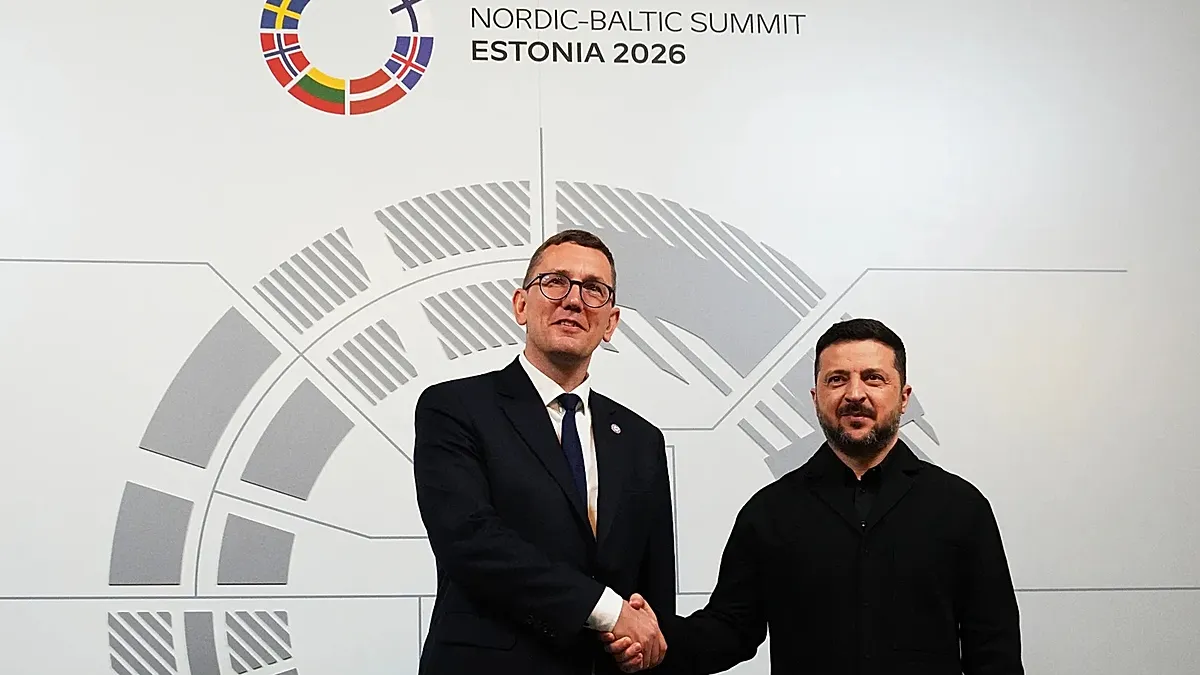
At the Nordic-Baltic summit, Zelenskyy reiterated his call for Europe to take a central role in diplomacy. “Yesterday in the E3 format, today in our NB8 format, and later at the EU summit, we will focus on how Europe should approach these negotiations,” he stated. He pointed out that the success of the talks depends on the collective will of European nations to act decisively. Estonia’s President Alar Karis echoed this sentiment, acknowledging the high cost of using fighter jets to intercept Russian drones and expressing hope for a partnership with Ukraine to address the issue more affordably.
The president also addressed the United States, which has shifted some focus to the Middle East. “Washington is still committed to resolving the conflict,” Zelenskyy said, citing recent discussions with U.S. representatives. Despite this, he stressed that the U.S. remains a vital partner in the mediation process. The Kremlin, however, has not been as cooperative. Spokesperson Dmitry Peskov claimed that the U.S.-led mediation is “currently on hold,” and he dismissed the EU’s potential involvement. “Europeans are still far from being ready to act as mediators,” Peskov said, echoing Moscow’s complaints that European leaders prioritize the war’s continuation over peace.
Drone Incursions and Strategic Alliances
Meanwhile, recent drone incidents in the Baltic region have intensified concerns over Russian military tactics. In Estonia, a drone struck a power plant chimney, while others targeted fuel depots in Latvia and were intercepted by Romanian jets stationed in Lithuania. Ukrainian officials apologized for the accidents, stating the drones were intended for Russian military targets but were diverted by electronic interference. This incident has sparked discussions about strengthening alliances with neighboring countries to counter Russian air threats.
Zelenskyy revealed that Ukraine has already secured a drone deal with Latvia following his initial talks with the country’s new Prime Minister, Andris Kulbergs. “These agreements provide tangible support for our joint defense and co-production,” he wrote on X, noting that Ukraine’s expertise is helping its partners enhance their capabilities. He referenced Ukraine’s experience in the Middle East, where expert teams trained local forces to neutralize drones. “We did this in the Middle East, and it worked,” the president said, suggesting that similar partnerships could be established across Europe.
Estonia’s Karis expressed optimism about Ukraine’s technological offerings, particularly the low-cost interceptor drones used domestically. He hopes to deploy these systems in Baltic airspace to reduce reliance on expensive fighter jets. “Ukraine can provide these solutions at any moment,” Karis said, emphasizing the need for a unified defense strategy. The Baltic states, including Estonia, Latvia, and Lithuania, have been steadfast in their support for Ukraine, but the recent drone attacks have underscored the urgency of collaboration.
A Path Toward Peace or Further Conflict?
Zelenskyy’s diplomatic maneuvers come as the war’s trajectory remains uncertain. While Russia continues to assert its dominance, Ukraine’s ability to maintain frontline positions and disrupt its supply chains offers a glimmer of hope. The president’s push for European involvement is a calculated effort to broaden the coalition against Moscow, ensuring that peace talks are not just a Ukrainian initiative but a European one. “The war is not just a Ukrainian story anymore,” he said, underscoring the shared stakes of the conflict.
Yet, the path to peace remains fraught with challenges. The Kremlin’s resistance to negotiations, coupled with the war’s economic toll, could delay progress. Zelenskyy’s challenge is to maintain momentum while addressing logistical and strategic hurdles. As the G7 and EU summits approach, the international community will be watching closely to see whether Ukraine’s diplomacy can shift the balance of power. For now, the president remains determined, advocating for continued pressure and the eventual return to talks that could end the war.
In summary, Zelenskyy’s strategy combines military success with diplomatic outreach, aiming to force Russia into a position where it has no choice but to seek peace. The collaboration with European allies, including Latvia and Estonia, highlights Ukraine’s growing influence and its ability to share expertise. As the war drags on, the president’s efforts to build a united front may determine whether the conflict moves toward resolution or escalates further.