Von der Leyen Urges EU Leaders to Consider Talks with Russia
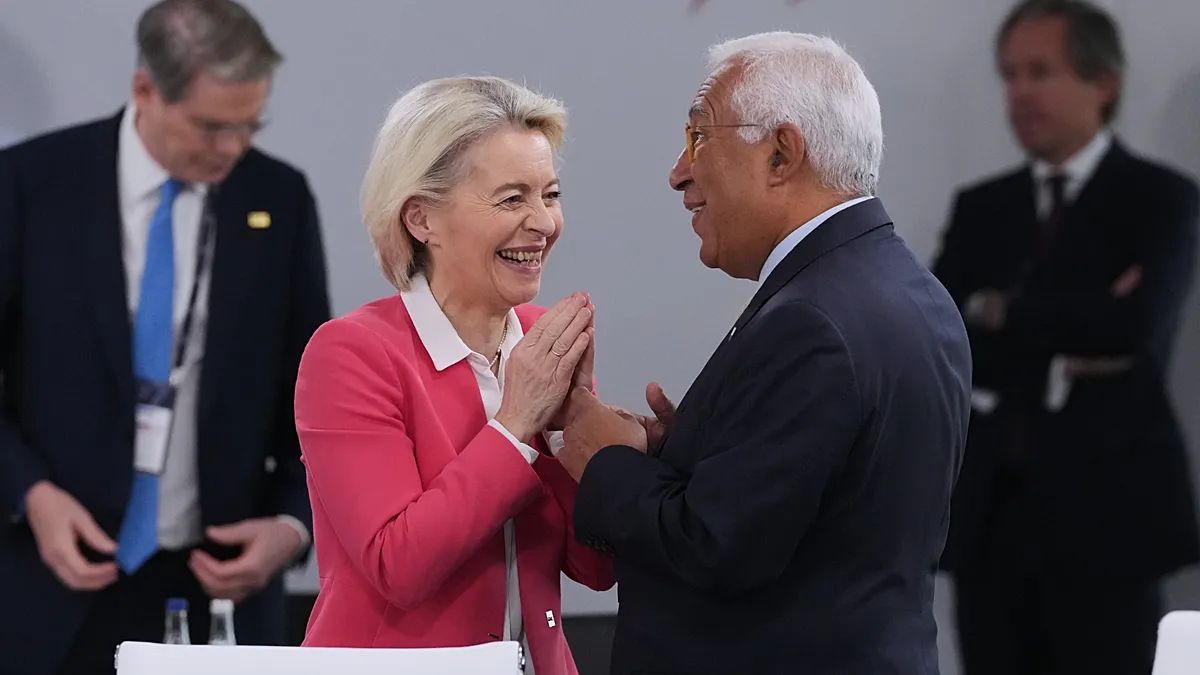
Von der Leyen told EU leaders – European Commission President Ursula von der Leyen highlighted to EU leaders that the current moment presents an opportune time to explore diplomatic engagement with Russia. During a meeting in Brussels on June 19, 2026, she emphasized the need for the bloc to prepare for potential discussions with Moscow, even as tensions persist over the Ukraine conflict. Von der Leyen argued that maintaining readiness for dialogue is essential, while also underscoring the importance of continued economic pressure on Russia to achieve favorable outcomes. Her remarks sparked mixed reactions, with some members of the EU questioning whether the timing was appropriate for such a move.
Economic Pressure as a Strategic Tool
Von der Leyen pointed to recent economic data as a key rationale for engaging with Russia. She noted that inflation rates in Moscow had risen significantly, and the country’s economic performance showed signs of stagnation, suggesting that Western sanctions had taken a toll. “The economic strain on Russia demonstrates the effectiveness of our current policies,” she stated, positioning this as a reason to keep the door open for talks. However, this perspective faced resistance from eastern European nations, which viewed the EU’s approach as too lenient given the ongoing war.
The Commission head also framed the evolving war dynamics as a critical factor in the decision. She acknowledged that Ukraine’s territorial gains had shifted the balance of power, but insisted that diplomacy should not be abandoned. “We must remain vigilant while also being open to negotiation,” von der Leyen said, a sentiment echoed by her emphasis on a unified European stance. This call for unity aimed to reconcile differing views within the bloc, particularly between those advocating for continued sanctions and those supporting a diplomatic channel.
Costa’s Initiative and the Debate Over Transparency
European Council President António Costa introduced a diplomatic initiative during the meeting, focusing on establishing a framework for dialogue with Russia. His proposal was not an immediate push for formal talks but a step toward creating a communication bridge. Costa’s team had already contacted Yuri Ushakov, a key advisor to Russian President Vladimir Putin, as part of this effort. Von der Leyen, informed of the call, stressed that the initiative reflected a broader strategy rather than a unilateral decision.
Despite this, the lack of transparency in the process led to confusion among some EU members. Several leaders expressed surprise, learning of the initiative through media reports the next day. This delayed communication raised concerns, especially from states on the eastern flank of the union. They argued that the EU should not signal compromise while Russia remains on the offensive. “The EU’s willingness to engage with Moscow risks undermining our sanctions strategy,” one leader remarked, highlighting the internal debate over the proposed mandate.
Security Guarantees and the Role of Member States
While von der Leyen advocated for a coordinated approach, she acknowledged that security guarantees for Ukraine would still be handled by individual member states. This division allowed for flexibility but also created uncertainty about the bloc’s overall commitment. The “Coalition of the Willing,” led by France and the UK, was expected to take the lead in securing these assurances, according to Euronews sources. Von der Leyen framed this as a necessary balance, ensuring that critical issues were not prematurely decided.
Her defense of Costa’s mandate emphasized the importance of a unified European message. “A single voice is stronger when engaging with Putin,” she said, reinforcing the need for solidarity. This strategy aimed to strengthen the EU’s position in negotiations, even as some leaders called for more aggressive measures. The debate underscored the challenge of aligning the bloc’s diverse interests in the face of a complex geopolitical situation.
Zelenskyy’s Position on Negotiations
Ukrainian President Volodymyr Zelenskyy reiterated his country’s stance during the meeting, insisting that Kyiv would not concede captured territories. “Our goal is to weaken Russia, not to cede ground,” he said, framing negotiations as a means to achieve this objective. While Zelenskyy acknowledged the value of dialogue, he stressed that Ukraine would not engage without clear security guarantees, a condition that remains central to the war effort.
Nonetheless, Zelenskyy called for the EU to remain an active participant in eventual talks with Putin. “Our continent’s future depends on a strong European presence at the negotiating table,” he argued, emphasizing the need for the bloc to support Ukraine’s position. This perspective contrasted with the views of some EU leaders, who remained cautious about the risks of engaging Russia at this stage. The discussion highlighted the EU’s dual challenge: maintaining pressure on Moscow while preparing for potential peace talks.