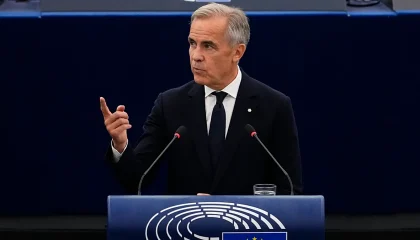
UK Prime Minister Calls for Tech Companies to Block Explicit Content for Children
UK PM – At the forefront of efforts to enhance online safety for minors, UK Prime Minister Keir Starmer has emphasized the urgent need for major technology firms to adopt stronger measures to curb the sharing of explicit material by children. During his address at London Tech Week, Starmer highlighted the importance of immediate action, stating that without such interventions, the government may be compelled to introduce new legislation within the next few months. The focus of his call is on implementing device-level controls to prevent young users from transmitting or receiving sexually explicit images featuring minors.
Proposed Safeguards and Legislative Threats
Starmer’s directive centers on requiring technology companies operating in the UK to integrate tools capable of identifying and blocking nude content involving children. These tools, he argued, would be activated on smartphones and tablets, ensuring that explicit material is filtered before it reaches young users. “The technology is already on devices,” Starmer noted, “so the tech firms just need to switch it on to block children from seeing nude imagery.” He emphasized that this challenge is achievable, underscoring the government’s belief in the feasibility of such measures.
According to the proposals, firms like Apple and Google would be tasked with developing or deploying systems that detect harmful content. These systems would operate at the device level, meaning they would function independently of internet service providers or cloud storage. While the plan aims to prevent children from accessing explicit material, adults would still retain access through established age verification processes. Starmer clarified that the goal is to mitigate risks rather than impose excessive restrictions on mature users.
Government’s Broader Strategy Against Online Risks
The initiative is part of a wider governmental campaign to combat online dangers faced by children. This includes addressing issues like online grooming and sextortion, which have increasingly targeted minors through digital platforms. Home Secretary Shabana Mahmood supported Starmer’s stance, reiterating that the measures would focus on preventing abuse without overstepping into surveillance. “There is no reporting, no data collection, and no images leaving the device,” she explained, emphasizing the privacy-focused design of the proposed controls.
Maturing technology has enabled children to access explicit content with ease, often without parental oversight. The government’s push for device-level restrictions aims to close this gap by leveraging existing tools to create a safer digital environment. Mahmood stressed that these controls would not require additional data collection or monitoring beyond what is already in place, ensuring that the focus remains on blocking harmful material rather than tracking user behavior.
Mixed Reactions from Advocates and Politicians
The announcement has sparked a range of responses, with some applauding the proactive approach and others expressing reservations. Child protection organizations, such as the NSPCC, have endorsed the proposal, viewing it as a critical step toward safeguarding young users from exploitation. “Stronger safeguards could prevent devastating harm if implemented swiftly,” said Chris Sherwood, a representative from the NSPCC, according to BBC reports.
However, privacy advocates have raised concerns about the potential for increased surveillance. The campaign group Big Brother Watch warned that the measures might lead to intrusive monitoring of personal devices, citing fears of overreach. “This could set a precedent for governments to access more data than necessary,” the group argued, highlighting the balance between safety and individual privacy.
Political reactions have also been divided. Conservative leader Kemi Badenoch questioned the practicality of the plan, suggesting that restricting certain features alone may not be enough to tackle the issue comprehensively. She emphasized the need for broader regulatory frameworks, arguing that device-level controls might not address all forms of online abuse. Meanwhile, Liberal Democrat deputy leader Daisy Cooper criticized the timing of the proposal, stating that the government had delayed action for too long. “This is a long-overdue step, but it should have been taken earlier,” Cooper remarked, per BBC coverage.
Industry Response and Implementation Challenges
Technology companies have responded to the government’s call with cautious optimism. Google, for instance, stated that it is collaborating with UK authorities to develop effective solutions. “We are working constructively to find privacy-preserving methods that deter harmful content while ensuring a safe digital environment for young people,” a company spokesperson said, as reported by Reuters. This partnership reflects the industry’s acknowledgment of the responsibility to adapt to evolving threats.
Implementing device-level controls presents technical and logistical challenges. While companies like Apple and Google have the infrastructure to deploy such tools, there are questions about their effectiveness in real-world scenarios. For example, how will these systems differentiate between explicit content and appropriate material? Additionally, the three-month deadline for compliance has raised concerns about the pace of implementation. Critics argue that this tight timeframe may not allow for thorough testing or widespread adoption, potentially leading to gaps in protection.
Implications for the Tech Sector and Young Users
The proposed measures could have significant implications for the tech sector. If companies fail to meet the deadline, the government has indicated it is prepared to introduce mandatory legislation, which may include hefty fines and, as a last resort, criminal liability for executives. This threat underscores the seriousness with which the UK government views the issue, signaling a shift toward stricter enforcement of online safety standards.
For young users, the impact could be substantial. By reducing access to explicit content, the measures aim to protect children from early exposure to harmful imagery. However, the success of these controls will depend on their integration into everyday devices and user habits. Parents and educators may see this as a positive development, but there are also concerns about the potential for overblocking or limiting access to educational content. The government aims to strike a balance, ensuring that the tools are effective without stifling legitimate use of technology.
The debate over the proposal reflects a larger conversation about digital rights and child protection. While some view the measures as a necessary evolution in safeguarding minors, others worry about the erosion of privacy and the potential for misuse. As the UK government moves forward with its plans, the response from tech companies and the public will be crucial in determining the long-term success of the initiative. The outcome could shape future policies not only in the UK but also in other regions grappling with similar challenges.
Long-Term Impact and Future Directions
Starmer’s push for immediate action highlights the growing pressure on tech firms to take responsibility for content moderation. The measures could serve as a model for other countries, where governments are increasingly seeking to hold digital platforms accountable for their role in child exploitation. However, the effectiveness of the plan will depend on how well the technology is implemented and how responsive the companies are to the government’s demands.
Long-term, the proposal may lead to a reevaluation of how explicit content is managed online. If successful, device-level controls could become a standard feature across major platforms, reducing the risk of harmful material reaching young users. At the same time, the government’s approach may inspire further innovations in digital safety, such as AI-driven content filters or real-time monitoring systems. These tools, combined with user education, could create a more holistic strategy for protecting children in the digital age.
The UK’s stance on this issue also signals a broader trend in global internet governance. As more nations focus on online safety, the pressure on tech companies to comply with national regulations will intensify. Starmer’s announcement, therefore, is not just a domestic policy but a part of a larger effort to establish international standards for content moderation. This could lead to increased collaboration between governments and tech firms, with a shared goal of creating a safer online space for all users.
Ultimately, the success of the proposed measures will hinge on the balance between innovation and regulation. By requiring companies to activate existing tools, the UK government is pushing for immediate action while leaving room for future refinements. As the deadline approaches, the tech sector will need to demonstrate its commitment to these changes, ensuring that the new safeguards are both effective and user-friendly. The outcome of this initiative will be closely watched, as it could redefine the relationship between technology and child safety in the years to come.