Russian Opposition Party Congress in Berlin Sparks Concerns Over Yashin’s Leadership
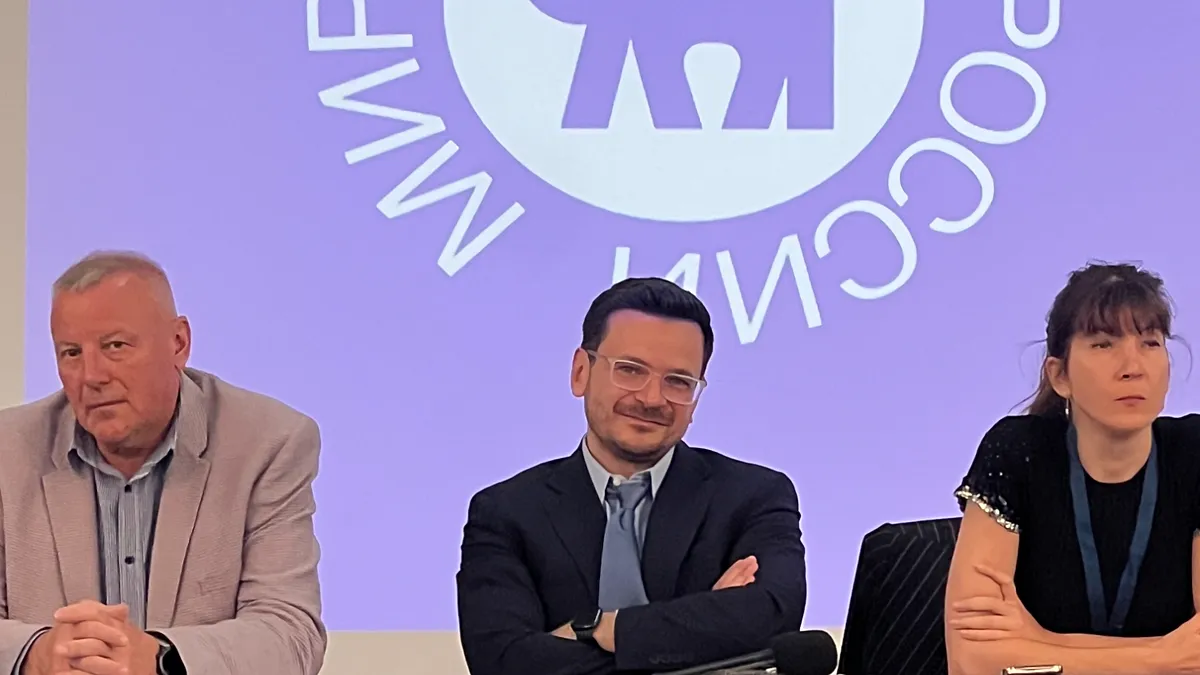
Russian opposition party congress in Berlin – On June 12 and 13, 2026, the newly formed Russian opposition party Peaceful Russia convened in Berlin for its inaugural congress. The event brought together 126 delegates, all of whom were invited to finalize the party’s foundational principles. While the gathering aimed to solidify the group’s political identity, it also became a stage for intense discussions about its future direction and leadership.
The congress was marked by passionate debates over who should lead the party. Ilya Yashin, a prominent opposition figure and former political detainee, emerged victorious with approximately 60% of the votes, according to Igor Kachetkov, a human rights advocate and member of the organizing team. Kachetkov, who served as a key organizer, noted that the two-day event concluded after about twelve hours of deliberation, during which the party rebranded itself from Peaceful Forces of Russia to Peaceful Russia. This decision, he explained, was made to distance the group from associations with state repression and the ongoing war in Ukraine.
Hope and Hype for Yashin’s Vision
Despite the name change, delegates expressed cautious optimism about Yashin’s leadership. Alexander Archagov, a party delegate, highlighted Yashin’s strengths, emphasizing his political experience and rhetorical skills. “Yashin is a skilled communicator, which is essential for bridging divides within the opposition,” Archagov said. He also praised Yashin’s ideological clarity, though stressed that the ability to inspire people is critical for the party’s success in both Russia and the international arena.
“He is an experienced politician. He is a gifted speaker. That is very important because a politician who cannot communicate will not be able to work with others,” Archagov told Euronews.
Yashin himself acknowledged the challenges of operating from Europe, where his party is based. “It is very difficult because we are based in Europe,” he said. “But we plan to work in Russia in the future, and that is very risky.” He described the party’s strategy as one of subtle outreach, targeting Russian citizens who feel marginalized by the current regime. “We will appeal to Russian society and work with people discreetly,” Yashin added. “It is clear that people in Russia cannot cooperate with us without risks. We take that into account. But our main target audience is in Russia. Millions of our supporters are there.”
Yashin’s party program is designed to resonate with those who lack a voice within the government. “Our political message is aimed first and foremost at people in Russia who have no voice,” he said. “We want to be their voice.” Yet, the party’s ability to influence events from abroad remains a question mark. Yashin admitted that legal operations within Russia are currently impossible, but he pointed to historical precedents where exile-based movements eventually took control.
Reznik’s Warnings: Fear of Authoritarian Replication
Maxim Reznik, a renowned liberal opposition politician and former member of the St. Petersburg Legislative Assembly, voiced concerns about Yashin’s potential trajectory. After fleeing Russia following the invasion of Ukraine, Reznik has become a vocal critic of the Kremlin. While he has collaborated with Yashin for years, he now worries the party could mirror the authoritarian structures of the past.
“I do not want Yashin to turn into a mini-Putin. Unfortunately, I see my hope fading that he will not prove to be a self-centered Moscow political boss,” Reznik told Euronews.
Reznik argued that Yashin’s approach risks creating a centralized hierarchy similar to the Communist Party of the Soviet Union. “He is essentially trying to recreate a party modeled on the CPSU,” Reznik said. “We should stop making the same mistakes.” He warned that internal divisions could emerge if the party fails to balance regional interests and represent diverse perspectives.
Reznik’s fears are rooted in the opposition’s historical struggles. For decades, Russian political movements have been hampered by competing factions and personal ambitions. “The opposition has long been fragmented,” he noted. “Competition and self-interest have repeatedly blocked unity.” He sees the Peaceful Russia party as a new opportunity but urges caution, emphasizing the need for a leader who treats all supporters as equals.
Expert Perspectives: Lessons from Yabloko
Andreas Heinemann-Grüder, a Russia expert at the University of Bonn, provided insight into the challenges facing the new party. He highlighted that the Russian opposition has historically grappled with leadership crises, often resulting in a lack of cohesion. “The opposition has always struggled with leadership issues,” Heinemann-Grüder explained. “Competition and personal ambitions have repeatedly prevented unity.”
“We need someone who can unite different people across regions. Someone who treats them as equals. At the moment, I don’t see that in him,” Reznik said.
Heinemann-Grüder suggested the party could draw from the experience of Yabloko, a liberal opposition group founded in 1993. Yabloko’s success, he argued, relied on decentralization and a commitment to reflecting Russia’s ethnic and regional diversity. “To succeed, the new party must embrace a decentralized structure,” he told Euronews. “It should also represent the Russian diaspora across the EU, ensuring broader influence.”
However, Heinemann-Grüder cautioned that operating from exile has its limitations. “The ability to influence developments inside Russia from abroad remains very limited,” he said. The expert stressed that while the Peaceful Russia party’s goals are commendable, its survival depends on avoiding the pitfalls that have plagued previous opposition groups. “The key is to maintain a balance between ideological consistency and adaptability,” he added.
As the party prepares to challenge the status quo, questions linger about its long-term viability. Yashin’s election as chairman has sparked both excitement and skepticism, with some delegates questioning whether his vision aligns with the needs of a divided opposition. The upcoming months will be crucial in determining if the party can overcome its internal dynamics and achieve its goal of becoming a unifying force for Russian dissent. Whether it can follow the path of Lenin’s Bolsheviks or chart a new course remains uncertain, but the journey has already begun in the heart of Europe.