Moscow Strike on Kyiv-Pechersk Lavra ‘One of Russia’s Most Serious Crimes Against Christian Culture’
The Attack and Its Immediate Impact
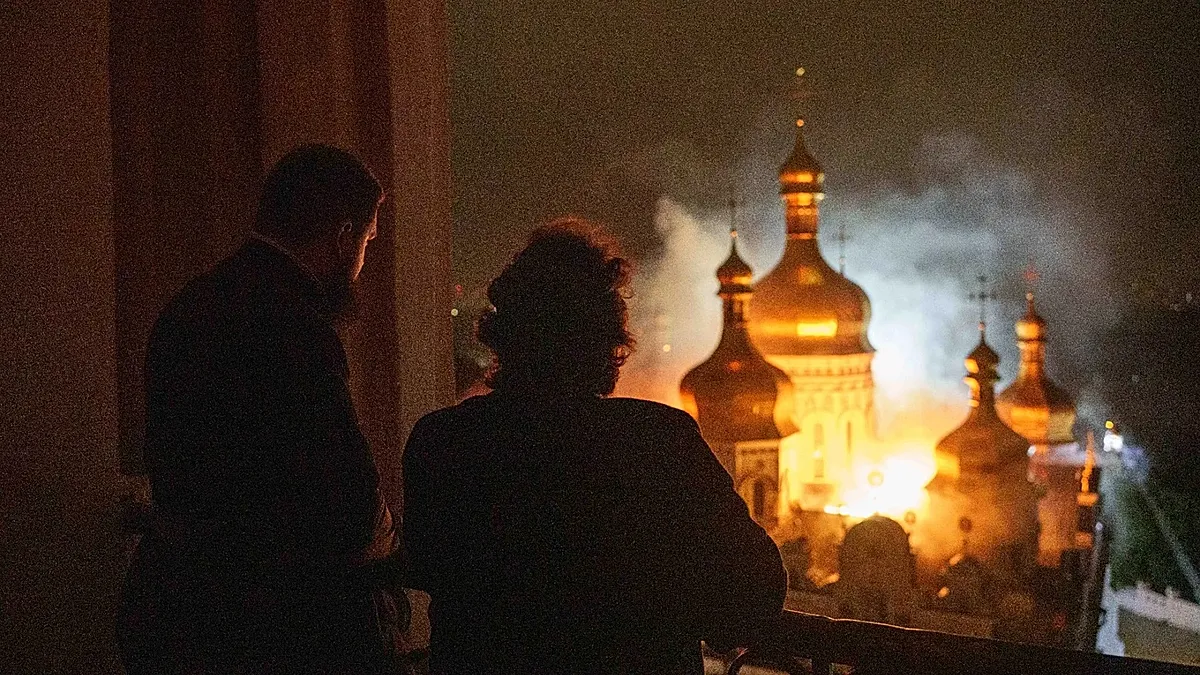
Moscow strike on Kyiv Pechersk Lavra – Early on Monday, June 15, 2026, Kyiv was shaken by a series of explosions that sent shockwaves through the city. Among the most harrowing sights was the Kyiv-Pechersk Lavra, a historic church complex and UNESCO World Heritage site, where flames rose dramatically above its ancient structures. Social media platforms soon flooded with images of the destruction, highlighting the devastating blow to a symbol of Christian heritage in Ukraine. For thousands of Ukrainians taking refuge in metro stations and other shelters across the nation, the attack on the Lavra was more than a military strike—it was a visceral reminder of the vulnerability of their cultural legacy.
The cathedral, a cornerstone of Kyivan Rus’ history, stood on the bluffs above the Dnipro River, a place of pilgrimage for centuries. Its destruction, which included underground monastic chambers and cavernous tunnels, threatened to erase a vital link to Ukraine’s religious and scholarly traditions. The attack not only targeted physical structures but also struck at the heart of a deeply symbolic site, one that embodies the unbroken continuity of Ukrainian identity and faith.
Leaders’ Reactions and Calls for Action
Ukrainian President Volodymyr Zelenskyy swiftly condemned the strike, labeling it “one of Russia’s most serious crimes against Christian culture to date.” In a statement shared on social media, he emphasized the urgency for G7 leaders convening in France to respond decisively. “It is very important that there be a response from the G7 countries, which are now gathering for their summit,” Zelenskyy said, “and that this response be decisive and substantive: more pressure on the aggressor and more support for Ukraine’s air defence, especially anti-ballistic capabilities.”
“Nothing can justify the war of aggression that Russia has been waging against Ukraine for more than four years, nothing can justify this attack on our shared universal heritage.”
Following the strike, Zelenskyy visited the damaged site alongside Prime Minister Yuliia Svyrydenko and other government officials. The group arrived as emergency teams worked tirelessly to rescue religious artifacts and ancient icons stored within the complex. Despite the destruction, the bells of the Lavra once again echoed across Kyiv, a poignant contrast to the chaos of the attack. Svyrydenko, speaking at the scene, described the assault as “a brutal attack on our people and our heritage.” She added, “We ask for prayers for the salvation of the shrine from destruction. Another Russian crime against humanity, against history, against Christianity.”
A Symbol of Kyivan Rus’ and Resistance
The Kyiv-Pechersk Lavra, also known as the Monastery of the Caves, spans over 600 meters of interconnected tunnels and churches, a labyrinthine network built between the 11th and 19th centuries. Its origins trace back to the early days of Kyivan Rus’, the first eastern Slavic state, when Moscow had yet to establish itself as a dominant power. For many Ukrainians, the Lavra represents more than just a religious site—it is a testament to their cultural and spiritual roots, unshaken by the influence of Moscow.
Metropolitan Epiphanius of the Orthodox Church of Ukraine was among the first to confirm the strike via social media, posting on X that the Dormition Cathedral’s roof had caught fire. He echoed the sentiments of Zelenskyy and Svyrydenko, calling the attack “another Russian crime against humanity, against history, against Christianity.” The leader of the Orthodox Church further urged prayers for the site’s survival, underscoring the deep emotional and symbolic weight of the assault.
International Response and Cultural Significance
French Foreign Minister Jean-Noel Barrot drew a powerful parallel between the Lavra’s destruction and the 2019 bombing of Notre Dame Cathedral in Paris. “The attack on the Lavra is, for us French, the equivalent of a bombing of Notre Dame,” he stated, highlighting the cultural loss to both nations. Meanwhile, French President Emmanuel Macron expressed solidarity with Ukraine, noting that the strike had only intensified the resolve of allies to seek a ceasefire and peace.
Foreign Minister Andrii Sybiha announced that Ukraine would “urgently initiate” procedures with UNESCO and other international bodies to ensure a swift response to the attack. “We need immediate and adequate responses to this state barbarism,” he said, emphasizing the need for global recognition of the damage inflicted on the site. The Kyiv-Pechersk Lavra, with its centuries-old history, has now become one of the most significant targets of Russia’s campaign against Ukrainian cultural heritage since the full-scale invasion began in 2022.
Evacuation Efforts and the Emotional Toll
As the explosions subsided, staff members rushed to evacuate priceless relics and artworks from the damaged complex. Among the treasures at risk were sacred icons and manuscripts that date back over a millennium, some of which had been preserved in underground chambers. The effort to save these artifacts underscored the urgency of the situation and the deep emotional investment Ukrainians have in their historical legacy.
Oleksandra Matviichuk, a prominent human rights defender and 2022 Nobel Peace Prize co-recipient, revealed that Russia had “deliberately struck the Lavra—built during the era of Kyivan Rus’, when Moscow itself did not yet exist—with a Russian drone.” Her statement added a layer of intent to the attack, suggesting that the destruction was not accidental but a calculated move to undermine Ukraine’s cultural and historical foundations.
The Broader Implications
The attack on the Kyiv-Pechersk Lavra has sparked outrage beyond Ukraine’s borders, with international leaders and cultural institutions condemning the act. Its significance lies not only in its architectural and religious value but also in its role as a unifying symbol for Ukraine. Situated on the right bank of the Dnipro River, the site has long been a focal point for religious life, scholarship, and cultural memory, embodying the nation’s deep historical ties to Kyiv rather than Moscow.
For many Ukrainians, the damage to the Lavra is more than physical—it represents a severing of their connection to a shared past. The assault on the site, which houses some of the country’s most revered shrines, has been perceived as an attack on the very essence of Ukrainian identity. This sentiment resonates widely, as the loss of the Lavra’s heritage is seen as a blow to the broader narrative of Kyivan Rus’ and its enduring influence over the nation’s spiritual and cultural landscape.
The strike has also drawn attention to the broader pattern of Russian aggression against cultural landmarks. From the initial days of the invasion, Russian forces have targeted churches, museums, and historical sites, aiming to erase Ukrainian history and assert control over its narrative. The Kyiv-Pechersk Lavra, with its UNESCO designation, stands as a powerful reminder of the global stakes involved in this conflict. Its destruction, whether partial or complete, is a stark symbol of the war’s impact on the world’s shared heritage.
As the world watches the aftermath of the attack, the question remains: how will the international community respond to this latest act of cultural erasure? For Ukraine, the answer lies in the solidarity of allies and the determination to protect their historical legacy, even as the war continues to reshape the nation’s future.