MEPs Approve EU-US Trade Deal Despite Trump’s New Trade War Threats
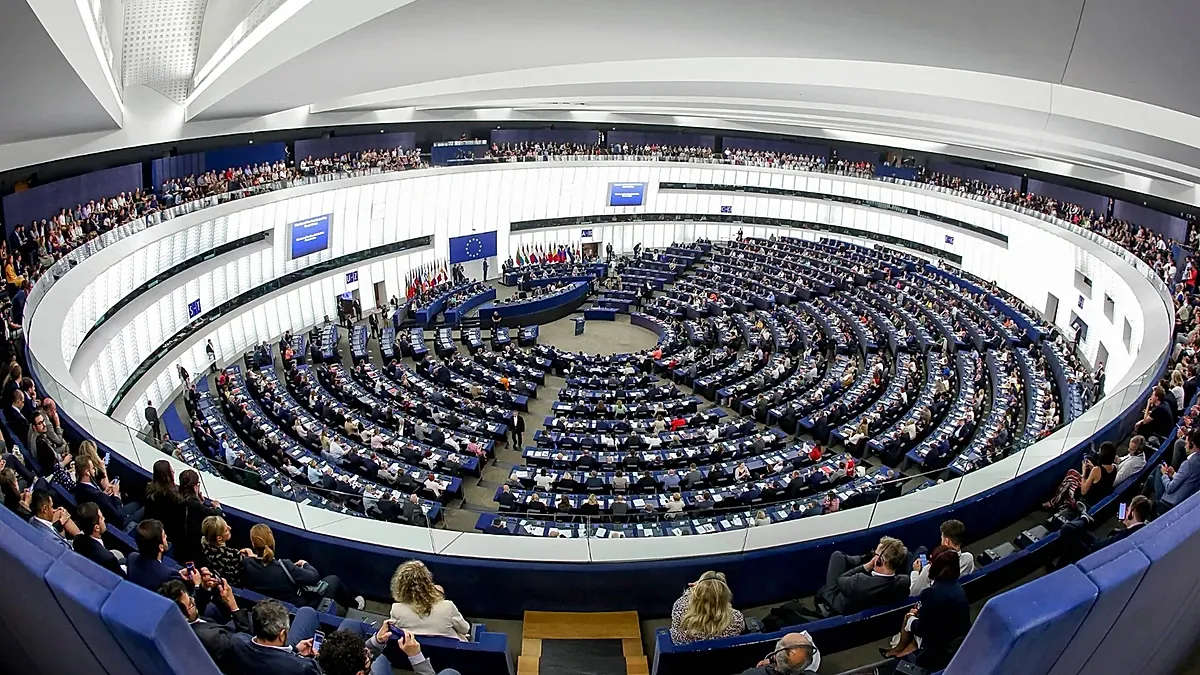
MEPs approve EU US trade deal – On Tuesday, the European Parliament took a decisive step by ratifying the EU-US trade agreement negotiated in the summer of 2025. The pact, signed during a summit in Turnberry, Scotland, between US President Donald Trump and European Commission President Ursula von der Leyen, was finalized after months of deliberation. The final vote marked the culmination of a complex negotiation process, with European lawmakers expressing cautious optimism about the deal’s potential to strengthen economic ties despite ongoing concerns over Trump’s recent threats to escalate trade tensions.
The agreement’s adoption came amid heightened uncertainty, as Trump warned on Monday that he would impose tariffs on French wine and champagne if Paris did not eliminate its digital tax on US technology companies. This latest move was part of a broader pattern of using trade as a leverage tool against European partners. However, the European Parliament’s approval suggests that the bloc remained committed to the deal, even as it acknowledged the risks posed by Trump’s unpredictable approach to international trade.
The vote, which saw 440 MEPs supporting the agreement and 151 opposing it, was a significant milestone in the implementation of the Turnberry pact. With 50 MEPs abstaining, the result underscored the divided opinions within the Parliament on the deal’s merits. The approval allows the EU to reduce tariffs on most US industrial goods, a key provision aimed at boosting trade and economic cooperation. In return, Europeans will now pay a 15% tariff on goods exported to the United States, a compromise that has drawn criticism from some lawmakers who argue the terms favor American interests.
While the Commission, which spearheaded the negotiations, hailed the deal as the best possible outcome given the current geopolitical climate, several members of the Parliament expressed reservations. “We said, and we still believe, this is not what it should be,” stated Kathleen Van Brempt, a Belgian MEP representing the Socialists and Democrats (S&D) group, before the vote. She highlighted the deal’s perceived imbalance, noting that the Commission would not have concluded it without considering the strategic importance of securing US support for Ukraine. This rationale has been central to justifying the agreement, as the EU seeks to maintain strong transatlantic ties amid global challenges.
“We have a strong suspension clause, so that if the US breaches the deal, we come back to our tariff system,” said German MEP Bernd Lange (S&D) in response to questions about the agreement’s safeguards. His remarks reflect the Parliament’s effort to create a buffer against potential US coercion, ensuring the EU retains flexibility in future disputes.
Despite the deal’s approval, the specter of Trump’s trade war looms large. The US president has a history of imposing tariffs to pressure European partners, as seen in his earlier threat to levy 25% tariffs on EU cars after German Chancellor Friedrich Merz criticized the US military’s actions in the Iran war. This tactic has been repeated in recent weeks, with Trump warning of additional tariffs on goods from EU countries that refuse to grant him access to Greenland. Such moves have been interpreted as a continuation of his strategy to use economic leverage in political negotiations.
The negotiation process itself was fraught, with the Parliament initially delaying its decision after Trump’s threat to impose tariffs on EU nations. The delay was a response to the fear that the US might exploit the agreement to advance its own geopolitical goals. This hesitation was compounded by the lack of clarity on how the deal would balance trade interests with security considerations. The compromise reached—allocating a sunset clause to end the agreement on 31 March 2029 unless renewed—was a direct attempt to limit the deal’s long-term commitment and create a timeline for reassessment.
Additionally, the agreement includes a provision enabling the EU to suspend the deal at the request of either the Parliament or a member state if the US fails to lift tariffs on European steel and aluminium by the end of 2026. This clause has been framed as a critical safeguard, allowing the EU to respond swiftly to any violations by the US. However, critics argue that these measures may not be enough to counter Trump’s aggressive trade policies, which have increasingly targeted non-trade issues such as labor practices and digital taxation.
Trump’s recent threats to impose tariffs on French wine and champagne illustrate the broader strategy of using trade as a political weapon. By linking economic concessions to issues like digital taxation, the US president has sought to pressure EU partners into agreeing to terms that align with his interests. This approach has sparked debates within the EU about the fairness of the agreement and its long-term implications for trade relations. While the deal addresses immediate concerns, it also leaves room for future disputes, as the US continues to wield tariffs as a tool of influence.
The EU’s decision to approve the agreement, despite these challenges, signals a willingness to prioritize economic cooperation over ideological differences. Yet, the inclusion of the sunset clause and suspension mechanisms suggests that the bloc is not entirely confident in the deal’s permanence. These provisions provide a safety net in case Trump’s threats escalate or new trade issues emerge. For now, the agreement stands as a testament to the EU’s resolve to maintain its partnership with the US, even as it navigates the complexities of a leader who views trade as a strategic battleground.
Looking ahead, the success of the Turnberry deal will depend on its ability to withstand future pressures. While the EU has secured temporary protections, the ongoing debate over trade imbalances highlights the need for more equitable terms. The deal’s critics, including some S&D members, argue that the 15% tariff on European exports to the US is a concession that may not fully address the concerns of all stakeholders. Nevertheless, the approval by the Parliament marks a pivotal moment in the EU-US relationship, setting the stage for further negotiations and potential adjustments in the coming years.