Germany Resists EU Push to Dismantle Internal Border Controls
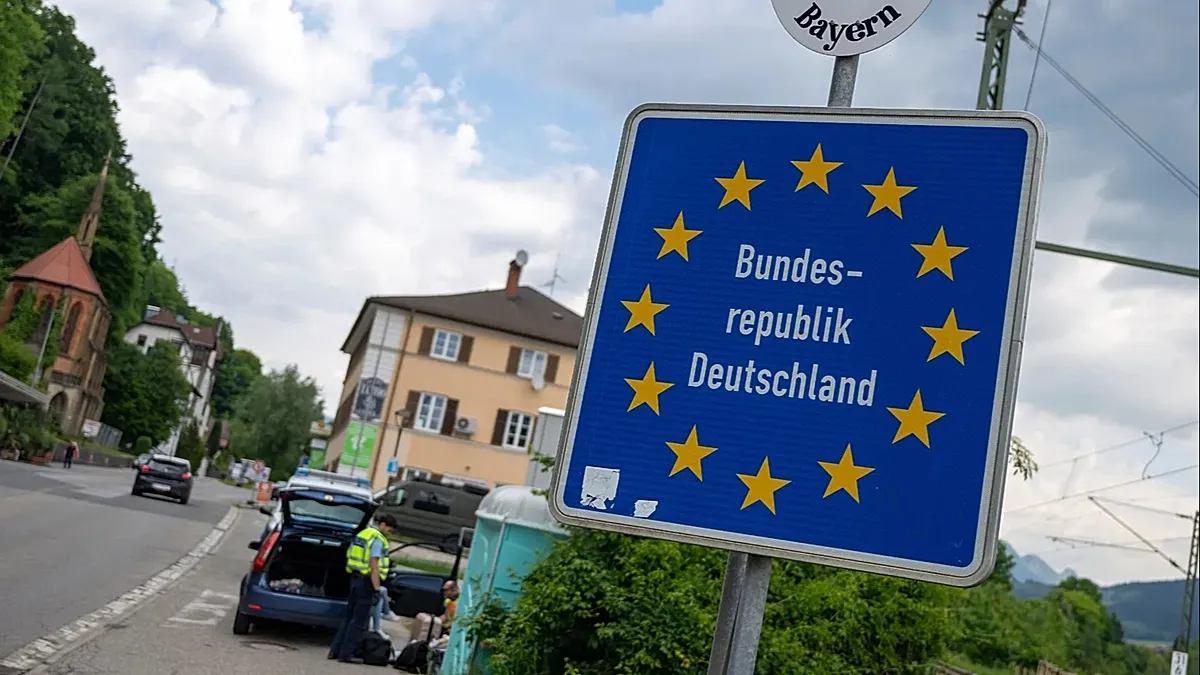
Germany rejects EU request to scrap – Germany has resisted a European Union directive urging member states to abolish internal border checks, asserting that these measures are essential for managing migration flows. Interior Minister Alexander Dobrindt emphasized during a recent EU summit in Luxembourg that his country remains committed to maintaining its internal border controls, which he described as “necessary” for the bloc’s ongoing efforts to control migration. The debate comes as EU nations evaluate the effectiveness of their policies following a major migration agreement signed earlier this month.
Germany’s Defiance and Border Control Efficacy
Speaking at the Luxembourg meeting, Dobrindt defended Germany’s continued use of internal border checks, claiming they are “working” and have yielded tangible results. He highlighted the “significant number of pushbacks” and the “seizure of smuggling gangs” as evidence of their success. “These border roles are effective, and that is why we want to continue them,” he said, underscoring the need for further development rather than immediate removal. While acknowledging the EU’s push for flexibility, Dobrindt stressed that Germany would not abandon its current approach without careful consideration.
“The migration turnaround is working in Germany and it is also working at European level. We are firmly determined that we will continue along this path consistently with our neighboring countries and partner countries,” Dobrindt stated.
Dobrindt’s comments reflect Germany’s broader stance on border management, which has become a contentious issue within the EU. The minister argued that internal checks are crucial for preventing unauthorized entry and ensuring the efficiency of the bloc’s migration system. His remarks contrast with the European Commission’s assertion that these controls are no longer essential due to transformative changes in EU migration policy.
The EU’s Call for Border Simplification
The European Commission has proposed a gradual elimination of internal border controls, citing recent policy reforms that have streamlined migration processes. These include the approval of plans to increase deportations and the establishment of detention centers in non-EU countries. The commission’s position is based on the idea that these new measures would reduce the need for existing internal checks, which are seen as outdated in the face of modernized immigration frameworks.
Currently, ten EU countries enforce internal border controls, with seven explicitly stating that migration is the primary reason for their retention. The commission’s request was directed at Austria, Denmark, France, Germany, Italy, the Netherlands, Slovenia, and Sweden, as well as non-EU member Norway. Poland, the tenth country maintaining such controls, was not included in the call to ease restrictions. While the controls were initially intended as a temporary measure, many have persisted for years, raising questions about their long-term necessity.
Key Provisions of the Return Regulation
At the heart of the EU’s strategy is the newly agreed Return Regulation, a law designed to expedite the deportation of migrants without legal residency. This provision has sparked controversy, as it allows EU nations to establish “return hubs” in non-EU countries, either as transit points or permanent detention locations. Such a move represents a significant shift from previous practices, where internal checks were often the only mechanism for managing migration.
Commissioner Magnus Brunner, who oversaw the negotiation of the Return Regulation, argued that the time is ripe to phase out internal border controls. “The reforms have been done. The external borders are better protected. The returns regulation has been decided,” Brunner said. He framed the policy as a cornerstone of the EU’s efforts to curb irregular migration, asserting that it would enable more efficient processing of migrants while reducing pressure on internal borders.
“Numbers…are going down. We’re on the right track,” Brunner added, highlighting the perceived progress in managing migration.
Despite the EU’s optimism, the implementation of the Return Regulation faces challenges. The law requires cooperation from non-EU countries, which may not always be forthcoming. Germany’s resistance to scrapping internal controls suggests that the country believes these measures are still vital for securing its borders. The minister’s emphasis on “flexibility” and “adaptability” aligns with the EU’s broader goal of harmonizing migration policies, but it also signals a cautious approach to dismantling existing systems.
Public and Political Reactions
The debate over internal border controls has intensified as migration policies reshape the EU’s approach to managing cross-border movement. While the European Commission views these controls as a relic of past practices, German officials argue that they remain indispensable. The country’s experience with high volumes of irregular migrants has reinforced its belief in the necessity of robust internal checks.
Supporters of the current system highlight the effectiveness of Germany’s efforts in reducing the number of unauthorized arrivals. However, critics contend that the policy is becoming increasingly rigid and that it should be adapted to reflect the evolving landscape of migration. The question now is whether the EU can reconcile the need for strict internal controls with its ambition to create a more unified and efficient migration framework.
Broader Implications for EU Unity
The divergence between Germany and the EU Commission reflects deeper tensions within the bloc over migration governance. While some member states advocate for stricter controls, others push for more open borders. This divide has been evident in the recent approval of the Return Regulation, which marks the EU’s most aggressive shift in migration policy in decades.
Statistics from official reports indicate that 29% of migrants without legal residency in Europe have left the EU under the new system. This figure, while promising, has been met with mixed reactions. Proponents see it as proof of the policy’s success, while opponents argue that it may not be enough to address long-term challenges. The outcome of this debate will likely determine the future of internal border controls and the balance of power within the EU’s migration strategy.
As the EU moves forward with its plans, the role of internal border checks will remain a focal point of discussion. The European Parliament and member states must now navigate the complex interplay between national priorities and collective action. Germany’s decision to retain its controls has set the stage for further negotiations, with the potential to either strengthen or reshape the EU’s migration framework in the years to come.