Germany and Poland Set to Finalize Defense Pact Amid Rising Regional Tensions
Germany and Poland set to boost – On June 17, 2026, Germany and Poland are poised to finalize a significant defense agreement that marks a pivotal step in their evolving partnership. The deal aims to deepen military collaboration and redefine shared responsibilities, particularly in light of ongoing hostilities with Russia and the shifting dynamics of Western alliances. This move comes as both nations seek to bolster European security in an era where traditional power structures are being tested by geopolitical challenges.
A Shift from Divergence to Unity
Germany and Poland have long navigated a complex relationship, often influenced by historical grievances and differing political priorities. However, recent developments have fostered a more pragmatic approach. The full-scale Russian invasion of Ukraine in 2022, coupled with the liberal government’s rise to power in Poland in 2023, has prompted a reevaluation of bilateral ties. The new agreement reflects this transformation, prioritizing collective security over historical disputes.
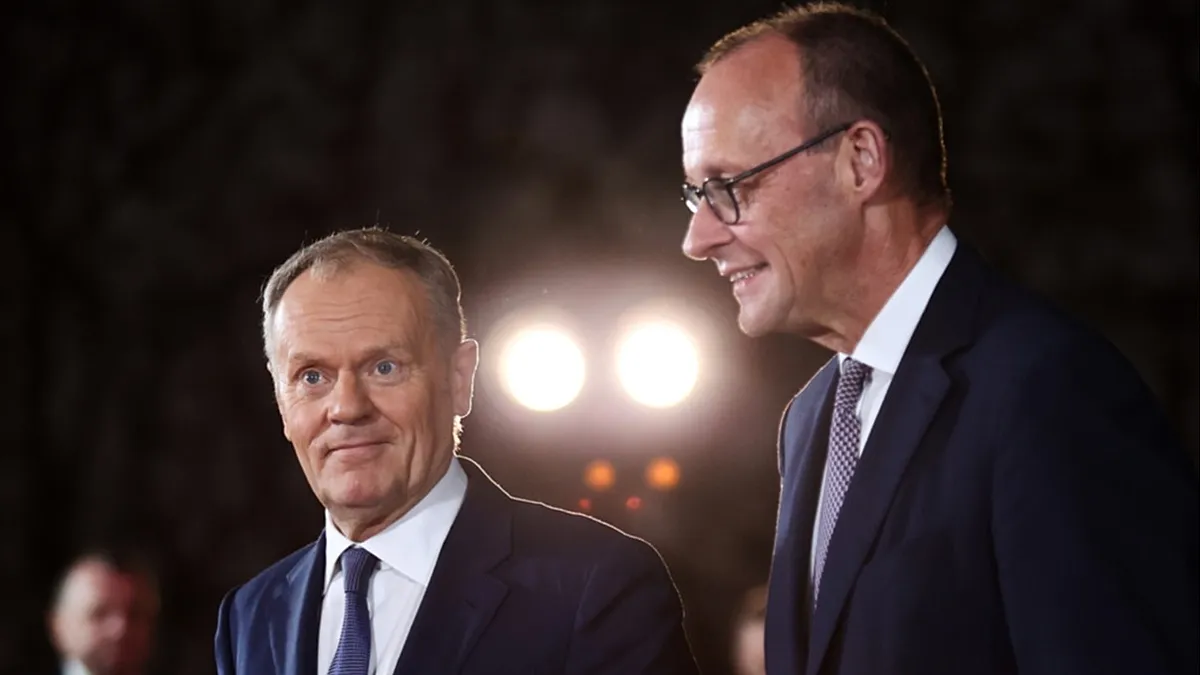
German Chancellor Friedrich Merz has emphasized the importance of Poland as a strategic partner in strengthening Europe’s eastern defense. His efforts to revitalize the Bundeswehr, Germany’s military force, have gained momentum as the country aims to rebuild its conventional capabilities. With Russia’s aggressive posture and the potential for further expansion of its influence, Merz sees a strong Poland as essential to ensuring stability in the region. “We Germans need a strong Poland as an equal partner,” he stated during a meeting with Polish Prime Minister Donald Tusk in December, highlighting the mutual benefit of the alliance.
Addressing the Eastern Flank
Poland’s growing role in European defense has been underscored by its strategic location and substantial investments in military infrastructure. As a key logistics hub for Ukrainian forces, Poland has played a critical part in sustaining the front lines against Russian aggression. This position, combined with its expanding economy and commitment to defense spending, has made it an attractive collaborator for Germany and other European nations. The new pact is expected to formalize cooperation in several areas, including the protection of the Baltic Sea region, military mobility, infrastructure development, cybersecurity, and technological advancements.
The Baltic states, such as Latvia, Lithuania, and Estonia, are frequently cited as potential targets for Russian military action. Their vulnerability has intensified since the 2022 invasion, making them a focal point for NATO defense strategies. Germany’s role in safeguarding this region has been central to its post-Cold War foreign policy, but the new agreement with Poland is seen as a way to solidify this commitment. Justyna Gotkowska, deputy director of the Warsaw-based Center for Eastern Studies, noted that “Germany is largely responsible for the defense of the Baltic states and without cooperation with Poland, that will not happen.” Her comments reflect the interdependence of the two nations within NATO’s framework.
Inter-Ministerial Collaboration and Strategic Implications
Unlike previous bilateral treaties with France and the United Kingdom, the German-Polish agreement is inter-ministerial, focusing on practical military coordination rather than political declarations. This structure is designed to streamline decision-making and ensure tangible results in areas like logistics, technology, and joint operations. While the pact reaffirms security commitments outlined in NATO and EU treaties, it avoids the more formal mutual defense clauses included in earlier agreements, which could have required Poland to commit to collective action in case of an attack.
Despite its strategic importance, Poland has not yet entered into a formal mutual defense treaty with Germany. When asked about this omission by Polish media, Foreign Minister Radosław Sikorski explained that President Karol Nawrocki, who leads the national-conservative Law and Justice party, would resist such a pact. “Hell would break loose here” if a German-Polish treaty were signed, Sikorski remarked, hinting at internal political tensions. The absence of a binding treaty suggests that while cooperation is strong, the two nations may still differ on the extent of their security commitments.
A Regional Power Shift
Germany’s push to enhance its military capabilities has been a priority under Merz’s leadership. The country has long sought to reduce its reliance on the United States in European security matters, a goal that aligns with Poland’s ambitions. As the U.S. considers a partial withdrawal from its military presence in Europe, Poland is eager to assert itself as a key player in the region. This dynamic has led to calls for greater European autonomy, with both nations playing a central role in shaping the continent’s defense posture.
While Germany has traditionally worked closely with France and the United Kingdom on major initiatives, the new agreement signals a willingness to involve Poland more directly. This shift is evident in recent discussions, such as the June 7 meeting in London where Ukrainian President Volodymyr Zelenskyy engaged with the trio of Western allies. Tusk, following the meeting, highlighted his concern that Poland should be included in discussions about Ukraine’s future and broader regional security. “Any arrangements made without our participation will not be respected or binding for us,” he said, underscoring the importance of Poland’s voice in shaping European defense strategies.
Looking Ahead
The defense pact is expected to serve as a foundation for future collaboration, particularly in addressing emerging threats. By pooling resources and expertise, Germany and Poland aim to create a more resilient security architecture for Europe. This partnership could also influence NATO’s overall strategy, as the alliance seeks to balance the contributions of its members. Analysts suggest that the agreement may encourage other Eastern European nations to engage more actively in defense planning, potentially altering the power dynamics within the alliance.
However, challenges remain. The differing political ideologies between Germany and Poland, particularly under Nawrocki’s leadership, may affect the depth of their cooperation. While the pact emphasizes practical collaboration, it leaves room for future negotiations. For now, the focus is on fortifying the eastern flank and ensuring that Europe is prepared for the uncertainties ahead. As the deal moves forward, it will be a test of how far both nations can align their interests in the face of evolving global tensions.
“We Germans need a strong Poland as an equal partner,” said Chancellor Merz in Berlin after meeting with Polish Prime Minister Donald Tusk in December. “This is in our fundamental interest.”
“Germany is largely responsible for the defence of the Baltic states and without cooperation with Poland, that will not happen,” said Justyna Gotkowska, deputy director of the Warsaw-based think tank Center for Eastern Studies.
“Hell would break loose here” if a German-Polish treaty was signed, Sikorski said.
The agreement not only strengthens Germany and Poland’s bilateral ties but also signals a broader shift in European defense priorities. As the continent grapples with the aftermath of the Ukraine conflict and the potential for further Russian aggression, this partnership may become a cornerstone of future security efforts. With the Baltic region at the heart of these discussions, the collaboration between Berlin and Warsaw could redefine the balance of power in Eastern Europe for years to come.