Protest Movements Intensify Over Jared Kushner’s Albanian Resort Project
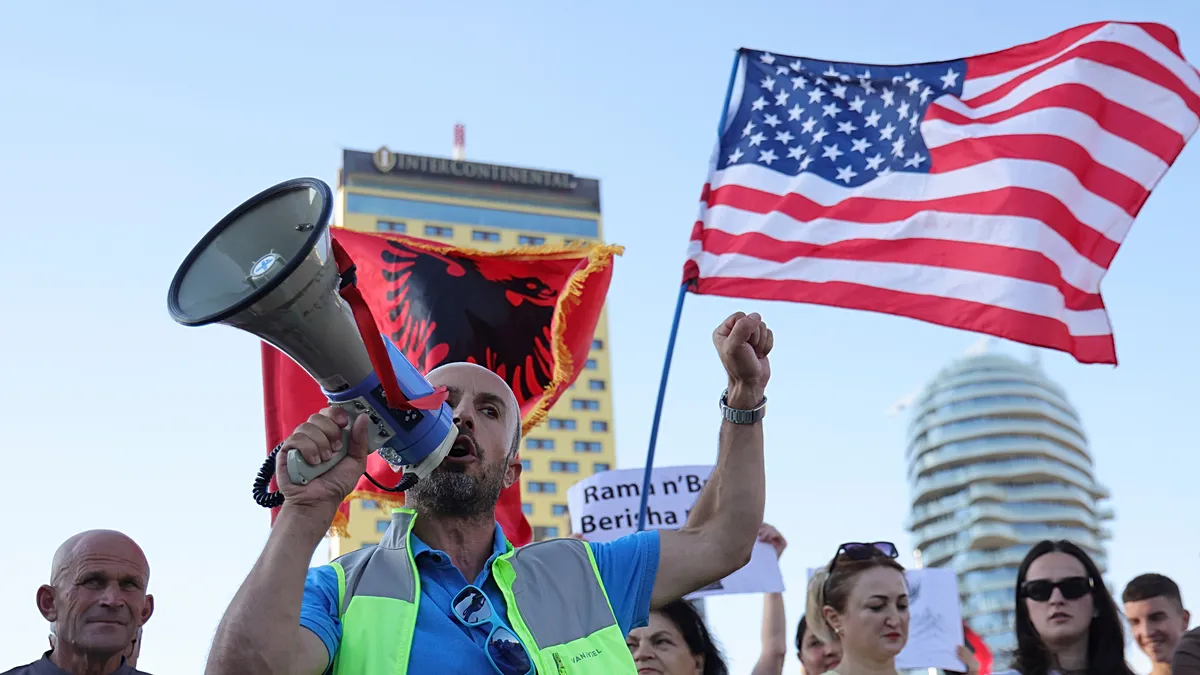
Everything you need to know about – Demands for action have surged in Albania as public discontent grows over a high-profile resort development spearheaded by Jared Kushner, the son-in-law of former U.S. President Donald Trump. Thousands of citizens gathered in Tirana on Thursday to voice their opposition to the $4 billion luxury resort, which is set to be constructed in a designated protected area along the country’s Adriatic coastline. The project, backed by Kushner’s investment firm Affinity Partners, has sparked a fierce debate over environmental preservation, economic benefits, and the role of political influence in shaping national priorities.
A Protected Ecosystem Under Threat
The proposed resort is located in the Vjosa-Narta Lagoon, a vital wetland area recognized for its ecological significance. This region, home to over 200 migratory bird species, including flamingos, seals, and nesting sea turtles, is considered a unique natural habitat by environmental experts. Wetlands International, a global organization dedicated to conserving wetlands, has highlighted the area’s irreplaceable value, stating that its destruction could have long-term consequences for biodiversity.
“The Vjosa–Narta Lagoon is a uniquely intact and very special Mediterranean wetland, sheltering over 200 bird species and more than 70 endangered ones,” said Chris Baker, the director of Wetlands International Europe. “Building luxury resorts inside this protected ecosystem—despite strong protest from local citizens and environmental groups—raises serious doubts about Albania’s readiness to join the EU.”
Baker’s remarks underscore the growing concern that the project might compromise Albania’s environmental standards, which are a key requirement for EU membership. The European Commission has echoed these worries, urging the country to address the issue promptly to avoid jeopardizing its accession bid. A spokesperson for the Commission, Guillaume Mercier, emphasized that the government must act swiftly to meet EU environmental criteria. “Albania should refrain from actions that could undermine the fulfillment of the closing benchmark,” Mercier stated, “and we expect the Albanian authorities to respond without delay.”
Government Defends the Project
Albanian Prime Minister Edi Rama has defended the initiative, asserting that the resort will bring transformative economic opportunities to the nation. He argued that the development could revitalize tourism in a country still recovering from its communist era, creating jobs and boosting infrastructure. However, critics have accused the government of prioritizing foreign investment over public and environmental interests, with some calling for Rama’s resignation as a result.
During a recent interview with CNN International, Rama addressed the protests, claiming that a segment of the population had been misled by external forces. “In this protest, there are well-meaning people, young activists genuinely concerned about the environment, but they’ve been manipulated extensively,” he said. “There’s no such thing as a Trump family island. The American president’s family isn’t taking over protected areas where flamingos will be destroyed.”
Political Allegations and Cross-Border Tensions
Rama’s comments have also drawn attention to the political dimension of the protests, suggesting that external actors are behind the campaign against the project. He accused Iran of orchestrating a “hybrid war” against Albania, stating that the country is already engaged in cyber conflicts with Tehran. “There is one malicious actor, Iran,” Rama said. “This is something we know for a fact. I never said, and I don’t say, that Iran invented it. I’m saying that Iran jumped in it. Right away.”
The Iranian Foreign Ministry swiftly dismissed Rama’s allegations, with spokesperson Esmaeil Baqaei countering on X. “It was YOU, sir, who started this,” Baqaei wrote. “So…you should ‘face the music’!” His response has fueled further speculation about the role of international politics in the dispute, though the government has yet to provide evidence supporting its claims.
Public Demonstrations and Symbolic Resistance
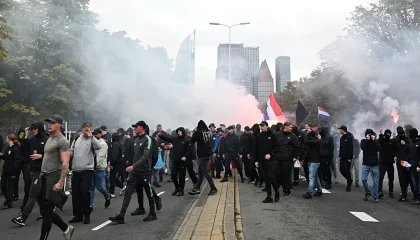
For nearly two weeks, protests have continued to escalate, with demonstrators using creative methods to highlight their concerns. Participants have held signs reading “Albania is not for sale” and chanted slogans to demand accountability from both the government and foreign investors. The use of inflatable flamingos, a symbol of the region’s wildlife, has become a striking feature of the demonstrations, drawing media attention and reinforcing the environmental stakes.
Local environmental groups have criticized the project for its potential to disrupt the lagoon’s delicate ecosystem. The Albanian Association for the Protection of the Environment warned that constructing a luxury resort on the uninhabited island of Sazan would pose “serious risks to biodiversity and critical habitats.” This has raised questions about the balance between economic growth and environmental sustainability, particularly as the project aims to capitalize on Albania’s natural landscapes.
Broader Implications for Albania’s EU Ambitions
As the protests gain momentum, they have also intensified scrutiny on Albania’s ability to meet EU standards. The European Commission has made it clear that environmental compliance is non-negotiable, with Chapter 27 of the accession process focusing on environmental protection as a core criterion. Failure to uphold these standards could delay Albania’s entry into the bloc, casting doubt on its commitment to governance and ecological responsibility.
Supporters of the project argue that the investment is essential for modernizing Albania’s economy and positioning it as a regional tourism hub. However, opponents stress that the proposed development could set a precedent for future projects that prioritize profit over preservation. The controversy has highlighted deepening divisions within Albanian society, with some citizens aligning with the government’s vision of progress while others remain steadfast in their defense of the environment.
What’s Next for the Project?
With public pressure mounting, the Albanian government faces a critical decision. It must weigh the economic potential of the resort against the environmental and political backlash it has triggered. The upcoming months will likely determine whether the project moves forward as planned or is revised to address local concerns. Meanwhile, the protests continue to serve as a symbol of the broader struggle between development and conservation in Albania.
As the situation evolves, the global attention on the country’s environmental policies and political choices remains high. The dispute over Kushner’s resort has become a microcosm of Albania’s larger aspirations and challenges, testing its ability to navigate international expectations while safeguarding its natural heritage. Whether the government can reconcile these competing interests will shape the country’s future in the eyes of both its citizens and the European Union.