Deadly Overnight Russian Attack in Ukraine as Industrial Facilities Struck Deep into Russia
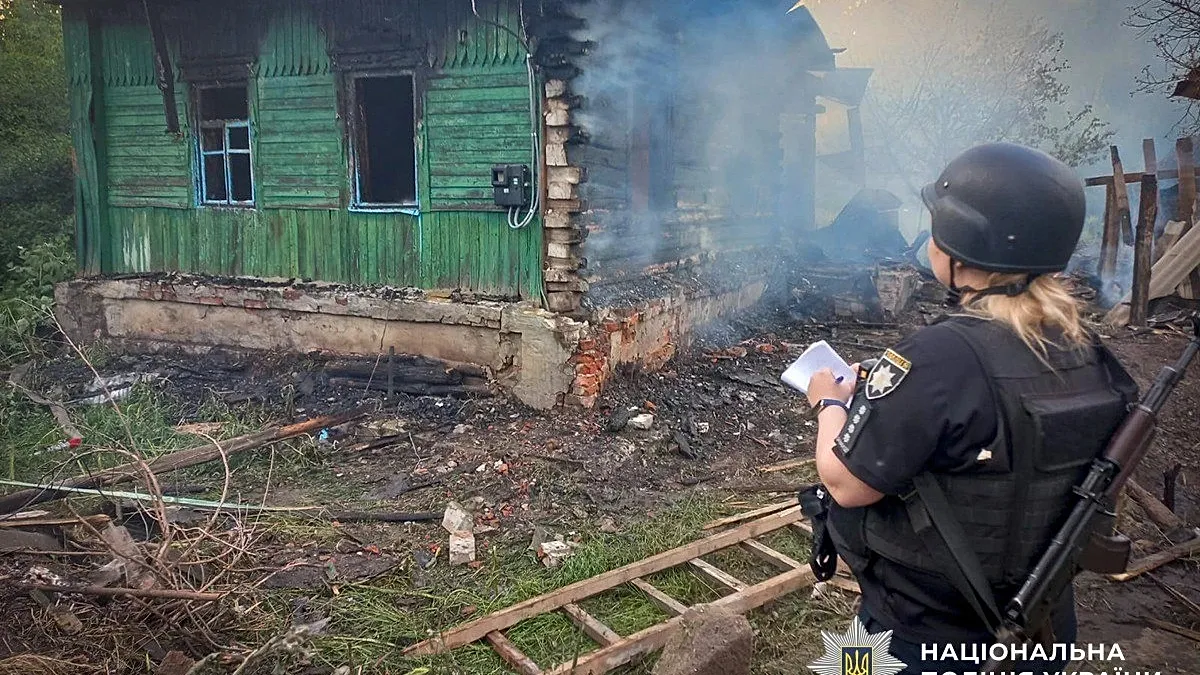
Deadly overnight Russian attack in Ukraine – On June 14, a series of Russian attacks overnight left two civilians dead and four others injured in the Sumy Oblast of Ukraine, according to police reports. The incidents occurred in the Bilopol community, where a 64-year-old woman succumbed to injuries caused by enemy drone strikes. Additionally, two men—one aged 51 and the other 66—were hospitalized following the blasts. The Seredino-Budsk community also faced damage, with a 57-year-old woman losing her life in the attack. The total number of casualties stems from shelling that targeted 17 communities across the region, according to local authorities.
Meanwhile, Ukrainian strikes hit multiple industrial sites in Russia, marking a significant escalation in the ongoing conflict. The Azot chemical plant, situated in the Russian city of Novomoskovsk within Tula Oblast, was set ablaze, as reported by the independent Telegram monitoring channel Exilenova Plus. This facility, located 200 kilometers south of Moscow, serves as Russia’s primary ammonia and nitrogen fertilizer producer, as noted on its official website. Separate reports indicate that an oil depot in Rybinsk, part of Yaroslavl Oblast, was also struck and ignited, though the extent of damage remains under assessment.
“During the repulsion of the aerial attack, fragments of downed Ukrainian drones fell onto the territory of one of the industrial enterprises in Novomoskovsk,” stated Dmitriy Milayev, the Tula Oblast Governor. His comments came after Russian authorities confirmed that Novomoskovsk had been targeted in an overnight strike, though they provided no further details about the specific damage to the Azot plant.
Rybinsk, which is 700 kilometers from the Ukrainian border, was impacted by the same wave of attacks. According to Astra, an independent Telegram news channel, a residential building in the Russian city of Oryal was damaged, and a railway infrastructure site was set on fire. These strikes underscore the shifting dynamics of the conflict, with both sides targeting each other’s critical installations.
Ukraine’s General Staff confirmed that the attacks were part of a broader pattern of strikes against Russian facilities. On June 11, the Afipsky Oil Refinery in the Krasnodar region was hit, and earlier on June 10, a military factory in Cheboksary, Chuvash Republic, was also targeted. This facility produces components for drones and missiles, highlighting the strategic nature of Ukraine’s assault. Volodymyr Zelensky, Ukraine’s President, reiterated that such operations are routine as part of the country’s efforts to weaken Russian supply lines and military capabilities.
The attacks in Sumy Oblast and the retaliatory strikes in Russia represent a new phase in the war, with both sides escalating their operations. The combination of drone strikes, guided aerial bombs, and artillery has created a volatile environment, forcing residents to take shelter and disrupting daily life. The Sumy region, which has been a focal point of recent battles, now faces the additional challenge of targeted strikes that have extended beyond its borders into Russian territory.
Analysis of the attack patterns reveals a deliberate strategy to strike key infrastructure. The Azot plant’s location in Tula Oblast places it within a critical supply chain for Russia’s energy and agricultural sectors. Its destruction could impact production capacities, particularly for ammonia, a vital component in fertilizers and industrial processes. The Rybinsk oil depot, meanwhile, adds to the pressure on Russia’s energy infrastructure, which has already faced multiple strikes in recent months.
Residents in the Sumy Oblast reported a sense of urgency as the attacks continued into the early hours of June 14. The combination of drone strikes and conventional weaponry has created a dual threat, with explosive fragments and shrapnel causing injuries even in areas far from the direct impact zones. Local authorities have been working to assess the damage and provide emergency aid to affected communities, though the full scale of the destruction remains unclear.
Experts suggest that the strikes in Russia are part of a coordinated effort to shift the balance of power. By targeting industrial facilities deep within Russian territory, Ukraine aims to disrupt the flow of resources and equipment to its front lines. The Azot plant, in particular, has been a key supplier for the Russian military, and its damage could have long-term consequences for both defense and civilian industries. The oil depot in Rybinsk, which is a major storage facility, further complicates the logistics of Russia’s energy network.
Despite the intensity of the attacks, Russian officials have remained largely silent on the specifics of the damage. While they acknowledged that Novomoskovsk was hit, they did not comment on the reported strikes at the Azot plant. This lack of immediate response may indicate a strategic decision to focus on damage control rather than publicizing the losses. The Tula Oblast Governor’s statement, however, provided a glimpse into the chaos of the night, highlighting the accidental damage caused by Ukrainian drones.
The broader conflict has seen a steady increase in attacks targeting each other’s territory. From the Ukrainian perspective, these strikes are part of a sustained effort to hit Russian logistical hubs and manufacturing centers. Conversely, the Russian response has focused on reclaiming lost ground and protecting critical infrastructure. The recent events in Sumy and Novomoskovsk exemplify this tit-for-tat strategy, with both sides seeking to gain an advantage through targeted strikes.
As the war continues to evolve, the impact of such attacks on civilians and infrastructure becomes more pronounced. The Sumy Oblast, already bearing the brunt of heavy shelling, now faces the added risk of strikes that extend beyond its borders. Meanwhile, the damage to Russian facilities serves as a reminder of the war’s reach, with conflicts no longer confined to Ukraine’s front lines. The international community will likely watch closely as these incidents unfold, assessing their implications for the ongoing war and potential for further escalation.
For now, the focus remains on the immediate aftermath of the attacks. In Ukraine, emergency services are working to recover bodies and treat the injured, while in Russia, officials are evaluating the damage to their industrial and energy sectors. The dual targeting of both Ukrainian and Russian locations highlights the war’s complexity, with each side striving to disrupt the other’s operations. As the conflict moves forward, the balance of power may continue to shift, driven by these strategic strikes and the resulting casualties.