
What we know about the death of Iranian supreme leader Khamenei
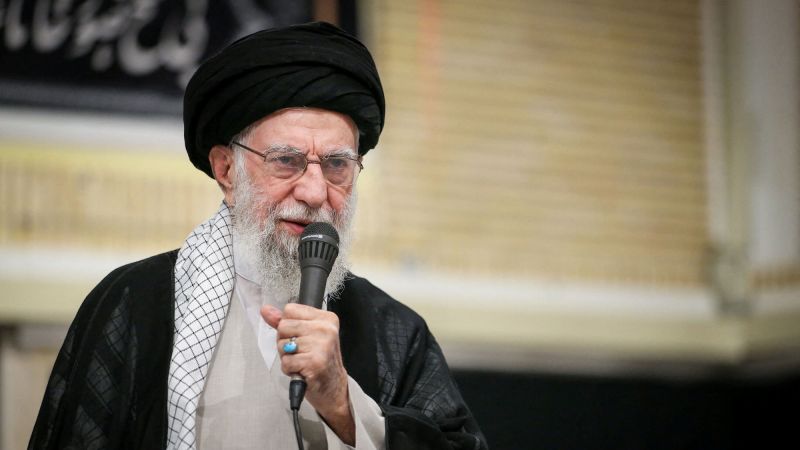
What We Know About the Death of Iranian Supreme Leader Khamenei
State-run Iranian media announced Sunday that Ayatollah Ali Khamenei, the nation’s hardline supreme leader, had perished in a coordinated US-Israeli attack on Saturday. The news ignited mixed reactions, with opponents of his governance in Iran celebrating, while loyalists to the regime expressed outrage. A TV anchor wept as he declared Khamenei’s “martyrdom” following the strike that reportedly struck his residence in Tehran during his routine activities.
“There are many signs” that Iran’s supreme leader is “no longer with us,” Netanyahu stated Saturday evening, without offering further specifics.
Satellite imagery from Airbus captured dark plumes of smoke emanating from Khamenei’s compound in the capital on Saturday, suggesting significant damage to multiple structures. Initially, Iran’s Foreign Ministry denied any casualties, but the report by US President Donald Trump and Israeli Prime Minister Benjamin Netanyahu swiftly shifted the narrative. Trump emphasized the joint operation’s goal of toppling the regime, urging Iranians to resist their government.
“Death to America” was chanted by crowds in Tehran as the news spread, though the fate of Khamenei’s successor remains uncertain.
According to intelligence sources, the strikes aimed to eliminate key figures, including Khamenei, President Masoud Pezeshkian, and Abdolrahim Mousavi, the head of the armed forces’ staff. Analysts warned that Khamenei’s passing might lead to a resurgence of hardline control by the Islamic Revolutionary Guard Corps, rather than immediate democratic transition.
Iran’s Weakness and the Path to Crisis
His death occurs amid Iran’s most vulnerable period since his 1989 rise to power. Decades of Western sanctions, compounded by strikes in June 2025, have weakened the country’s economic and political standing. Protests sparked by economic grievances in January 2026 quickly evolved into a broader challenge to the regime, sweeping across 31 provinces within weeks. Officials responded with extreme force, branding the demonstrations as part of a “conspiracy” against the Islamic Republic.
Leadership Transition and Regional Implications
Ali Larijani, Khamenei’s longtime advisor, outlined plans for a temporary leadership setup, involving the president and the head of the judiciary. He assured regional allies that Iran would not pursue war but would continue targeting American military installations. “The Americans cannot bully the Iranian nation,” Larijani asserted. Meanwhile, Reza Pahlavi, grandson of Iran’s last monarch, dismissed any attempt to appoint a new supreme leader as inherently flawed.
With no clear successor in sight, the nation faces an unprecedented leadership vacuum. Even those who sought to remove Khamenei now struggle to predict the future course of power, highlighting the uncertainty surrounding Iran’s next chapter.