
Huge venomous ‘flying’ spiders are beginning to swarm the US
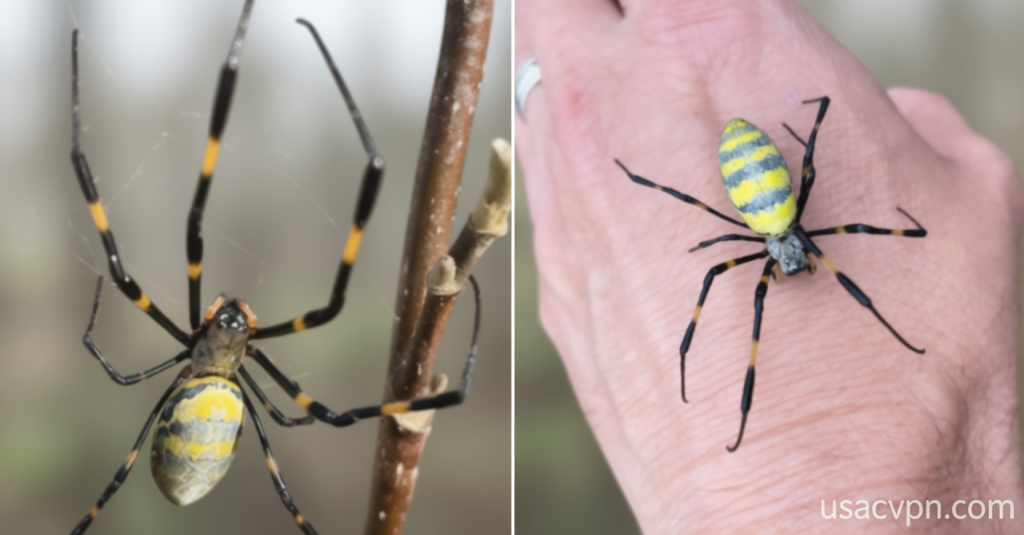
Huge venomous ‘flying’ spiders are beginning to swarm the US
Arachnophobes take note: A growing population of massive, bright yellow flying spiders is becoming increasingly noticeable throughout the United States.
The Joro spider, a non-native species hailing from East Asia, is expanding its numbers in anticipation of a new active season. This time, its geographic spread appears poised to extend beyond previous limits.
Native to regions such as Japan, China, South Korea, and Taiwan, the Joro spider isn’t originally from the U.S. Experts speculate that it first made its way to America over a decade ago, likely transported through Asian shipping containers arriving in Georgia.
Since their arrival, the Joro spider has gradually colonized new territories. Each year, fresh reports emerge from previously uncharted locations. Now, a new wave is approaching as the next generation prepares to emerge.
Eggs usually hatch between May and June, followed by a brief period of maturation before the spiders reach their full size. By late summer, they are mature and ready to reproduce, with peak activity spanning from August to October.
Females are striking, featuring a bright yellow body adorned with blue stripes and red accents. Males, in contrast, are less conspicuous, smaller in size, and more brown-toned. The females, with their vibrant presence, are the ones that tend to capture attention, as one might expect.
These spiders construct expansive golden webs that materialize almost overnight. As their populations grow, these webs are becoming a regular sight. Their design is highly effective at ensnaring prey, making their presence unavoidable for those who stumble upon them.
In some instances, ‘Trichonephila clavata’ can grow to the size of a human palm. Interestingly, females have also been observed consuming males, a behavior that challenges traditional gender norms.
The Joro spider has been documented in numerous U.S. locations, including Georgia, Tennessee, North and South Carolina, Virginia, Maryland, and Pennsylvania. They’ve even been reported as far west as California, with their spread likely to continue.
One key factor driving their rapid expansion is their unique ability to travel. Joro spiders employ a technique known as ballooning, where they release silk strands that catch the wind, allowing them to glide several feet through the air.
This method enables them to be carried by vehicles or wind currents without intent, facilitating quick movement between regions. It’s this unintentional mobility that has contributed to their swift spread across the country.
“There have been no fatalities have been recorded, and there are no significant medical reports of bites,” said José R. Ramírez-Garofalo, an ecologist on Staten Island.
“Given their reluctance to bite and existing research, they pose little risk to people or pets,” he added.
Despite their proliferation, scientists remain cautious, monitoring their impact and potential for further expansion.