
Where does Europe stand on the US-Israel war with Iran?
Where does Europe stand on the US-Israel war with Iran?
As the conflict between the US and Iran escalates, Europe faces increasing pressure to take a stance. While the bloc has urged adherence to international law and criticized Iran’s government, a cohesive strategy remains elusive. Despite this, the recent drone strike on Cyprus—a territory of the EU—has raised questions about whether European nations can continue to remain neutral.
Divided Approaches Amid Rising Threats
The European Union, alongside key European powers and the United Kingdom, has consistently called for compliance with international legal frameworks and condemned Iran’s regime. However, their positions have shown fragmentation, with some states appearing hesitant or uncoordinated in addressing the growing crisis in the Middle East. This uncertainty has sparked debate about Europe’s effectiveness in shaping the conflict’s trajectory.
“There will be no unified position on the war,” said Cornelius Adebahr, an Associate Fellow at the German Council of Foreign Relations. “On the other hand, none of the member states will enter the war directly; they will not play an active role alongside the US or Israel.”
Following Iran’s attack on a British Royal Air Force base in Cyprus, several European nations, including Italy, Greece, the Netherlands, and France, swiftly deployed naval assets to the region. This response underscores the perceived threat to EU interests, though the exact role of Europe in the conflict remains unclear.
US Pressures and European Compromises
White House Press Secretary Karoline Leavitt emphasized that US President Donald Trump anticipates “all of our European allies” to endorse the military campaign against Iran. She framed the goal as eliminating a “rogue Iranian regime” that endangers both American and European security. This stance followed Trump’s frustration with delays in securing European backing.
“This is not Winston Churchill that we’re dealing with,” Trump remarked, referencing British Prime Minister Keir Starmer’s skepticism about air strikes as a means of regime change.
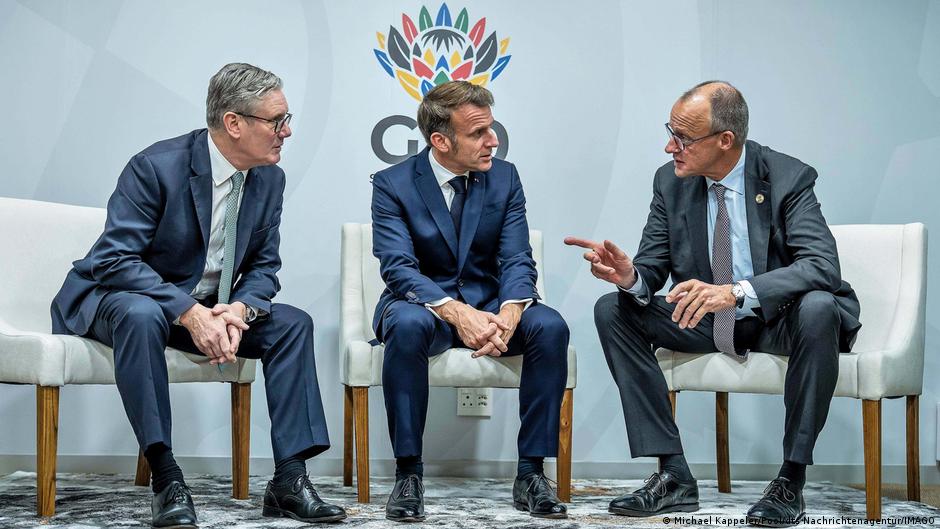
Starmer has questioned the legal basis for the war, yet allowed the US to utilize two British bases. Meanwhile, German Chancellor Friedrich Merz earned praise from Trump for aligning with the goal of removing Iran’s leadership, enabling the use of Ramstein Air Base. France, too, granted temporary access to its bases for American planes, but only after assurances that the aircraft would not target Iran and would support regional allies.
Italy, meanwhile, has not yet received direct requests from the US to use its facilities. However, Rome has indicated willingness to supply air defense systems to Gulf states. Antonio Giustozzi of the Royal United Services Institute noted that allowing limited base access represents “a compromise under US pressure to do something.”
NATO’s Warnings and Regional Implications
NATO Secretary-General Mark Rutte highlighted Iran’s threat to Europe, labeling the country an “exporter of chaos” responsible for “terrorist plots and assassination attempts, including against people living on European soil.” This warning reflects growing concerns about the potential for the conflict to spill beyond the Middle East and into European territories.
Experts suggest European nations are adopting a defensive posture, focusing on protecting their interests rather than committing to full-scale military involvement. While they support actions to safeguard allies, disagreements persist over the extent of backing for US-led operations against Iran. As tensions rise, Europe’s role in the conflict continues to evolve, balancing diplomacy with the need for security measures.