The Odyssey: From Classroom and Stage to Christopher Nolan’s Epic
A Cultural Journey Through Homer’s Masterpiece
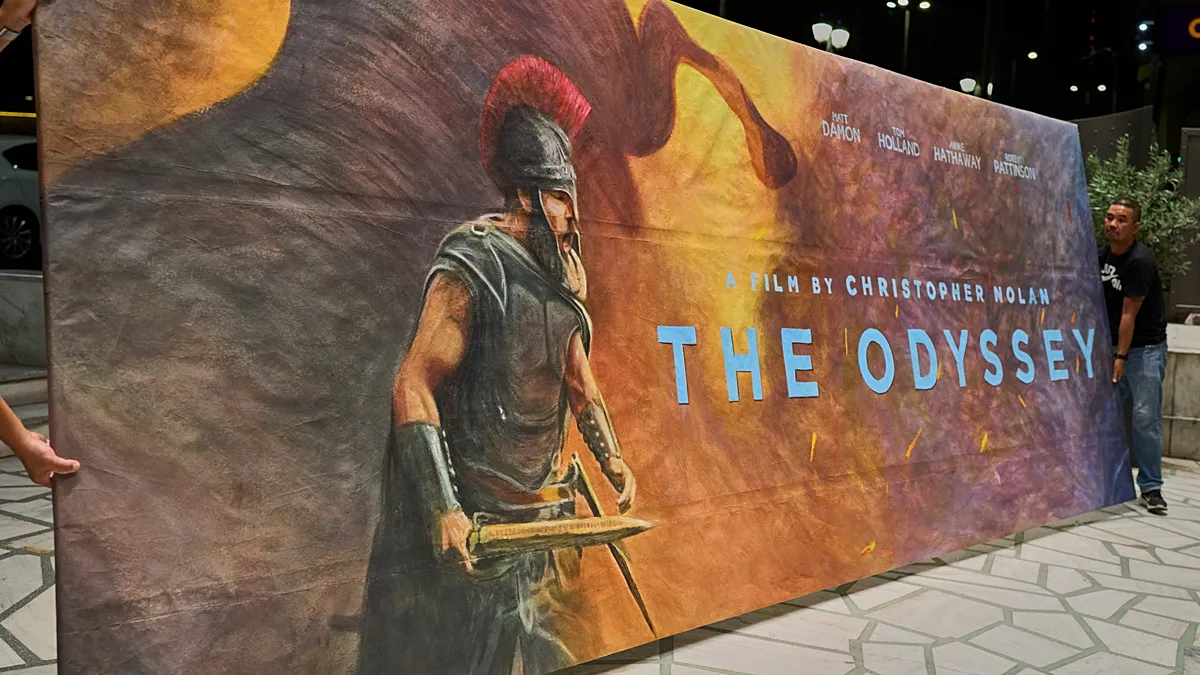
The Odyssey – Christopher Nolan’s long-awaited adaptation of Homer’s legendary epic has finally arrived in cinemas worldwide. The film, which brings the ancient tale to contemporary audiences, represents a monumental achievement in modern filmmaking. For educators like Philippos Mantzaris, this cinematic release holds special significance beyond mere entertainment. As a dedicated teacher, Mantzaris incorporates the adventures of the Ithacan king into his daily lessons, helping students discover the enduring beauty of Ancient Greek literature.
“It is a wonderful piece of literature that children can identify with, perhaps even see Odysseus within themselves, and also see their own homeland,” explained Mantzaris. The teacher emphasized how the narrative connects young learners to their cultural heritage. “The Odyssey is a story that unfolded here in Greece. As a child, when I was in my village studying the Odyssey, every time I read about Nausicaa washing clothes at the spring, I pictured my mother taking me there as a child and us going to wash clothes in exactly the same way.”
Classroom Reflections and Student Perspectives
Mantzaris encourages his students to engage critically with the text. Pupils examine how Odysseus demonstrates intelligence alongside physical prowess, and they debate whether the hero’s actions against the suitors constitute justice. This analytical approach helps children understand that the epic offers timeless lessons about perseverance and the power of intellect over brute force.
“It is a story that teaches us many things and tells us not to give up and to use our minds instead of violence. I think we should continue to teach it,” stated pupil Maria Zeibekaki, reflecting the educational value that extends far beyond the classroom walls.
Theatrical Encounters with the Ancient World
Outside traditional education settings, many young Greeks encounter Homer’s work through live performance. Actor Manos Pintzis portrays Odysseus in a theatrical production designed specifically for children and teenagers. Pintzis believes that theater serves an important function in helping younger generations connect with the Homeric universe in meaningful ways.
Performances attract families and school groups from both Athens and regional areas throughout Greece. “You don’t say to a child, ‘Just read the story because you have to.’ Because they will resist when something is imposed on them. But when the child sees all this unfold before their eyes, that becomes a valuable step towards learning: they learn because they want to,” Pintzis observed. This experiential approach transforms passive reading into active engagement.
Family Traditions and Cinematic Achievement
Nikos Varelas recently attended the theatrical performance alongside his four-year-old son. “We’ve started now that he is four. Since he was two and a half or three, we’ve been reading both the Iliad and the Odyssey in versions suitable for children. It is our duty as parents, as Greeks,” Varelas shared, highlighting how families pass down cultural knowledge across generations.
Euronews Culture’s assessment of Nolan’s film noted that while certain purists might object to anachronistic dialogue choices—including a couple of modern expletives—the production ultimately succeeds through its technical brilliance. The review praised cinematographer Hoyte van Hoytema, who has collaborated with Nolan four times, and composer Ludwig Göransson, whose powerful musical score enhances the viewing experience. The critics acknowledged that such excellence was anticipated from Nolan’s meticulous approach, yet remained impressed by the final result.
Nevertheless, the review identified one element that could have been strengthened. “Still, something is missing. Not the filmmaking flair, nor the ambition; rather a moment to breathe and emote during what sometimes feels like a dutiful α to β to γ trip to Hades and back.” This observation suggests that while the film achieves remarkable technical heights, it occasionally prioritizes narrative progression over emotional resonance—a minor consideration in what remains a truly spectacular cinematic endeavor.