Kremlin-affiliated artist leverages AI deepfakes, ignites debate
The Artist’s Background
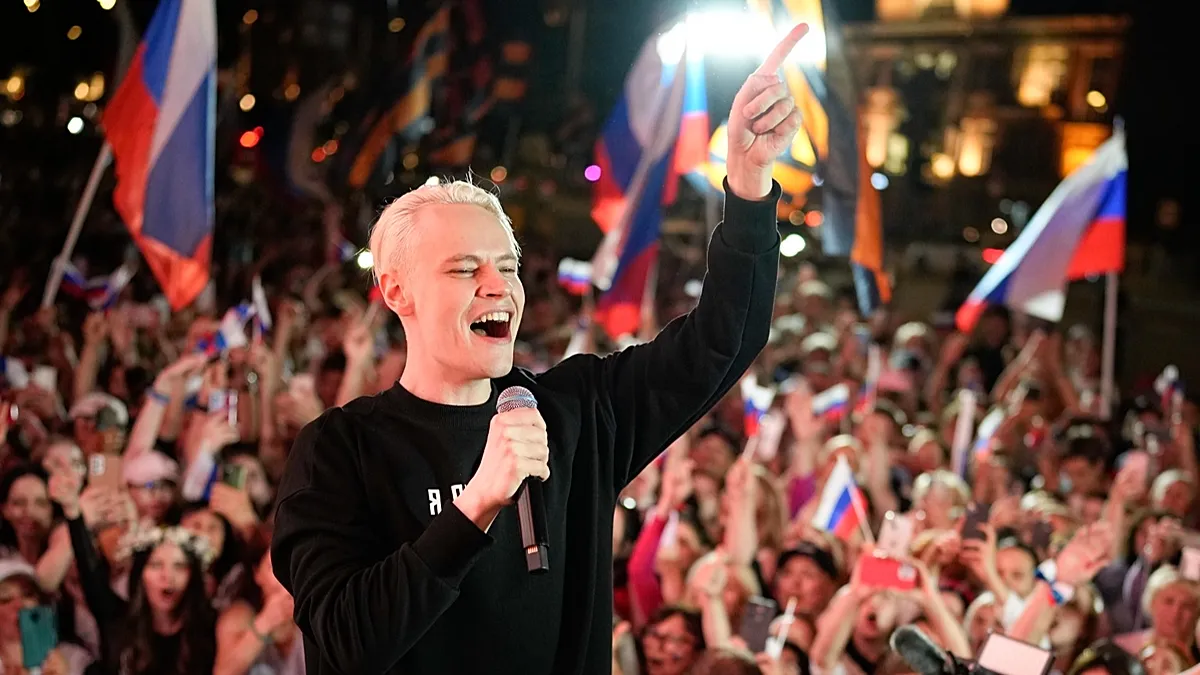
Kremlin backed artist uses AI deepfakes – Yaroslav Dronov, a 34-year-old Russian singer known by his stage name Shaman, has become a focal point of controversy through his recent use of artificial intelligence technology. Before gaining attention for his AI-driven projects, Dronov was a participant in popular Russian music competitions such as *The X Factor* and *The Voice*. His career has been closely aligned with the Kremlin’s narrative, as he openly advocates for Russia’s actions in Ukraine and frequently performs at government-organized events. In 2025, he took part in *Intervision 2025*, an alternative to Eurovision orchestrated by President Vladimir Putin to promote traditional values. His performances in North Korea, including a notable appearance in Pyongyang that same year, further underscore his commitment to Russian geopolitical initiatives.
The Controversial Music Video
Dronov’s latest project, a music video titled *“Mother Russia”* (*Rossiya – Mama*), has drawn significant public attention. The video features AI-generated deepfakes of Russian public figures who have fled the country following the invasion of Ukraine. While not every individual labeled as a “foreign agent” by the Russian government appears in the clip, several high-profile names are included: comedian Maxim Galkin, rappers Noize MC and Morgenshtern, journalist Yury Dud, businessmen Oleg Tinkov and Mikhail Khodorkovsky, and political scientist Ekaterina Schulmann. The piece opens with these figures’ portraits pinned to a board, before their AI-altered images harmonize in a synchronized choir, singing the song.
A disclaimer in the video explicitly notes the use of AI-generated content, but the artistic choice has sparked mixed responses. Dronov shared his reasoning on VK, Russia’s largest social media platform, stating,
“While they [‘foreign agents’] perform for money against Russia, in my music video they sing for Russia free of charge.”
This statement frames the deepfakes as a form of patriotic contribution, rather than a political attack.
Public Reactions and Omissions
The individuals depicted in the video have expressed a range of opinions. Some have criticized the use of their old photographs, feeling it undermines their personal autonomy. Others, however, view the exposure as beneficial for their public profiles. Blogger Ilya Varlamov, for instance, remarked that Dronov is “one of theirs” and highlighted his support for the LGBTQIA+ community, suggesting the deepfakes could serve as a strategic move to reintroduce these figures to Russian audiences. Varlamov also questioned the effectiveness of the AI project in maintaining the public’s trust.
One notable absence from the video is Monetochka, whose real name is Yelizaveta Gyrdymova. Designated a “foreign agent” by Russia’s Ministry of Justice, she resides in Lithuania and faces legal consequences for allegedly evading her duties. Dronov’s decision to exclude her from the deepfake choir has prompted disappointment, with Gyrdymova herself expressing regret over the omission. This exclusion has raised questions about the artist’s criteria for selecting participants and whether it reflects a broader political bias.
Legal Implications and Criticisms
The controversy has extended into legal discussions, with experts debating the validity of claims against Dronov for unauthorized image use. Under Russian law, individuals can pursue lawsuits if they believe their likenesses have been exploited without consent. However, critics argue that the artist’s strong ties to the government may complicate legal action. Some commentators have suggested that the deepfakes are a calculated effort to align with Kremlin interests, making it less likely that the subjects would win a case.
Dronov has defended his actions, asserting,
“I do not have the right to conceal this betrayal,”
and stating that he will “be lit up with the truth like a Kremlin star.” His rhetoric positions the deepfakes as a necessary act of defiance against critics who accuse him of hypocrisy. The artist’s bold approach has reignited debates about the ethical boundaries of AI in art, particularly in politically charged contexts.
Broader Context of AI Regulation
As nations grapple with AI’s role in shaping media and art, Dronov’s work stands in contrast to efforts aimed at curbing its misuse. While countries like the EU, Canada, and Australia have imposed sanctions on artists linked to Russia’s invasion of Ukraine, Dronov’s use of AI deepfakes highlights a different strategy: blending technology with propaganda to amplify messages. His music video, released in 2026, serves as both a creative statement and a political tool, leveraging the medium to reach audiences beyond traditional media.
The project also reflects the growing accessibility of AI tools, which enable individuals to manipulate images and voices with relative ease. Critics argue that this democratization of deepfake technology poses challenges for accountability, as it allows creators to bypass conventional verification processes. Dronov’s video, with its clear artistic intent and inclusion of disclaimers, represents a middle ground between innovation and transparency, yet it continues to divide opinions.
International Reactions and Media Coverage
Reactions to Dronov’s work have been amplified by international media and public discourse. The video’s provocative nature has led to discussions about its potential impact on public perception, particularly in regions that view Russia’s actions in Ukraine with skepticism. While some see the deepfakes as a powerful way to highlight the cultural influence of Russian figures abroad, others question whether the artist’s alignment with the Kremlin compromises the authenticity of his art.
Legal experts remain divided on the matter. Some emphasize that Russian law provides a framework for addressing AI-related disputes, while others stress the difficulty of proving intent in cases where the technology is used creatively. The absence of an official lawsuit as of publication suggests that the legal battle may not be immediate, but the debate over AI’s role in political messaging is far from over.
Legacy of the Deepfake Project
Dronov’s *Mother Russia* video has become a symbol of the evolving intersection between art, technology, and politics. By incorporating AI deepfakes, he challenges traditional notions of authorship and authenticity, prompting audiences to consider the implications of digital manipulation. The project’s success in capturing attention underscores the potential of AI to reshape narratives, even as it raises concerns about consent and control.
As the controversy surrounding the video continues, it serves as a case study in the use of AI for ideological purposes. Whether viewed as a bold artistic statement or a calculated political maneuver, Dronov’s work exemplifies how technology can be wielded to reinforce national identity in an era of digital transformation. The debate over his methods is likely to persist, shaping how AI is perceived in the years to come.