Germany to Take 40% Stake in Leopard Tank Maker KNDS with France
Germany to take 40 stake in Leopard – On Monday, the German government revealed its plan to acquire a 40% stake in KNDS, a defense contractor that produces the Leopard tank, in a strategic collaboration with France. This move underscores Europe’s efforts to strengthen its arms manufacturing capabilities and reduce reliance on external suppliers, particularly amid ongoing security challenges from Russia’s invasion of Ukraine and shifting alliances in global defense. The partnership between Germany and France is seen as a critical step in ensuring the continent’s military independence and consolidating its industrial base.
KNDS: A European Defense Powerhouse
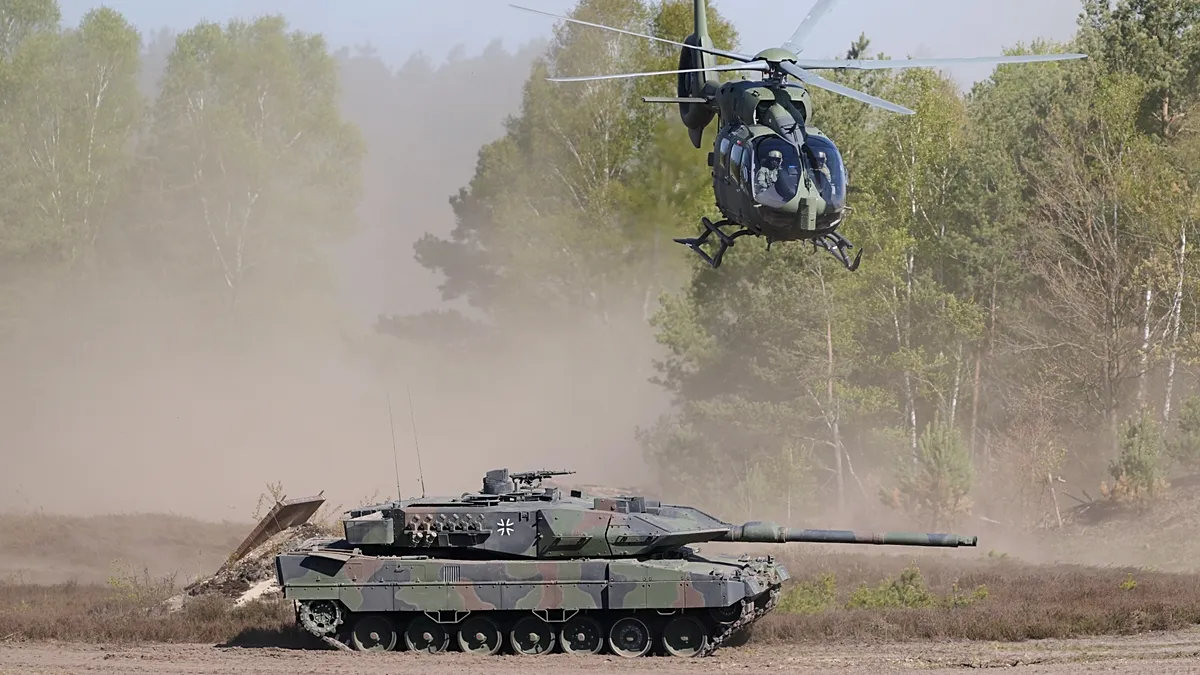
KNDS, a company established in 2015 through the merger of Krauss-Maffei Wegmann (Germany) and Nexter (France), has become a cornerstone of European military production. The combined entity now operates from Amsterdam, generating €4.4 billion in revenue last year and employing over 11,000 people. Its products, including the Leopard main battle tank, Puma infantry fighting vehicle, and Boxer and Dingo armored personnel carriers, are increasingly in demand as European armies replenish their equipment following years of underinvestment and donations to Ukraine’s defense.
The German government’s investment follows a decision made by French officials to maintain their 50% ownership stake, while the remaining 50% of the company was previously held by the Krauss-Maffei Wegmann family. This family’s planned exit from the firm has allowed Berlin to step in, ensuring a balanced partnership with Paris. The deal marks a deeper state involvement in the company, which has been central to Europe’s rearmament initiatives in recent years.
Strategic Imperatives and European Independence
Germany framed the investment as a vital component of securing long-term influence over a business it deems essential to European security. The acquisition is intended to reinforce domestic industrial output, technological self-sufficiency, and the protection of key national interests. “This partnership will ensure lasting control over a sector critical to our continent’s defense,” said a spokesperson for the German government in a statement. The move also reflects a broader European strategy to diversify security partnerships, particularly as doubts grow about the reliability of the United States as a guarantor of defense.
The timing of the stake purchase aligns with Europe’s heightened focus on military preparedness. With Russia’s war in Ukraine continuing to strain supply chains and escalate regional tensions, governments are accelerating investments in defense capabilities. By co-owning KNDS, Germany and France aim to consolidate their influence over the company’s future, ensuring that its production aligns with shared strategic goals. The joint statement emphasized the importance of equal shareholdings, stating that both nations would maintain balanced governance structures to guide the company’s direction.
While specific details about the timeline for the investment were not disclosed, the agreement signals a shift toward long-term stability in KNDS’s ownership. According to sources cited by the Associated Press, the two governments plan to gradually reduce their stakes to around 30% within two to three years if the company undergoes a public listing. Despite this reduction, they will retain equal voting rights, ensuring that both nations have a say in critical decisions, regardless of the final shareholding percentages.
A Step Toward Consolidating European Defense
The collaboration between Germany and France is not just a financial arrangement but a symbolic effort to rebuild Europe’s strategic autonomy. By jointly controlling KNDS, the two countries aim to create a unified framework for defense production, which could serve as a model for other European defense firms. “This is a joint commitment to strengthening Europe’s defense industry and ensuring its resilience,” added officials in the statement. The partnership is expected to foster innovation, streamline operations, and enhance the company’s competitive edge in the global arms market.
KNDS’s role in Europe’s rearmament efforts has been pivotal, particularly with its Leopard tank serving as a flagship product for the continent. The German government highlighted the importance of this investment in safeguarding the expertise and jobs tied to the company’s operations. “By securing a stake in KNDS, we protect vital technologies and maintain a strong industrial presence,” the statement noted. This aligns with Germany’s broader goals to reduce dependency on foreign manufacturers and bolster its domestic defense sector.
France, as a NATO and EU ally, has been a key partner in this initiative. The two nations’ collaboration began in 2025 when Germany’s Defense Minister Boris Pistorius first proposed state involvement in KNDS. At the time, the goal was to shield strategic capabilities from potential disruptions and ensure the company’s continued contribution to European security. The recent acquisition formalizes this vision, creating a more structured and long-term partnership.
As Europe races to modernize its military infrastructure, the KNDS stake represents a strategic investment in both immediate and future security needs. The company’s equipment is not only critical for current defense operations but also for the continent’s long-term military readiness. With rising demand for armored vehicles and tanks, KNDS’s expanded stakeholder base is expected to drive growth and innovation in the sector.
The decision to co-own KNDS also reflects a broader trend of European nations taking proactive steps to strengthen their defense industries. With global supply chains under pressure and geopolitical uncertainty persisting, the EU and NATO have prioritized self-reliance in arms production. This move by Germany and France is seen as a template for future collaborations, potentially paving the way for other defense companies to adopt similar models of joint ownership and state-backed development.
Analysts suggest that the increased state involvement in KNDS could lead to more centralized control over critical defense technologies, reducing the risk of fragmentation in European military capabilities. The two governments emphasized that this partnership would not only support the company’s growth but also ensure alignment with the continent’s strategic priorities. “By working together, we secure a unified approach to defense manufacturing that benefits all of Europe,” a French official stated in the joint declaration.
Looking ahead, the potential flotation of KNDS in the near future could mark a significant milestone for the company. The joint strategy aims to transition the firm into a publicly traded entity, allowing it to access broader capital markets while maintaining the strategic oversight of both Germany and France. This approach balances the need for financial flexibility with the assurance of national control, positioning KNDS as a key player in Europe’s defense sector.
In summary, the German and French governments’ acquisition of stakes in KNDS represents a bold step toward enhancing European defense capabilities. By combining their resources and expertise, the two nations aim to create a more resilient and independent defense industry, capable of meeting the challenges of the 21st century. This partnership not only solidifies their roles as leading defense powers but also sets a precedent for collaborative strategies across the continent.