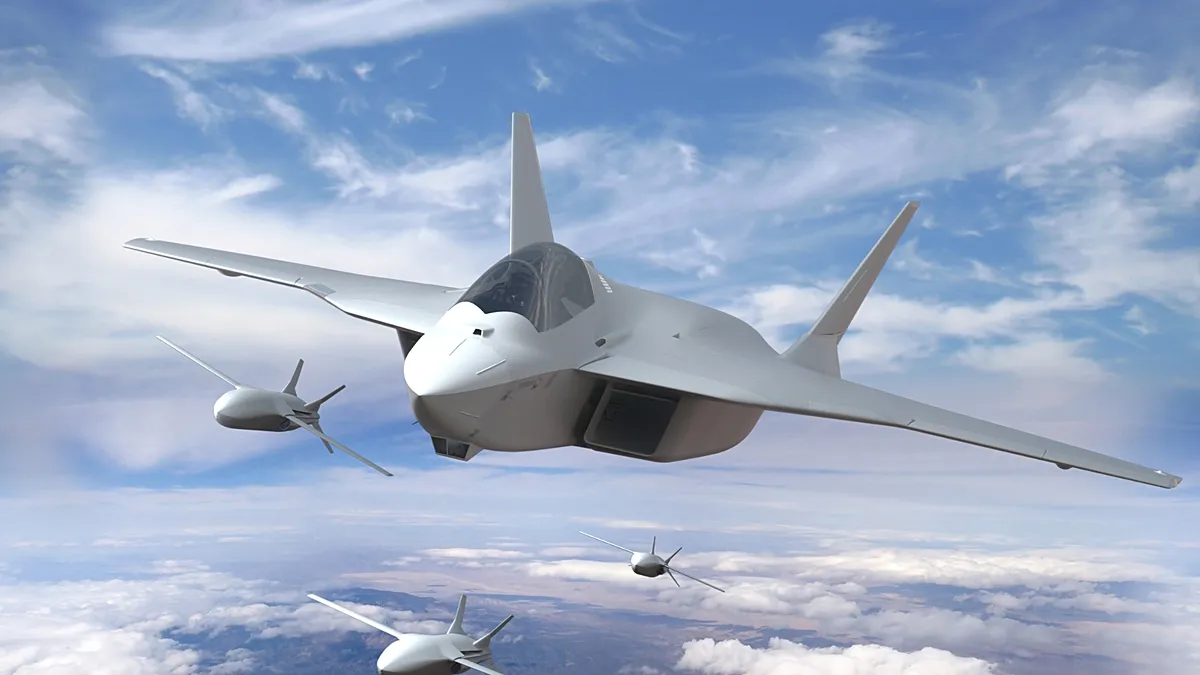
Airbus-led group proposes fighter jet alternative after French-German project fails
Airbus led group proposes fighter jet alternative – Following the termination of a prominent Franco-German defense collaboration, Airbus has spearheaded a new alliance to design a cutting-edge fighter jet, according to a statement shared with the AFP news agency on Tuesday. The decision to pivot stems from months of tensions between France and Germany, culminating in the end of their joint warplane initiative. This shift marks a significant development in European aerospace strategy as the two nations reassess their roles in a sector critical to regional security.
The new consortium, which includes German-based defense electronics firm Hensoldt, Airbus Defence and Space, Autoflug, Diehl Defence, Rohde & Schwarz, Liebherr, MBDA, and MTU Aero Engines, has outlined an alternative plan to replace the failed project. A company representative confirmed that the proposal has been forwarded to German Defence Minister Boris Pistorius, with additional copies sent to Chancellor Friedrich Merz’s office. The move comes as a response to the growing rift between the industrial partners, which has complicated the progress of the Future Combat Air System (FCAS) programme.
“We’ve also been in discussions on this for months with various stakeholders,” Pistorius said, highlighting the ongoing efforts to determine the direction of Germany’s defense priorities. The spokesperson added, “The companies have jointly drawn up a position paper on the FCAS and the associated Next Generation Weapon System (NGWS).”
While the FCAS project was initially hailed as a cornerstone of European defense integration, its collapse has raised concerns about the continent’s ability to maintain unified military projects. The programme aimed to develop a next-generation combat air system capable of countering evolving threats, particularly from a more assertive Russia and the United States, which has strained its geopolitical ties. However, internal disagreements have stalled its progress, with France’s Dassault Aviation and Germany’s Airbus Defence and Space at the center of the dispute.
The conflict primarily revolved around Dassault’s push to take greater control over the aircraft’s development, a stance that German partners resisted. Airbus, as the primary industrial collaborator for Germany, had been advocating for a more balanced approach, ensuring all participating nations had equal influence. This struggle over leadership has reportedly delayed critical decision-making and created uncertainty about the future of the FCAS, which was designed to provide Europe with a shared platform for advanced air combat capabilities.
German partners have emphasized their need for a fighter jet tailored to specific operational requirements, such as the ability to carry nuclear weapons or operate from aircraft carriers. Chancellor Merz has argued that Germany’s strategic needs differ from France’s, particularly in terms of mobility and versatility. This divergence in priorities has underscored the challenges of aligning national interests within a transnational defense programme, despite the shared goal of reducing reliance on foreign suppliers.
“Pistorius said Berlin was assessing ‘which direction we take.’ The collapse of the original Franco-German project had ‘pained’ him, as he acknowledged the importance of the partnership for European defense cohesion. ‘Ultimately, you have to draw a line between head and heart,’ he added, reflecting the emotional and strategic trade-offs involved.”
The new proposal, which was unveiled just a day after the project’s termination, seeks to address these concerns by redefining the FCAS framework. Hensoldt’s involvement signals a renewed focus on integrating advanced sensor and communication technologies, a key component of modern fighter jet capabilities. The consortium aims to streamline decision-making while retaining the core objectives of the original programme, which included developing a high-tech, multi-role aircraft to modernize Europe’s air forces.
Details of the alternative plan are expected to be revealed during an announcement at the Berlin ILA Air Show on Thursday. This event will provide a platform for the industry partners to present their vision and seek broader support from the European defense community. Analysts suggest the proposal may prioritize agility and cost-efficiency, catering to Germany’s immediate needs while maintaining the FCAS’s long-term goals.
The German defence ministry has confirmed the existence of the new proposal, which has sparked renewed optimism among some stakeholders. While the failure of the Franco-German project has been a setback, it has also created an opportunity for other European nations to contribute to the development of a unified combat air system. Countries such as Spain, which has been a key partner in the FCAS, may now play a more prominent role in shaping the next phase of the initiative.
Industry experts note that the alternative plan could lead to a more decentralized approach, allowing each participating nation to customize its contributions. This strategy may help mitigate past conflicts by ensuring clearer responsibilities and avoiding overlapping mandates. However, it also raises questions about the long-term cohesion of the FCAS programme, which was meant to serve as a flagship project for European defense innovation.
As the German government reviews the proposal, the focus will remain on balancing national interests with collective goals. The decision could have far-reaching implications for Europe’s military capabilities, potentially reshaping the landscape of joint defense ventures. With the upcoming announcement, the consortium hopes to demonstrate that a new path is not only feasible but essential for the continent’s security future.
The collapse of the original Franco-German project highlights the complexities of cross-border collaboration in defense manufacturing. While the partnership was ambitious, it struggled to reconcile differing strategic visions and technical priorities. The new consortium’s alternative plan may offer a more flexible solution, but its success will depend on the willingness of all involved parties to align their objectives. For now, the focus is on preparing for the Berlin ILA Air Show, where the details of this potential shift will be unveiled to a global audience.