Multiple Attackers Kill 12 in Johannesburg Shooting, Police Report
Multiple attackers kill 12 people in late – A violent late-night assault in Johannesburg left 12 people dead, according to South African police. The attack occurred shortly before midnight on Tuesday, targeting an informal settlement located near a cluster of illegal mining operations. The incident marks the latest in a series of mass shootings that have plagued the country, often linked to escalating tensions between rival gangs and disputes over informal enterprises.
Attack Details and Timeline
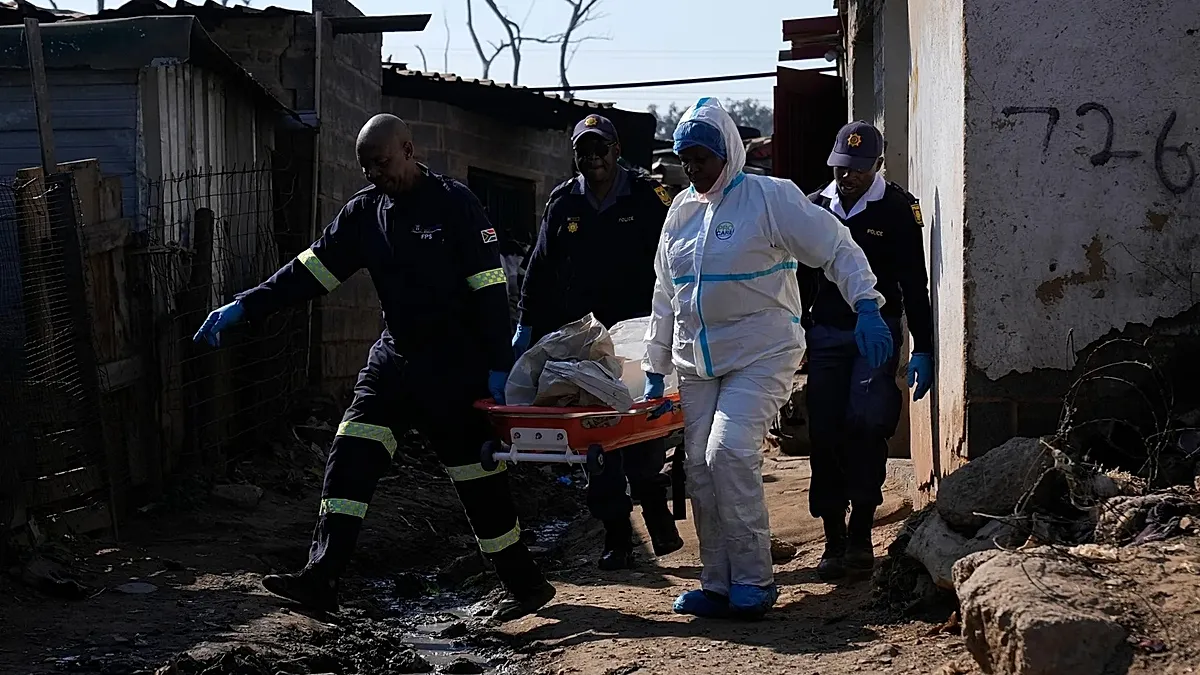
Authorities revealed that approximately 10 assailants arrived at the settlement in a vehicle, disembarking before launching a coordinated attack. “The suspects reportedly entered the informal settlement through both main entrances and systematically moved through the area, firing at residents and community members at multiple locations before fleeing in the same vehicle,” a police spokesperson stated. The settlement, known as Jumpers, is characterized by its makeshift structures, including metal and wooden huts, which house a population reliant on informal economic activities.
Casualty Breakdown
Colonel Dimakatso Nevhuhulwi, a provincial police official, confirmed that 12 individuals lost their lives during the attack. “Preliminary findings indicate that eight adult males and three adult females were killed on-site,” she added. One additional victim succumbed to injuries in a hospital later that day. The exact identities of the deceased remain under investigation, though a local resident informed eNCA that some of the victims were from neighboring Lesotho, highlighting the cross-border nature of the settlement’s population.
Context of Gun Violence in South Africa
South Africa continues to grapple with widespread gun violence, fueled by a combination of legal and illegal firearms. The country’s high prevalence of weapons, particularly assault rifles like the AK-47, has made shootings a common occurrence, often rooted in gang conflicts and competition for control of informal businesses. This incident underscores the persistent threat of violence in areas where criminal activity overlaps with daily life, creating a volatile environment for residents.
Location and Suspected Motive
The attack took place in a region about six kilometers east of Johannesburg’s central business district, close to abandoned gold mines. Provincial Commissioner Lieutenant General Tommy Mthombeni noted that the location’s proximity to illegal mining sites raised suspicions about the motive. “This area is adjacent to the illegal mining zone, and we believe the attack may have been tied to disputes over mineral resources,” he said. “The incident appears to be both ruthless and meticulously planned,” he added, emphasizing the targeted nature of the assault.
Police Operations and Previous Incidents
Mthombeni highlighted that police had recently conducted a sweep of the area, confiscating firearms and arresting three individuals. Despite these efforts, the attackers managed to strike with precision, suggesting ongoing challenges in curbing organized criminal networks. In a similar incident in December, nine people were killed in Bekkersdal township when gunmen opened fire at a bar, attributing the violence to rivalry between illegal mining groups. This pattern of attacks highlights the deepening link between mineral extraction and community conflict.
Community Impact and Witness Accounts
A local ward councillor who visited the scene described the attack as a “well-executed ambush” with clear strategic intent. “The assailants first targeted a shack situated over an informal mine shaft before moving toward nearby taverns,” the councillor said, as reported by the Sunday World. This sequence of violence suggests that the attackers may have aimed to disrupt both economic and social hubs within the settlement. Authorities have since begun collecting equipment believed to be connected to illegal mining activities, indicating a potential investigation into the broader criminal network.
Illegal Mining and Its Social Roots
Illegal mining, a widespread phenomenon in Johannesburg and its surrounding areas, has drawn communities from across southern Africa. The practice, often led by groups called zama zamas—meaning “those who try” in the Zulu language—has become entrenched in informal settlements, driven by economic desperation. These miners operate in abandoned shafts, extracting gold with minimal resources and often engaging in violent confrontations to secure access to mineral-rich sites. The presence of illegal mining has not only created economic opportunities but also embedded criminal elements into the local fabric, contributing to cycles of violence and unrest.
Government Response and Ongoing Challenges
In March, soldiers were deployed to Johannesburg’s most violent neighborhoods to bolster police efforts in combating crime. This move was part of a broader strategy to address the country’s mounting security crisis, which President Cyril Ramaphosa has called one of the greatest threats to national stability. Despite these interventions, the recent shooting in Jumpers settlement demonstrates that challenges persist. The police spokesperson noted that the motive of the latest attack remains unclear, though its connection to illegal mining activities is under scrutiny. “No arrests have been made yet, but the evidence points toward a conflict over resources,” she said.
Broader Implications for Public Safety
The attack in Jumpers settlement raises concerns about the intersection of economic survival and criminal violence in South Africa. As informal mining continues to thrive in the region, it fuels not only competition among miners but also broader societal tensions. The police spokesperson emphasized the need for sustained efforts to address the root causes of such violence, including poverty and unemployment, which drive individuals to take risks for economic gain. Meanwhile, the government faces pressure to enhance security measures and dismantle the networks perpetuating these attacks.
Future Outlook and Community Resilience
While the immediate aftermath of the shooting focuses on investigating the perpetrators and securing the area, the community’s resilience remains a key factor in its recovery. Local leaders and residents are calling for increased police presence and support to combat the growing influence of organized crime. “The attack was brutal, but our people are determined to rebuild,” said a community representative, reflecting the ongoing struggle between violence and survival in Johannesburg’s informal settlements. As investigations continue, the incident serves as a stark reminder of the complex challenges facing South Africa’s urban centers.
With its deep roots in the country’s socio-economic landscape, illegal mining remains a catalyst for conflict, shaping the lives of those who live and work in its shadow. The Jumpers settlement’s tragedy underscores the need for coordinated action between law enforcement and local communities to address the escalating violence and ensure safety in these vulnerable areas.