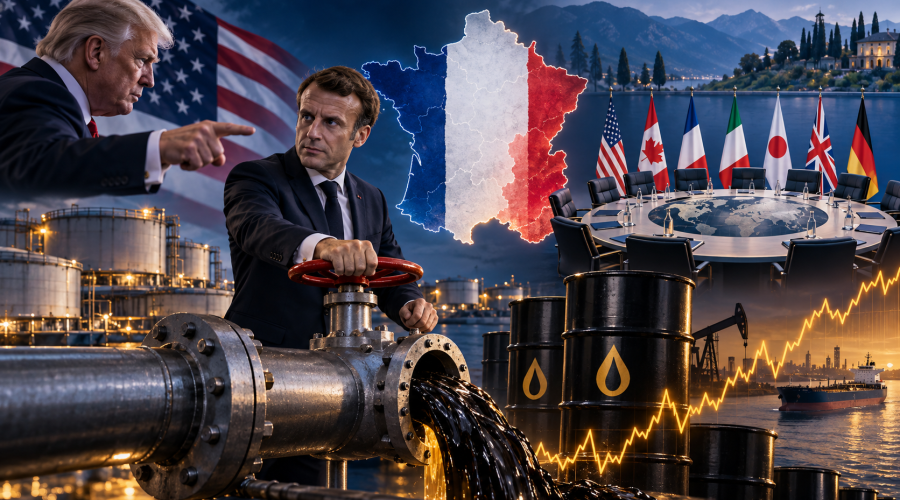
France considers oil-stock release as diesel costs surge before G7 talks
Usagevpn.com – France is exploring whether to draw on emergency fuel reserves as diesel prices climb sharply and concerns grow over the availability of oil products across Europe. The issue moved quickly onto the political agenda on Friday, shortly after President Emmanuel Macron spoke with US President Donald Trump about global energy conditions.
Three EU diplomats said Paris raised the possibility during a Friday morning meeting involving the European Commission and EU member states. France has not submitted a formal plan, but it suggested a release of 50 million barrels of diesel and a further 50 million barrels of crude oil through the International Energy Agency’s emergency-stock system.
The US demanded 100 million barrels, but the EU is not accepting, and France proposed the 50 + 50 formula.
The proposed balance is important for households, transport firms and businesses watching fuel costs. Diesel held in emergency inventories can be distributed to the market more rapidly, while crude oil must first be processed at refineries before becoming usable fuel. A combined release could therefore offer faster support for diesel supplies while also adding crude to the broader market.
Washington presses allies over strategic reserves
The United States has urged European governments to make more of their strategic reserves available as Washington seeks to limit rising fuel prices ahead of November’s midterm elections. The Trump administration is also weighing a ban on diesel exports, a move that would have potentially serious consequences for countries dependent on internationally traded refined products.
The US energy secretary had previously floated an alternative: a European release of 120 million barrels from stockpiles over three months, rather than a far-reaching restriction on US diesel exports. Macron has called the prospect of such an export ban “catastrophic.” France is among the countries expected to face particularly strong effects if US diesel supplies were restricted.
For European consumers, the debate is not simply about the price of crude oil. Diesel is widely used in road freight, agriculture, construction and other parts of the economy. A shortage or sustained price increase can feed into delivery charges and operating costs, even when the immediate impact at filling stations varies from country to country.
Energy-market pressure intensifies
Brent crude moved above $100 a barrel on 1 October as tensions and supply disruptions added to market anxiety. The increase followed the deployment of a third US aircraft carrier to the Middle East and China’s suspension of fuel exports. Together, those developments heightened worries about both crude supplies and the availability of refined fuels.
Emergency reserves are designed to give governments a tool during severe disruptions, but deploying them requires careful coordination. Releasing stocks may help cushion a short-term shortage or ease immediate market pressure, yet participating countries must also consider the need to retain reserves for later emergencies.
The European Commission said after Friday’s meeting that the EU was ready to take collective action. It also stressed that the International Energy Agency would organise any eventual release. Countries involved in the IEA emergency system would need to coordinate their decisions before oil and diesel stocks could be brought to market.
France leads Friday’s G7 discussion
Leaders of the G7 are scheduled to hold a videoconference on Friday afternoon, with France serving as the group’s current president. The call is expected to focus on steps that could reduce pressure on prices and strengthen confidence in supply chains for both crude oil and refined products.
The aim is to coordinate measures to help ease price pressures and guarantee supplies of crude oil and refined products — both among G7 nations and globally.
The discussion places France in a central role at a moment when energy policy, foreign policy and domestic cost-of-living concerns are closely connected. A coordinated release could signal that major industrialised economies are prepared to use existing emergency mechanisms. At the same time, the talks underline the differences still separating Washington and European capitals over the scale and composition of any action.
The French 50-million-barrel diesel and 50-million-barrel crude proposal attempts to address both sides of the challenge. The diesel portion is aimed at a refined-product market facing immediate stress, while the crude component would add supply that refineries could turn into fuel over time. Whether that formula gains wider backing will depend on discussions among EU governments, the IEA and G7 leaders.
For now, no formal French proposal has been adopted and no coordinated stock release has been announced. The outcome of Friday’s consultations will help determine whether emergency inventories become part of the response to the latest rise in oil and diesel prices.
Related Reading
Frequently Asked Questions
What is France weighs emergency oil release as US?
France weighs emergency oil release as US is the main topic of this guide. The article explains the context, practical details, and next steps readers should understand.
Why does France weighs emergency oil release as US matter?
France weighs emergency oil release as US matters because readers are looking for a useful answer, not just a short summary. Good content should match search intent and help them decide what to do next.