State elections put Germany’s political mood in sharp focus
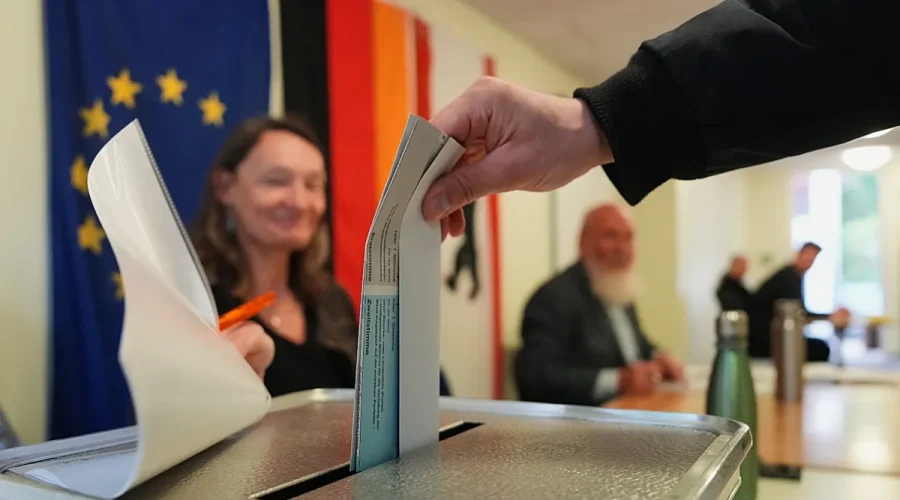
Usagevpn.com – Voters in Berlin and Mecklenburg–Western Pomerania are casting ballots on Sunday in two closely watched state elections that may deepen the political pressure on Chancellor Friedrich Merz. The contests arrive at a difficult moment for the CDU leader, whose public standing has continued to weaken since he became chancellor in May 2025.
While the elections concern regional parliaments and governments, their significance extends well beyond the two states. Strong results for parties on either end of the political spectrum would be viewed as a warning for Merz and his ruling Christian Democratic Union, particularly as the CDU faces tight races in both locations.
Berlin contest centres on housing and younger voters
In the German capital, the CDU is competing closely with Die Linke. The left-wing party has built substantial backing among younger voters and has placed the housing crisis at the heart of its campaign.
Housing costs and access to affordable homes have become a major concern in Berlin, where voters are weighing which parties offer the most convincing response. Die Linke has pledged action on the issue, helping it challenge the CDU in a city-state where the latest polling puts it narrowly ahead.
The contest is therefore more than a conventional battle between established rivals. It has become a test of whether voters who are frustrated with living costs and housing pressures will turn to Die Linke, potentially dealing a setback to the chancellor’s party in one of Germany’s most visible political arenas.
Moritz Lembke-Oezer, 43, spoke outside a polling station south of Berlin about his concern that the vote could assist the AfD. At the same time, he said he wanted the CDU to suffer a defeat and planned to support Die Linke because of its promises on housing.
“Maybe then Friedrich Merz will be gone,” he said.
AfD seeks another advance in the northeast
In Mecklenburg–Western Pomerania, the campaign has taken on a different shape. The leading contest is between the Social Democratic Party and the hard-right, anti-immigration Alternative for Germany.
The AfD enters the vote encouraged by its electoral success in Saxony-Anhalt earlier this month and is seeking to translate that momentum into further gains. Polling before election day places the party ahead of the SPD in Mecklenburg–Western Pomerania, creating the prospect of another difficult result for Germany’s established governing parties.
Its path is not without obstacles. The AfD is facing Manuela Schwesig, the SPD politician who has been minister-president of the state since 2017. Her long tenure gives the SPD an experienced regional figurehead in a contest where local leadership may matter heavily to voters.
The CDU also faces an especially uncomfortable challenge in the northeastern state. Polls have placed it near the 5% threshold needed to retain representation in the state parliament. Falling below that line would remove the party from the legislature, underlining the scale of the risk for Merz’s political movement.
Peter Sommer, a pensioner voting in Schwerin, the state capital, expressed support for an AfD victory while arguing that electoral success would force the party to demonstrate what it could achieve in office.
“I’d be in favour of the AfD winning, because then they’ll have to prove themselves: either something will happen, or it’ll be the last time they get any votes.”
Results may add to pressure on Merz
The elections offer a snapshot of a fragmented political landscape in which dissatisfaction with mainstream parties is creating opportunities for forces to their left and right. In Berlin, a strong Die Linke showing would highlight the appeal of campaigning focused on the housing crisis. In Mecklenburg–Western Pomerania, further AfD gains would reinforce the party’s recent momentum after Saxony-Anhalt.
For Merz, the central question is whether his CDU can avoid losses that would be interpreted as a broader rejection of his leadership. The party’s vulnerability is particularly evident in Berlin, where it is running behind Die Linke in the latest polling, and in Mecklenburg–Western Pomerania, where even clearing the parliamentary threshold remains uncertain.
State elections do not directly determine who governs Germany at the federal level, but they can reshape the national debate. They influence party confidence, strengthen or weaken regional leadership, and offer voters an immediate way to register their views on the direction of national politics.
As ballots are counted, attention will focus not only on which party finishes first in each state, but also on whether the CDU can protect its standing and whether the AfD and Die Linke convert voter frustration into substantial electoral advances. The outcome will provide an important measure of the political challenges facing Merz less than a year and a half after he entered the chancellery.
Related Reading
Frequently Asked Questions
What is Germans head to the polls in state?
Germans head to the polls in state is the main topic of this guide. The article explains the context, practical details, and next steps readers should understand.
Why does Germans head to the polls in state matter?
Germans head to the polls in state matters because readers are looking for a useful answer, not just a short summary. Good content should match search intent and help them decide what to do next.