Newsletter: Carney’s EU Message Is About Political Choices
Usagevpn.com – This Newsletter examines why Mark Carney’s appearance before the European Parliament mattered beyond the label attached to closer Canada-EU ties. Whether the arrangement is called associate membership, a special partnership or something else is secondary. The real question is whether Europe and Canada are prepared to make political choices that protect their independence.
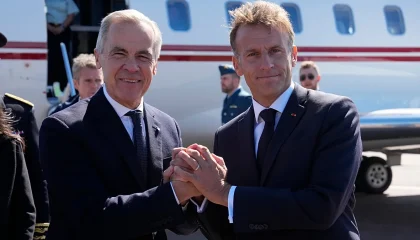
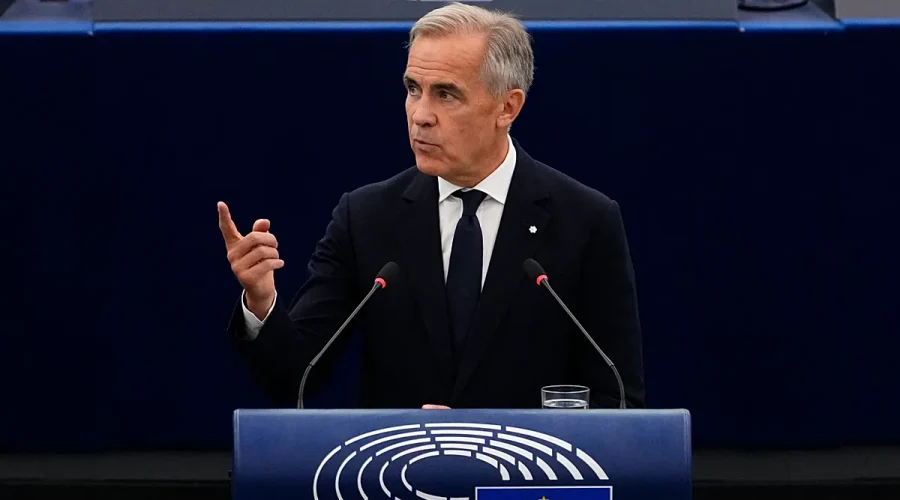
Speaking after a week shaped by the European Union’s annual State of the Union debates, the Canadian prime minister presented Canada and Europe as democratic partners facing a more difficult international environment. His argument was that sovereignty cannot rest on outdated assumptions about security, trade or political stability.
Carney opened with Goethe and a lesson from Faust: freedom is not something societies can inherit and preserve without effort. It must be defended continuously. The quotation gave his speech a wider purpose, linking the challenge of democratic self-determination to the choices now facing European lawmakers.
“Only those who strive for freedom every day are deserving of it.”
Different threats, one strategic challenge
Europe is under pressure from several directions, but those pressures should not be treated as identical. Russia remains the immediate military threat on the EU’s eastern flank. China’s industrial and commercial strength raises serious concerns for European manufacturers. At the same time, Donald Trump’s return to the centre of global politics has made the United States seem less predictable to allies that have long depended on Washington for security.
Russia, China and the United States have distinct roles and capabilities. NATO continues to depend heavily on American resources and taxpayers, while China’s impact on European industry cannot simply be explained through the priorities of a US administration. Still, the combined effect is unmistakable: the assumptions that shaped Europe’s post-Cold War relationship with North America are no longer secure.
In this Newsletter, Carney’s image of a forest enduring a storm captures his wider case for cooperation. A single tree may be exposed, but a network of partners can withstand harsher conditions. Canada and the European Union have strong commercial, educational and cultural ties, as well as shared democratic traditions. Turning those ties into deeper cooperation may be difficult, but the strategic logic is clear.
Why Carney’s argument resonates in Europe
Carney has gained political momentum in Canada by placing national sovereignty at the centre of his response to US pressure. His refusal to accept a subordinate role in uneven trade discussions has found support at home, where Canada’s identity has long been shaped partly by the wish to remain distinct from its much larger neighbour.
That helps explain the interest in his message across Europe. He is not only proposing a diplomatic initiative; he is offering a political argument that many European voters want their own leaders to make more confidently. At Davos earlier this year, Carney argued that middle powers should work together in a world where force is becoming more influential.
The broader issue is whether countries with comparable interests can turn shared concern into durable action. Xi Jinping’s 2023 remark to Vladimir Putin that the world was experiencing changes unseen in a century reflected the scale of the geopolitical shift. For Europe and Canada, the test is whether they can retain meaningful control over their alliances, economies and future direction.
European Independence Requires Investment
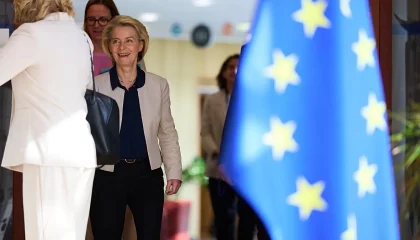
Carney’s intervention also highlights a gap in the European Commission’s language on independence. Ursula von der Leyen has accumulated significant authority as Commission president, but strategic autonomy cannot be achieved through declarations alone. It requires political consent, common investment and a credible plan to finance Europe’s ambitions.
Mario Draghi has estimated that a more independent Europe would require €800 billion in investment each year. That figure makes the debate over joint borrowing and European financing hard to avoid. Defence, technology, energy and industrial policy all demand resources, and the EU must decide how it will fund the capacity it says it wants to build.
Newsletter FAQ
What does EU associate membership mean for Canada?
The precise form of any closer relationship would need to be negotiated. Carney’s central point is that the political substance matters more than the name: Canada and the EU would need practical arrangements that strengthen cooperation while respecting their separate institutions and sovereignty.
Why is European strategic autonomy important?
Strategic autonomy refers to Europe’s ability to make and support major decisions in areas such as defence, technology, energy and industry. It does not necessarily mean acting alone, but it does require the capacity to avoid dependence on partners whose priorities may change.
What is the main message of this Newsletter?
Europe and Canada share an interest in closer cooperation, but political ambition must be matched by investment and durable commitments. The debate over associate membership is therefore less about branding than about whether both sides are ready to act.
Related Reading
Frequently Asked Questions
What is Newsletter?
Newsletter is the main topic of this guide. The article explains the context, practical details, and next steps readers should understand.
Why does Newsletter matter?
Newsletter matters because readers are looking for a useful answer, not just a short summary. Good content should match search intent and help them decide what to do next.