Police Deploy Water Cannon as Far-Right Rally Turns Violent in The Hague
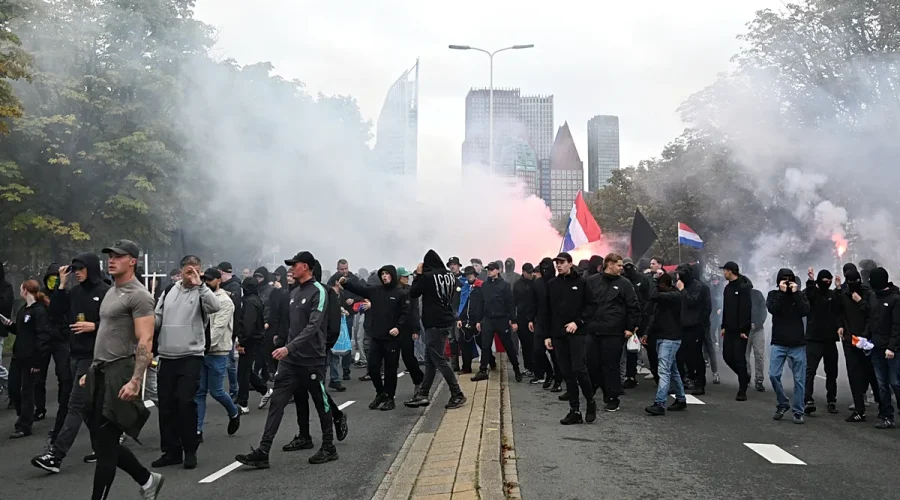
Usagevpn.com – Riot police in The Hague moved to break up a far-right demonstration on Saturday after disorder erupted among a crowd of roughly 500 people protesting Dutch immigration and asylum policy.
The gathering, held at the Malieveld park in the city centre under the banner “We Are The People,” was intended to include a march through the Dutch city. Authorities prevented that procession from going ahead, however, and later ordered participants to leave as confrontations with police intensified.
Officers used water cannon, baton charges and specially trained police dogs during the operation. Mounted police were also deployed, making several arrests as they worked to clear the area.
Fireworks, projectiles and hate speech
The violence involved protesters throwing fireworks and other objects at police. Demonstrators also shouted antisemitic slogans and made Nazi salutes, turning an event focused on opposition to immigration policy into a serious public-order incident.
The Malieveld, a large central park often used for public gatherings and demonstrations, became the focal point of the unrest. What began as a political protest was overtaken by clashes that required a substantial police response.
One attendee, 31-year-old mechanic Thijs Jansen, voiced the fears motivating some people at the rally.
“We’re losing our country. We’re literally losing our country to mass migration,”
The comment reflected the anti-immigration message promoted at the event, but the conduct of some participants drew attention away from the protest’s stated political demands. The use of antisemitic chants and Nazi gestures, alongside attacks on officers, underscored the severity of the disturbance.
Minister calls for a firm response
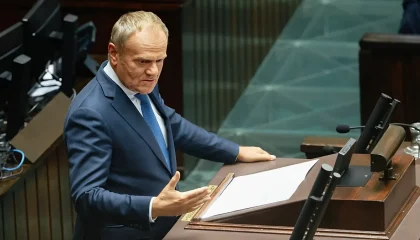
Justice Minister David van Weel condemned the events in a message posted on X. He described the scenes as “disgusting” and said violence directed at law enforcement, as well as hate speech, should meet an extremely firm response.
“Thanks to all the police officers who are once again standing up for our democratic rule of law,”
Van Weel’s message placed the police intervention in a wider context: the protection of public safety and the right to demonstrate without allowing violence or extremist conduct to take control of an event.
Public protest is a visible part of political life in the Netherlands, particularly in The Hague, which is home to the country’s government institutions. But the right to assemble does not remove the authority of local officials to restrict a march or disperse a crowd when safety risks arise. In this case, authorities first barred the planned route through the city and then ordered the group to leave after the situation deteriorated at the Malieveld.
Unrest follows earlier violence in the city
Saturday’s clashes came a year after another right-wing protest in The Hague descended into violence. During that earlier unrest, rioters set fire to a police vehicle and targeted the headquarters of the centrist D66 party.
D66 is currently led by Prime Minister Rob Jetten. The reference to the party’s offices highlights how political tensions can extend beyond a protest site when demonstrations become violent.
The latest incident again put police officers in the position of managing a crowd in which political expression was mixed with attacks, intimidation and extremist symbolism. Water cannon and mounted units are tools used to create distance between officers and a volatile crowd, while specialist dogs and baton charges can be deployed when police seek to push people back or restore control in a confined area.
Several arrests were made, though no further details about those detained were provided. The immediate priority for police was dispersing the gathering and preventing the disorder from spreading through central The Hague.
A demonstration overshadowed by confrontation
The rally’s original purpose was to oppose government approaches to immigration and asylum. Yet the attempted march never took place, and the day became defined instead by the confrontation between demonstrators and police.
The episode illustrates the sharp divide between lawful protest and actions that threaten others or obstruct public order. Opposition to government policy can be expressed through demonstration, campaigning and political debate. Throwing projectiles at officers, using hate speech and displaying Nazi salutes moves far beyond that boundary.
For residents and visitors in The Hague, the disruption was a reminder that the city’s public spaces can quickly become pressure points during politically charged demonstrations. The Malieveld’s central location makes it a prominent place for gatherings, but it also means disorder there can demand a rapid and highly visible security response.
Saturday’s events leave renewed questions about how authorities can protect peaceful assembly while responding decisively when a protest turns violent. Van Weel’s call for a tough approach signalled that the government views assaults on police and hate-fuelled conduct as matters requiring more than routine crowd management.
As the city recovers from the disturbance, the central facts remain clear: around 500 far-right protesters gathered in The Hague, a planned march was stopped, clashes broke out, and police used significant measures to disperse the crowd. The violence echoed unrest seen in the city a year earlier and reinforced concerns about extremist behaviour at politically charged demonstrations.
Related Reading
Frequently Asked Questions
What is Dutch police clash with hundreds of far?
Dutch police clash with hundreds of far is the main topic of this guide. The article explains the context, practical details, and next steps readers should understand.
Why does Dutch police clash with hundreds of far matter?
Dutch police clash with hundreds of far matters because readers are looking for a useful answer, not just a short summary. Good content should match search intent and help them decide what to do next.