Deadly strikes hit Ukrainian cities as nuclear safety concerns rise in Russia
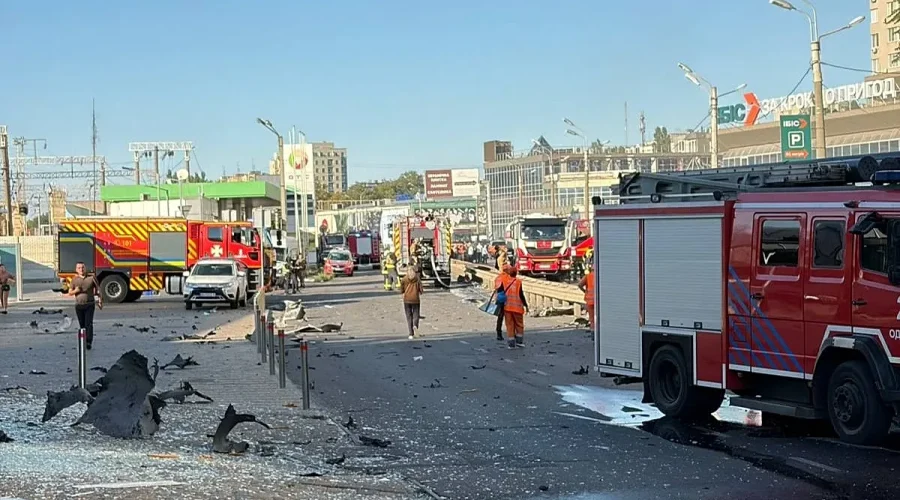
Usagevpn.com – Russian attacks struck multiple parts of Ukraine on Friday, killing two people in Balakliia in the Kharkiv region and placing Kyiv under a ballistic missile threat. The violence also extended to Odesa, where two closely timed strikes hit the city centre and left 10 people injured.
The latest attacks came as international concern continued over military activity near nuclear facilities. A drone hit a cooling tower at Russia’s Kursk Nuclear Power Plant early on Thursday, though the site remained in operation and no fire was recorded.
Deaths and damage in Balakliia
Balakliia’s military administration said the strike caused severe consequences for the community. Vitalii Karabanov, who heads the local administration, confirmed that initial information pointed to two fatalities.
“Sadly, the consequences of this attack are terrible. Early reports indicate that two people have been killed in the strike. I extend my deepest condolences to the families and loved ones of those killed.”
Balakliia is located in Ukraine’s Kharkiv region, an area that has repeatedly faced attacks during the war. Civilian communities across the region remain vulnerable to air raids, missile launches and other long-range strikes, making emergency alerts and shelter access an important part of daily life.
Kyiv placed under ballistic missile warning
Kyiv was also targeted later on Friday. Ukrainian media said ballistic missiles were launched toward the capital, prompting an urgent warning from Mayor Vitali Klitschko.
At 19:32 local time, or 18:32 CEST, Klitschko said air defence units were responding to the threat and urged residents to remain protected.
“Air defense forces are working in the capital. Kyiv is under ballistic fire. Stay in shelters!”
Ballistic missile alerts are particularly serious because such weapons can reach targets rapidly, leaving little time for people to move to safety. Air-defence systems are designed to intercept incoming threats, but authorities routinely advise residents not to leave shelters until an official all-clear is issued.
For people living in the capital, warnings of this kind can disrupt transport, work, schools and other ordinary routines. They also underline the continued importance of civil-defence measures during periods of heightened attacks.
Second Odesa strike hits during rescue work
Central Odesa was hit twice in quick succession. The second strike occurred while rescue operations were under way after the first attack, increasing the danger for emergency personnel and civilians helping those affected.
Ten people were injured in the attacks. The sequence illustrates the additional risks created when another strike follows an initial blast, as responders, medical workers and residents may already be gathered near damaged buildings or affected streets.
Odesa, a major Ukrainian Black Sea city, has frequently been exposed to attacks during the conflict. Damage in urban areas can affect housing, roads, essential services and emergency access even when the full scale of destruction is not immediately known.
Drone damage at Kursk nuclear facility
In Russia, attention focused on the Kursk Nuclear Power Plant after a drone struck one of its cooling towers early on Thursday. The International Atomic Energy Agency said on Friday that it was aware of the incident.
The agency said the power station was still operating at the time of its update. It added that there had been no fire and that plant operations continued. Even so, any attack in the vicinity of nuclear infrastructure carries wider safety implications because such facilities require stable operating conditions, protected equipment and reliable emergency arrangements.
Nuclear power plants are built with multiple safety systems, but military activity near them can introduce avoidable risks. Damage to supporting structures, disruption to power supplies or pressure on personnel can complicate the safe management of a facility, regardless of whether a reactor itself is directly affected.
Rafael Grossi, director general of the IAEA, warned against further military incidents close to nuclear sites. He again called for restraint aimed at preventing a potentially far more serious emergency.
“maximum military restraint to prevent the risk of a nuclear accident”
A widening security challenge
The attacks on Balakliia, Kyiv and Odesa show how the conflict continues to affect communities far from the immediate front line. For civilians, the immediate consequences include deaths, injuries, damaged homes and repeated warnings to seek shelter. For emergency services, each attack can create difficult and dangerous conditions in which to search for survivors and provide medical aid.
The Kursk incident adds another dimension to the broader security picture. Nuclear facilities require special protection because the consequences of a major accident could reach beyond the site itself. International appeals for caution near such infrastructure reflect concern not only for the countries involved, but also for regional safety.
As authorities assess the damage from the latest strikes, residents in affected Ukrainian cities face another period of uncertainty. Air-raid alerts, emergency responses and the need to protect critical infrastructure remain central concerns as attacks continue.
Related Reading
Frequently Asked Questions
What is As Russia strikes Kyiv and Kharkiv?
As Russia strikes Kyiv and Kharkiv is the main topic of this guide. The article explains the context, practical details, and next steps readers should understand.
Why does As Russia strikes Kyiv and Kharkiv matter?
As Russia strikes Kyiv and Kharkiv matters because readers are looking for a useful answer, not just a short summary. Good content should match search intent and help them decide what to do next.