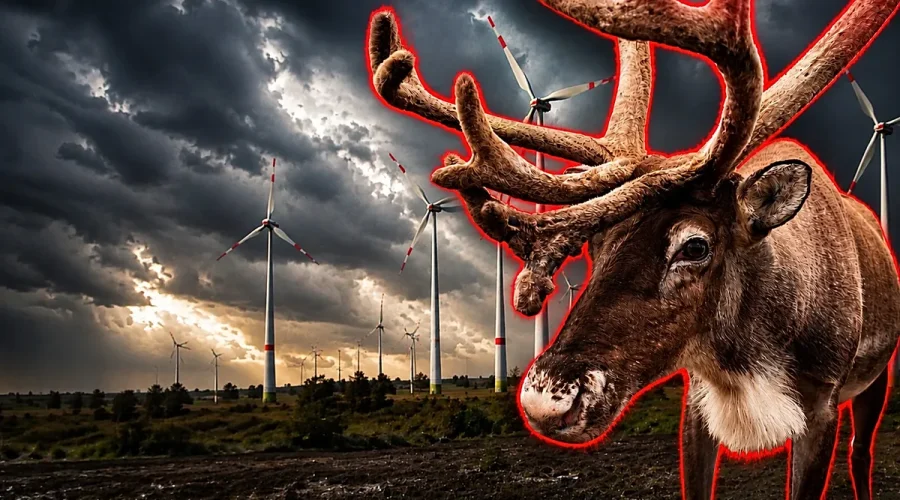
False claims about wind turbines and deformed reindeer distort a Sámi rights case
Usagevpn.com – A viral claim that wind turbines in Norway were ordered to be dismantled because they caused reindeer to be born deformed is false. The story misrepresents a major legal dispute involving the Sámi people, reindeer herding and one of Europe’s largest land-based wind power developments.
At the centre of the claim is the Fosen wind power area on Norway’s coast, where 151 turbines operated by Roan Vind remain in place. Social media posts viewed hundreds of thousands of times suggested that Norway’s Supreme Court had demanded their removal after finding that the turbines were harming reindeer offspring. No such ruling was made, and there are no scientific reports linking wind turbines to malformed reindeer births in Norway or elsewhere.
A real court ruling, but for a different reason
The false narrative draws credibility from a genuine Supreme Court decision delivered in 2021. The court found that the operating licences for the Fosen wind project were invalid. Its concern, however, was the impact on Sámi cultural rights, particularly the ability of Sámi families to continue traditional reindeer-herding practices.
Reindeer herding is an important part of Sámi culture and livelihood. Winter grazing routes and access to suitable land matter greatly to herders, and the construction of large energy infrastructure can affect how herds move through an area. That cultural-rights conflict, rather than an alleged animal-health emergency, was the basis for the court’s decision.
Norway later reached an agreement intended to resolve the dispute without removing the turbines. On 6 March 2024, Sámi reindeer herders and the wind power operators agreed on measures described as a new framework for peaceful coexistence. The arrangement provided additional winter grazing land, some electricity free of charge and a right for herders to veto possible future wind farm concessions. In return, the 151 turbines were permitted to continue operating in the coastal Fosen district.
Two years after that settlement, online posts reversed the meaning of the case by presenting it as proof that turbine noise had caused physical deformities in animals. The actual sequence of events does not support that conclusion.
What is known about turbine noise and health
Claims about deformed reindeer are part of a wider set of allegations about wind turbines and human or animal health. Some theories focus on infrasound and low-frequency noise, often described in this context as being in the range of 35 to 45 decibels. Posts and campaign material have attributed conditions including tinnitus, ear discomfort, vertigo, back pain and accelerated ageing to nearby turbines.
Scientific research has not established that people living close to properly sited wind turbines experience adverse health effects because of the turbines themselves. Reviews of available evidence have repeatedly stressed the importance of careful siting while finding no demonstrated causal connection between turbine proximity and the health problems alleged in such claims.
“Based on the findings and scientific merit of the research conducted to date, it is our opinion that the weight of evidence suggests that when sited properly, wind turbines are not related to adverse health effects.”
A paper published through the National Library of Medicine added that this assessment is consistent with conclusions reached by several government health and medical agencies, as well as legal decisions. The research does not dismiss the experiences of people who report headaches, stress or disrupted sleep near wind developments. Instead, it examines possible explanations for those experiences beyond low-frequency sound.
Researchers have pointed to factors such as visual disturbance, annoyance and concern about a development in the local landscape. Another proposed explanation is the nocebo effect: symptoms can be real and distressing when someone expects an exposure to be harmful, even when that exposure has not been shown to cause the condition. This differs from saying that reported symptoms are imagined; it means that expectations, stress and environmental perception can influence how people feel.
Why the distinction matters
The Fosen case illustrates how renewable-energy disputes can involve legitimate and difficult questions without supporting sensational health claims. Wind farms may raise concerns about land use, local consent, cultural heritage, wildlife management and the practical effects of construction on communities. These questions require evidence and negotiation, especially where Indigenous rights and long-established reindeer-herding practices are involved.
Turning the dispute into an unsupported story about malformed animals obscures those issues. It also risks confusing a ruling on cultural rights with a scientific finding that the court did not make. Courts assess the legal questions put before them; a decision about the validity of a licence does not automatically establish claims about disease, noise exposure or animal biology.
Readers encountering dramatic posts about wind turbines should check whether a legal judgment is being described accurately and whether a health claim is backed by peer-reviewed research. In this case, the core facts are clear: Norway’s Supreme Court ruled on Sámi cultural rights in 2021, the parties reached a settlement on 6 March 2024, and the turbines at Fosen were not ordered removed because they caused deformed reindeer.
There is no verified evidence that wind turbines have produced malformed reindeer in Norway. The viral claim is therefore false.
Related Reading
Frequently Asked Questions
What is Wind turbines cause animal malformations?
Wind turbines cause animal malformations is the main topic of this guide. The article explains the context, practical details, and next steps readers should understand.
Why does Wind turbines cause animal malformations matter?
Wind turbines cause animal malformations matters because readers are looking for a useful answer, not just a short summary. Good content should match search intent and help them decide what to do next.