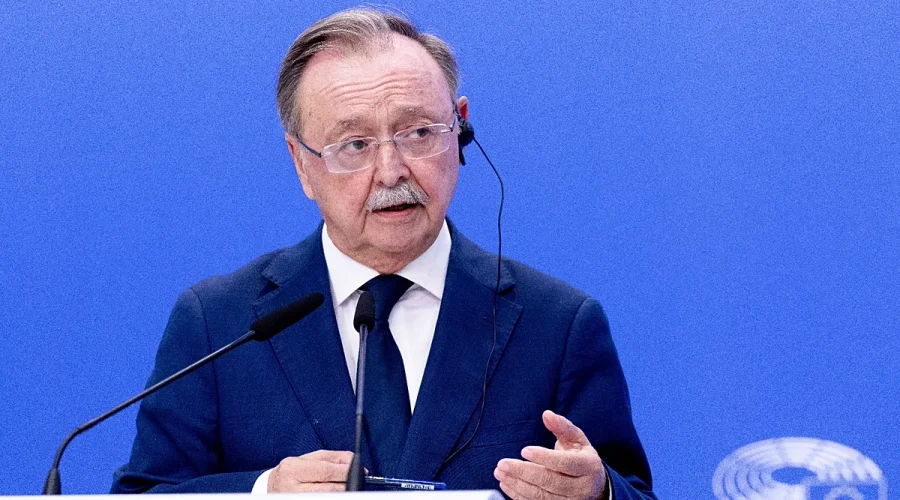
Ceuta President Urges the EU to Intervene
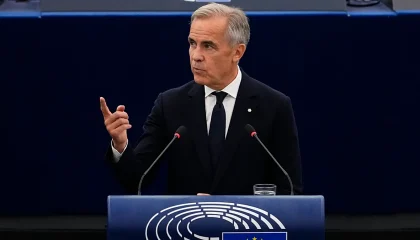
Usagevpn.com – In a rare public confrontation with his own national government, the Ceuta President urges the EU to step in and confront Morocco over what he describes as a deliberate campaign of pressure against Spain’s North African enclave. Speaking to commissioners and Members of the European Parliament in Brussels on Tuesday, Juan Jesús Vivas framed his city’s situation as existential: without decisive bloc action, he warned, the territory will buckle under the weight of an ongoing humanitarian and border crisis.
“Ceuta is on the brink of collapse,” Vivas told the chamber, to sustained applause from European People’s Party colleagues.
The crisis traces back to 30 July, when approximately 80,000 migrants crossed the land frontier into the enclave in a single day. Thousands of third-country nationals, including unaccompanied minors, remain in the city, overwhelming housing, medical, and social-service capacity. Local authorities have reported more than 150 deaths at sea connected to the episode.
A Public Split With Madrid
Vivas’s Brussels itinerary carried an unmistakable political charge: he broke openly with the Sánchez government’s cooperative posture toward Rabat. Where Madrid has officially described the mass crossing as a breach of territorial integrity driven by social-media misinformation and trafficking networks — and continues to label Morocco a “trusted partner” in migration management — the Ceuta President urges the EU to assign responsibility squarely. He cited a leaked police report suggesting Moroccan security forces played a role in the July events and pressed the Spanish government to explain why it declines to hold Rabat accountable, directly or through inaction.
“The EU should tell Morocco that any fruitful and mutually beneficial cooperation begins by respecting our borders,” he stated.
The European Commission has so far mirrored Madrid’s framing in its own communications, stopping short of attributing blame to Rabat. Vivas characterized the Moroccan posture as a sustained “policy of harassment” and warned that residents now live under the constant fear of another sudden, large-scale crossing.
Concrete Asks Directed at Brussels
In bilateral meetings with Commissioners Andrius Kubilius, Magnus Brunner, and Dubravka Šuica, Vivas laid out a two-track financial request: funding for border infrastructure capable of absorbing future flows, and immediate humanitarian relief for the post-July emergency. He also sought EU assistance in repatriating irregular migrants to their countries of origin and restoring what he called “normality” to daily life in the enclave.
Looking beyond the immediate crisis, he argued that Ceuta and its sister exclave Melilla — the only two points where Europe shares a land frontier with Africa — warrant a “special status” within EU migration architecture, with rules calibrated to their unique geography and demographics. He additionally called for a permanent on-the-ground presence of both the European Union Agency for Asylum (EUAA) and Frontex in Ceuta. The commissioners voiced support but made no specific commitments during the talks.
Notably, Vivas did not demand that the EU suspend the €160 million migration-management financing package directed at Rabat through 2027 — a step Spain’s far-right Vox party has pressed in recent days. His ask was narrower: continued funding, but channeled toward Ceuta’s own defensive and humanitarian needs rather than bilateral cooperation with Morocco.
FAQ
What happened on 30 July in Ceuta? Roughly 80,000 migrants crossed the land frontier into the enclave in a single day, overwhelming a city of approximately 85,000 permanent residents. More than 150 people died at sea during the associated episode, and thousands of third-country nationals, including unaccompanied minors, remain in the territory.
Why is the Ceuta President urging the EU rather than working solely through Madrid? Vivas has publicly accused the Spanish government of failing to respond adequately before, during, and after the July crisis. He believes the bloc must confront Morocco directly over border pressure and provide Ceuta with dedicated resources and institutional presence.
What specific EU agencies did Vivas ask to maintain a permanent presence in Ceuta? He called for permanent deployments of the European Union Agency for Asylum (EUAA) and Frontex, the agency responsible for managing the EU’s external borders.
Has the European Commission committed to any concrete action? Commissioners met with Vivas and expressed support for Ceuta’s position, but no specific commitments were announced during the Brussels talks.