Spain’s Top Criminal Court Opens Ceuta Probe
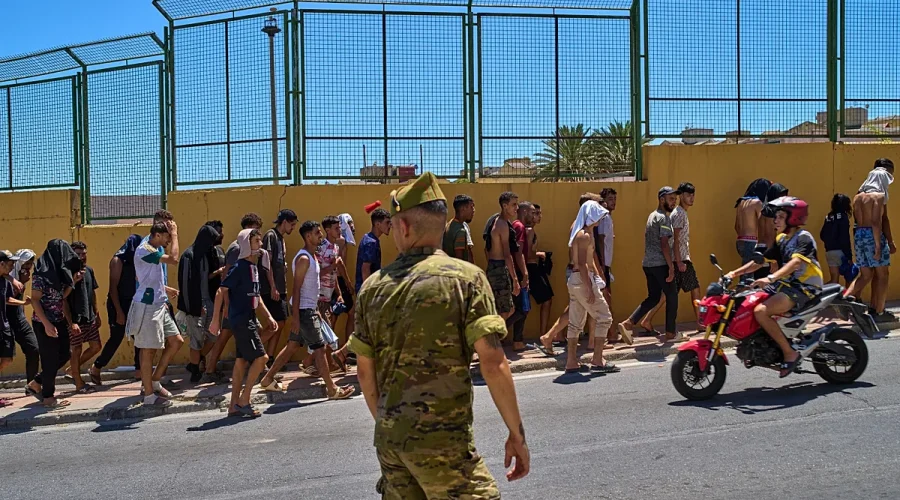
Usagevpn.com – Spain’s top criminal court has formally opened a criminal investigation into the mass migrant crossing that overwhelmed the North African enclave of Ceuta in late July. More than 70,000 people surged through the land frontier in a single sustained event, turning a humanitarian crisis into a matter of national judicial consequence. The Audiencia Nacional — the court in question — acted on a recommendation from the Public Prosecutor’s Office to examine whether deliberate external actors orchestrated the crossing.
Charges and Jurisdiction
Investigating judge María Tardón determined that the court held jurisdiction over three distinct categories of alleged wrongdoing: offences against territorial integrity, negligent homicide, and criminal organisation. In her written ruling, Tardón concluded that there were sufficient grounds to believe that
“criminal conduct allegedly committed abroad had seriously undermined Spain’s territorial integrity, using the mass entry into the country to do so.”
The framing matters. Rather than treating the event as a routine immigration-management failure, the judge positioned it as deliberate external interference with a sovereign border — a distinction that shapes every subsequent step of the inquiry.
“Hybrid Warfare” Language Enters the Record
Tardón went further, embedding the Ceuta crossing within a wider strategic vocabulary. She characterised the migrant flow as
“one of the characteristic methods of ‘hybrid warfare’ or the ‘grey zone,’ with the aim of altering the life and rights of Spanish citizens”
in the enclave. That phrasing borrows from contemporary defence discourse, where states pressure rivals through non-kinetic means — managed population movements, economic disruption, information campaigns — short of armed conflict. Applying such language to a border event elevates the incident from a migration-management lapse into a question of state-on-state contestation.
The Police Report and Alleged Moroccan Facilitation
The evidentiary core of the ruling rests on a Spanish police report documenting what it termed “total permissiveness” by Moroccan security forces stationed along the frontier during the crossing. Tardón quoted the report’s central finding directly:
“A clear and undeniable facilitation of the process” came from the North African nation, notably “through the verified and visually documented behaviour of Morocco’s security forces.”
According to the judge’s account, uniformed Moroccan officers made “no serious attempt” to halt the surging crowd. In several documented instances, the report alleges, those officers provided “active guidance” to migrants on how to execute the crossing. The court’s implication is that the event was not a spontaneous crowd phenomenon but a managed operation in which the adjacent state’s security apparatus played a permissive, and at times directive, role.
Diplomatic Aftermath
Madrid has publicly maintained that there is “no conclusive evidence” pinning responsibility for the late-July surge on Rabat. That measured phrasing signals a desire to keep diplomatic channels open while the judicial process unfolds independently. A criminal investigation opened by a court does not automatically constitute a state accusation, though the two tracks will inevitably inform one another.
Moroccan authorities have not issued an official comment on the Spanish police report. Moroccan media outlets, however, have been less restrained, labelling the document a “botched” piece of work that, in their assessment, lacks material evidence to support its conclusions. The absence of a formal Rabat response leaves the diplomatic dimension unresolved and likely to intensify as the investigation gathers pace.
Life in Ceuta After the Surge
The vast majority of the migrants who crossed into Ceuta in July have since been returned to Morocco. Yet thousands remain in the enclave, sharpening local political tensions. Ceuta’s resident population is roughly 85,000; the arrival of tens of thousands of additional people within days strained housing, healthcare, and public-order services to their limits. Municipal authorities have faced sustained pressure from residents who feel their daily lives were disrupted by an event they perceive as externally orchestrated.
Frequently Asked Questions
What exactly is Spain’s top criminal court investigating? The Audiencia Nacional is examining three categories of alleged wrongdoing connected to the late-July Ceuta crossing: crimes against territorial integrity, negligent homicide, and criminal organisation. The investigation was opened at the recommendation of the Public Prosecutor’s Office.
Has Morocco officially responded to the Spanish police report? No. Rabat has not issued a formal statement addressing the report’s findings. Moroccan media have criticised the document, but an official governmental reply has not been published as of the latest reporting.
How many migrants are still in Ceuta? While the majority of those who crossed in July have been returned to Morocco, thousands remain in the enclave. The exact figure shifts as return operations continue, but the residual population has placed measurable strain on local services.