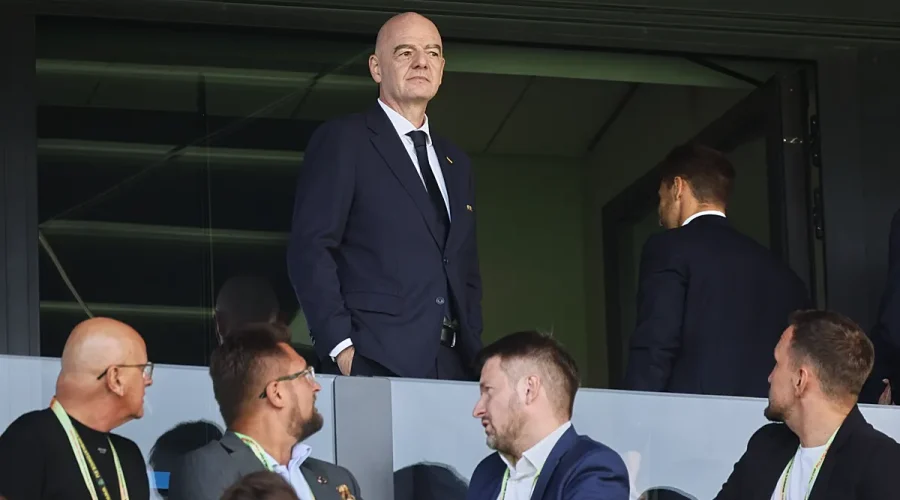
Infantino Confirms Bid for Second Term as FIFA President
Usagevpn.com – Gianni Infantino will seek another four years at the helm of world football’s most powerful institution. The current FIFA president, who has occupied the role since taking office in 2016, made his intention to contest the next presidential election explicit during the 76th FIFA Congress held in Vancouver, Canada earlier this year. His declaration was later reinforced by an official statement from the governing body confirming that no change of plans has occurred since the initial announcement made in April.
“The Fifa president announced in April that he will stand for re-election in 2027. Of course, nothing has changed. Mr Infantino will be standing for re-election.”
A Presidency Tested by Controversy
The road to the ballot box in March 2027 will not be a routine formality. Infantino’s tenure has been marked by a series of governance disputes, but none has generated as much alarm as the brief existence of the FIFA Forward Enterprise (FFE) proposal. Unveiled in late July, the plan would have opened a commercial subsidiary of FIFA to outside capital, inviting third-party investors to acquire equity stakes in a vehicle designed to monetise the organisation’s commercial assets. Within weeks, the scheme had become the most divisive issue in international football since the corruption scandals of the early 2010s reshaped the sport’s leadership.
Critics across the global football landscape accused the organisation of attempting to “sell” the sport to private financiers. National federations, player unions, and fan groups voiced alarm that a commercial entity with external shareholders could gain influence over decisions traditionally reserved for member associations. The backlash was swift and severe enough that FIFA withdrew the FFE initiative entirely, a decision that did little, however, to repair the damage to Infantino’s standing among a significant bloc of member nations.
The Confederation Split
In the weeks following the FFE announcement, a fracture line ran through the architecture of world football governance. Regional confederations — the six continental bodies that organise competition and represent member associations — found themselves divided over whether the president should retain his position. Some confederations issued statements of continued confidence; others called for accountability and, in at least one case, openly questioned whether the organisation’s leadership had lost its mandate.
Individual national federations added their own voices to the chorus, with several smaller associations publicly urging Infantino to step aside. The episode exposed a deeper tension within FIFA’s membership: between those who view the presidency as a stewardship role accountable to the collective will of 211 member associations, and those who see it as a political office whose occupant must answer to electoral consequences.
UEFA’s Boycott Threat and Its Retreat
The most dramatic escalation came in August, when European nations signalled their willingness to withdraw from FIFA-sanctioned competitions unless the organisation demonstrated that the FFE concept had been permanently shelved. UEFA, the European confederation, eventually received what it described as formal “assurances” that the plan had been “irrevocably and permanently withdrawn” and that it “will not re-appear in any other shape, construction, name or form.”
Those guarantees were sufficient to pull back the boycott threat, but they did not settle the broader question of Infantino’s future. UEFA has continued to advocate for a leadership change, arguing that the episode revealed structural weaknesses in how FIFA’s commercial ambitions are governed and overseen. The confederation’s position places it in an awkward posture heading into the 2027 election: it must compete under FIFA’s umbrella while simultaneously campaigning against the organisation’s chief executive.
The Election Ahead
The next FIFA presidential contest is scheduled for the 77th FIFA Congress, taking place on Thursday, 18 March 2027, in Rabat, Morocco. The venue — a North African capital with a growing football infrastructure and a national team that reached the 2022 World Cup quarter-finals — adds a symbolic dimension to proceedings that will determine who controls the sport’s most consequential decisions for another cycle.
Infantino’s own words from the Vancouver Congress framed his candidacy in terms of gratitude and continuity rather than policy:
“I want to tell you first – the 211 (FIFA) Member Associations – that I will be (a) candidate for the election of FIFA President next year.”
“Thank you for your support over the last 10 years, your support today, your work, your progress, your love for the game, your commitment, and your passion.”
What Stakes Define the Race
For member associations, the 2027 ballot will be less about personality and more about direction. The questions on the table include how FIFA will fund its expanding tournament calendar, whether commercial revenue streams will remain under member-association control or open to external capital, how the organisation will navigate its relationships with broadcasters, sponsors, and national governments, and what governance safeguards will prevent a repeat of the FFE episode.
Infantino’s first decade in office has overseen the expansion of the men’s World Cup to 48 teams, the introduction of a women’s World Cup format, and a series of disciplinary and regulatory reforms. Supporters credit him with stabilising an institution that entered the 2010s in disarray. Detractors counter that the same decade produced the FFE misstep and a pattern of decisions made with insufficient consultation of the membership.
With the election now formally on the calendar, the coming months will see candidate declarations, continental consultations, and a campaign that will test whether the football world’s divisions over governance can be resolved at the ballot box or will persist into the next term regardless of who occupies the chair.
Related Reading
Frequently Asked Questions
What is FIFA chief Gianni Infantino to stand?
FIFA chief Gianni Infantino to stand is the main topic of this guide. The article explains the context, practical details, and next steps readers should understand.
Why does FIFA chief Gianni Infantino to stand matter?
FIFA chief Gianni Infantino to stand matters because readers are looking for a useful answer, not just a short summary. Good content should match search intent and help them decide what to do next.