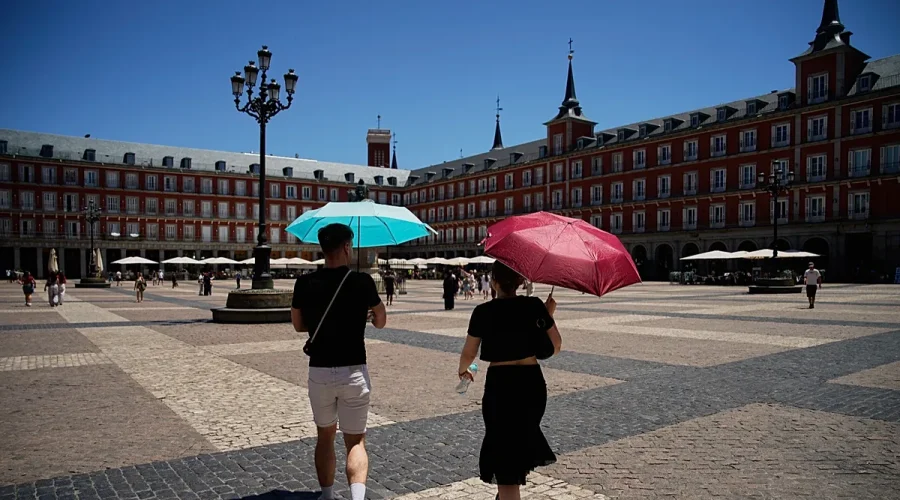
Andalusia’s Furnace: Spain Ties Its Own September Heat Benchmark at 45.7°C
Usagevpn.com – A thermometer in the small southwestern town of El Granado climbed to 45.7 degrees Celsius on Thursday, matching the September record first established in Montoro back in 2016. Both settlements sit within Andalusia, the sun-baked region along Spain’s southern coast where summer temperatures routinely push past 40 degrees. Yet a reading of nearly 46 degrees in early September — well into autumn — marks a departure from what residents of the area have historically experienced during that stretch of the calendar.
The measurement, confirmed by Spain’s State Meteorological Agency (AEMET), also stood as the single highest temperature logged anywhere in the country up to that point in 2026. For much of the preceding week, a broad band of summer-grade heat above 40 degrees had rolled across the southern and western provinces, turning what should have been a cooling period into a prolonged thermal event.
A Record That Compounds an Already Unprecedented Year
The Thursday reading did not arrive in isolation. AEMET simultaneously announced that the span from January through August constituted the warmest such period ever documented in Spanish meteorological history. The agency stressed that the gap between this year’s cumulative heat and the next four warmest January-to-August windows — each of which fell within the preceding four calendar years — was not marginal but pronounced.
“It is an unmistakable sign that, in Spain, warming is accelerating,” the agency stated.
That characterization lands with particular weight given that July had already been flagged by AEMET as Spain’s joint-hottest month on record. When the warmest month of the year and the warmest first-eight-month stretch both fall within a single calendar year, the statistical signal moves beyond the realm of ordinary interannual variability.
Why September Heat Matters
September in Andalusia has traditionally been a transitional month: harvest work winds down, vineyards enter their final ripening phase, and nighttime temperatures begin to dip below the 25-degree threshold that defines a true summer night. Sustained daytime readings above 40 degrees during that window compress the already narrow margin between agricultural viability and crop stress. Olive groves, almond orchards, and late-season grape varieties in the Guadalquivir basin face heightened risks of fruit drop, sunscald, and reduced oil content when heat spikes arrive weeks earlier than climatological norms would suggest.
For urban residents, the late-summer heat wave also strains cooling infrastructure that was designed around a shorter peak-heat season. Hospital admissions for dehydration and heat exhaustion tend to spike when elderly populations, who make up a disproportionate share of Andalusia’s rural demographic, are caught off guard by temperatures that should have moderated by early autumn.
The Human Toll Across the Continent
Spain’s public health institute has registered nearly 4,500 heat-related deaths in the country since 1 June, a figure that places the nation among the hardest-hit European states in what has been a continent-wide mortality event. Across Europe, extreme heat episodes have been linked to thousands of excess deaths, with older adults, outdoor workers, and those without reliable air-conditioning bearing the greatest risk.
The mortality burden compounds other disruptions. Prolonged drought and depressed river levels have already interfered with irrigation schedules, inland shipping on major waterways, and hydropower generation. Temperature records have been shattered across multiple European nations during the same period, underscoring that Spain’s experience is a local expression of a continental-scale thermal anomaly.
Madrid’s Push for a Structural EU Response
Against this backdrop, Spain has pressed the European Commission to elevate climate adaptation from a peripheral policy line item to a central pillar of economic and security planning. In documents reviewed by journalists, the Spanish position argues that the frequency and cost of extreme-weather events have outpaced the capacity of reactive, after-the-fact interventions. The argument is that infrastructure retrofits, early-warning integration into public-health systems, agricultural insurance redesign, and water-management modernization must be funded and legislated before the next event, not improvised in its aftermath.
The framing reflects a broader shift in how southern European governments conceptualize climate risk: no longer a distant, probabilistic threat to be managed through incremental policy tweaks, but a present-tense operational reality that reshapes budget cycles, urban-planning codes, and cross-border resource allocation. Whether Brussels will translate that pressure into binding adaptation mandates remains the open question heading into the autumn legislative session.
For now, the thermometer in El Granado has cooled, but the statistical record it helped write will not. The joint September benchmark, the record-breaking first eight months, and the accelerating trajectory AEMET describes together form a dataset that policymakers, insurers, and farmers across the Iberian Peninsula will be working from for years to come.
Related Reading
Frequently Asked Questions
What is Spain matches September heat record at 45?
Spain matches September heat record at 45 is the main topic of this guide. The article explains the context, practical details, and next steps readers should understand.
Why does Spain matches September heat record at 45 matter?
Spain matches September heat record at 45 matters because readers are looking for a useful answer, not just a short summary. Good content should match search intent and help them decide what to do next.