Kyiv Files Formal Airspace Safety Warning with ICAO, Escalating Pressure on Carriers Still Routing Through Russia
Usagevpn.com – Ukraine’s foreign ministry has taken a formal diplomatic step that could reshape how international carriers plan their routes across one of the world’s busiest aviation corridors. Foreign Minister Andrii Sybiha confirmed on Wednesday that Kyiv has submitted an official notification to the International Civil Aviation Organisation (ICAO) declaring Russian airspace unfit for civilian aircraft, citing heightened military activity in the region. The move places the matter squarely on the table of the UN body responsible for global aviation standards and gives airlines, insurers, and national regulators a documented basis for reassessing their exposure.
A Diplomatic Signal Aimed at Airlines and Insurers
Sybiha framed the notification as a precautionary measure taken because Moscow has, in Kyiv’s assessment, failed to meet its own obligations under international aviation law to alert operators about hazards in its sovereign airspace. The minister posted the announcement on X, where he stated:
“Ukraine has officially notified ICAO that the Russian airspace is not safe for civilian aviation because of increased military activity. We urge everyone to avoid it.”
He went on to explain the rationale behind the filing, emphasizing that the decision was made unilaterally out of concern for passenger and crew safety:
“This is our responsible decision to notify ICAO and all airlines, and governments to take caution — even if Russia refuses to fulfill its responsibility to inform them. We want to prevent unintended incidents.”
The minister argued that Russia had been “deliberately ignoring the existing threats” generated by its full-scale war against Ukraine, and that the accumulated risks had already produced multiple aviation incidents over recent years. By lodging the warning with ICAO, Kyiv creates a paper trail that insurers, regulators, and airline safety committees can reference when evaluating route risk.
Zelenskyy’s Day-Earlier Warning Set the Stage
The formal ICAO filing followed directly from a broader public warning issued by President Volodymyr Zelenskyy on Tuesday. Addressing airlines, insurance companies, and commercial operators that still rely on major Russian airports, the president described the evolving threat environment in stark terms:
“Today we want to warn every airline that uses Russian airspace, every insurer, everyone who still uses key Russian airports: Russian skies are becoming completely dangerous.”
Zelenskyy stressed that Ukraine itself poses no threat to civilian aviation, but that the expanding reach of Kyiv’s long-range drone operations inside Russian territory meant the danger could no longer be dismissed. He warned that Russian airspace would “effectively be closing” as the consequences of Moscow’s war increasingly manifested on Russian soil. The president’s remarks were aimed squarely at the commercial aviation sector, which has continued to thread routes through or into Russia despite the ongoing conflict.
Immediate Disruptions to Turkey–Moscow Traffic
The practical consequences arrived within hours. Overnight into Wednesday, several flights linking Turkey and Moscow were disrupted. Turkish low-cost carrier Pegasus Airlines cancelled twelve flights to and from Moscow’s Vnukovo Airport, according to airport operational data. A separate Pegasus service from Antalya to Moscow was diverted mid-route owing to security concerns in Russian airspace, as noted by Turkish media outlets. Turkish Airlines, the national flag carrier, largely maintained its Moscow schedule but cancelled two departures and two arrivals on its Istanbul–Moscow rotation.
These disruptions, while modest in scale relative to the thousands of weekly flights that once crossed the corridor, underscore how quickly operational decisions can shift once a formal safety notification enters the record. Airlines must now weigh the diplomatic and regulatory weight of an ICAO-filed warning against commercial commitments to Russian destinations.
Background: Two Airspaces, Two Very Different War Experiences
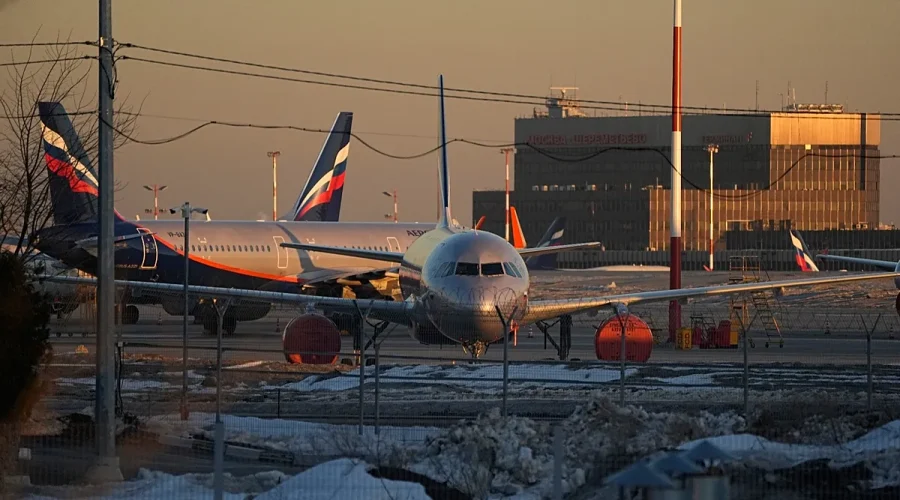
Ukraine’s own airspace has been closed to civilian aviation since 24 February 2022, the date Russia launched its full-scale invasion. For more than four years, commercial flights have been rerouted around Ukrainian territory entirely. Russian civilian aviation, by contrast, has continued operating throughout the conflict, albeit with growing frequency of temporary airport closures and mid-flight diversions triggered by Ukrainian drone strikes near or over airfields.
The asymmetry matters for understanding why the current notification carries particular force. Kyiv is not asking carriers to avoid a theoretical risk; it is pointing to a documented pattern of incidents in which military activity in Russian airspace has intersected with civilian flight paths. The formal ICAO filing converts that pattern into a structured safety communication that member states and industry bodies are expected to consider in their risk assessments.
Who Still Flies Through Russia, and What Changes Now
Following Moscow’s 2022 invasion, most European and US carriers ceased routing over Russian airspace, preferring longer southern or polar paths. Yet a substantial share of global traffic still touches Russian territory. Major carriers including Emirates, Turkish Airlines, Air India, Etihad, and Qatar Airways continue to operate flights to or through the country, as do several Chinese airlines. These operators connect Middle Eastern, South Asian, and East Asian hubs with European or North American destinations, and their routes frequently cross Russian airspace at high altitude.
The formal notification does not automatically close Russian airspace to foreign carriers — that authority rests with Moscow and with each airline’s own safety management system. However, it introduces a new layer of regulatory and reputational pressure. Insurers may revisit premium structures. National aviation authorities may issue advisory notices. Airlines facing passenger inquiries will need to explain why they continue routing through airspace that a neighbouring state has formally declared unsafe. The cumulative effect could accelerate a gradual shift away from Russian corridors, even if no single carrier makes an abrupt change.
For passengers, the practical near-term impact is limited: most flights remain scheduled, and no carrier has announced a wholesale withdrawal from Russian routes. But the diplomatic and documentary trail now being built through ICAO channels marks a significant escalation in how Kyiv is seeking to externalize the aviation costs of the war onto the operators and insurers who continue to use Russian airspace.
Related Reading
Frequently Asked Questions
What is Ukraine formally warns airlines that Russian?
Ukraine formally warns airlines that Russian is the main topic of this guide. The article explains the context, practical details, and next steps readers should understand.
Why does Ukraine formally warns airlines that Russian matter?
Ukraine formally warns airlines that Russian matters because readers are looking for a useful answer, not just a short summary. Good content should match search intent and help them decide what to do next.