EU Boards Suspected Russian Shadow Fleet Oil Tanker
Usagevpn.com – European naval forces carried out a flag-verification boarding on a suspected Russian shadow fleet oil tanker in the Mediterranean on Sunday, marking the sixth such interception by EU-linked operations in recent months. The move intensifies a sustained Western effort to sever the maritime revenue channels that sustain Moscow’s war economy in Ukraine.
The Boarding and Official Confirmation
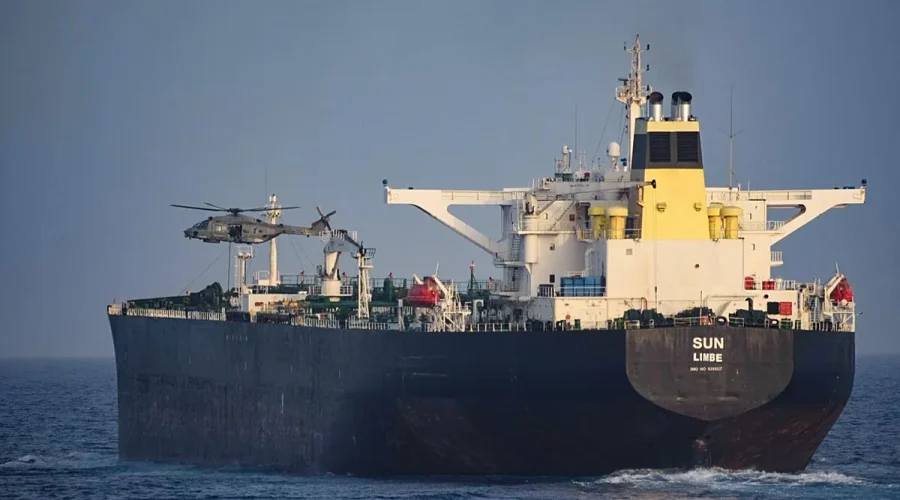
Kaja Kallas, the EU’s foreign policy chief, announced the operation on social media, confirming that personnel attached to Operation Irini had closed alongside the MV Sun to inspect its documentation. She characterised the action as a “flag verification,” explaining that the vessel was suspected of sailing under a false flag — a practice that contravenes international maritime law and lets owners mask a ship’s true nationality.
“Illegal oil sales from shadow fleet ships are a critical lifeline for Russia’s war in Ukraine, and we’ll continue to cut them off,” Kallas wrote.
Alongside the statement she posted images appearing to show the boarding in progress. Kallas also flagged that measures to disrupt the broader network would be on the agenda when EU defence ministers convened in Ireland on Tuesday.
A Widening Pattern of Interceptions
The MV Sun action is the latest in a series stretching back several months. In early August, Operation Irini forces stopped the sanctioned tanker MV Toa Payoh for a flag check after the Italian frigate Thaon di Revel had halted it west of Pantelleria while it was transiting from Cotonou, Benin, toward Istanbul, according to the Italian Defence Ministry.
In June, French President Emmanuel Macron revealed that French military units had intercepted the tanker Deliver near Sicily, describing its conduct as occurring “in violation of maritime law.” Earlier that same month, Ukraine’s foreign minister thanked the United Kingdom for its “leadership and decisive action” after Royal Marine Commandos, joined by National Crime Agency officers, boarded the vessel Smyrtos in the English Channel in an operation lasting roughly six hours.
How the Network Circumvents Sanctions
Western sanctions on Russia’s oil sector restrict Moscow’s access to compliant tankers and marine insurance unless strict conditions — including price caps and approved-vessel lists — are met. To sidestep those limits, operators deploy layered ownership structures, register ships under flags of convenience, and use other mechanisms to obscure the true origin and destination of cargo. The result is a sprawling, deliberately opaque fleet that continues to move crude and refined products to buyers in Asia, the Middle East, and beyond. Each boarding therefore strikes not just one ship but a node in that concealed supply chain.
Operation Irini’s Expanding Role
Launched in March 2020 to enforce the UN arms embargo on Libya during the Second Libyan Civil War, Operation Irini originally covered countering illicit arms trafficking, gathering intelligence on oil smuggling, disrupting human-trafficking routes, and training Libyan law-enforcement and search-and-rescue institutions. Its remit has since broadened to safeguard EU strategic interests across the wider Mediterranean. The recent string of boardings represents a clear step into direct economic-enforcement territory, effectively converting a peacekeeping-adjacent mission into a sanctions-implementation tool.
Strategic Implications
Repeated boardings signal to ship owners, insurers, and charterers that Western navies will actively police European waters. The cumulative effect raises the operational cost and risk premium for any vessel linked to Russian oil, potentially pushing cargo onto longer routes or compelling owners to seek alternative insurance markets. For Moscow, the pressure compounds existing constraints: sanctions have already narrowed the pool of compliant tankers, and physical enforcement in European waters now adds a layer of direct, tangible risk.
Frequently Asked Questions
What exactly did EU forces do to the MV Sun? Personnel attached to Operation Irini came alongside the vessel and conducted a flag-verification check, confirming whether the ship was lawfully registered under the flag it was displaying.
Why does a false flag matter? International maritime law requires every ship to sail under a single, valid flag of registry. Flying a false flag lets owners hide the vessel’s true nationality, evade sanctions screening, and complicate any subsequent legal or insurance claim.
How many such boardings have EU operations carried out recently? Kallas identified the MV Sun action as the sixth suspected shadow fleet vessel boarded by EU-linked operations in recent months, spanning multiple Mediterranean and adjacent-water incidents.
What is Operation Irini? A multinational mission launched in March 2020 to enforce the UN arms embargo on Libya. Its mandate has since expanded to include protecting EU strategic interests in the Mediterranean, including direct enforcement against sanctioned maritime traffic.