Iceland Votes Against EU Talks, Exposing Limits of Brussels’ Security Enlargement Strategy
Usagevpn.com – When Icelandic voters cast their ballots on Saturday and returned a 52.8% majority against resuming negotiations to join the European Union, the result landed in Brussels less like a routine enlargement setback and more like a structural diagnosis. The campaign had been framed, at least in official EU communications, around the bloc’s capacity to project collective defence and stability. What voters actually weighed, however, was a far narrower ledger: fishing rights, mortgage costs, currency policy, and the question of whether sovereignty could survive integration.
A Pitch Built on Geopolitical Anxiety
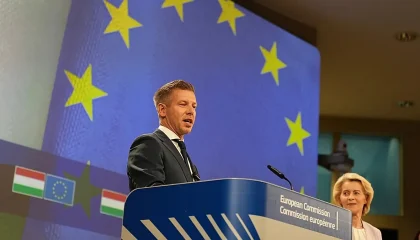
For months, EU leadership had staked its enlargement narrative on the argument that a fragmented world makes collective security indispensable. Enlargement Commissioner Marta Kos laid out the case plainly at a conference the previous week:
“In a world where we face pressures from East and West, where old alliances are fading, and new ones emerging, where dependencies are weaponised, and where we are experiencing direct attacks on our democracy and our way of life, becoming stronger together is our biggest asset.”
The geopolitical backdrop was undeniably tense. US President Donald Trump had threatened to seize Greenland by force. Russia’s war of aggression in Ukraine had entered its fifth year. The Arctic was hardening into a contested arena over rare-earth mineral deposits and newly viable shipping corridors. In April, Iceland’s Prime Minister Kristrún Frostadóttir acknowledged to Euronews that the shifting international order would shape public debate around the referendum, while insisting she did not want fear to drive the conversation.
Brussels also began scrutinising how it could strengthen the security guarantee embedded in Article 42.7 of the EU treaty — a provision allowing member states to extend mutual defence obligations to non-members. That review gained urgency after a drone strike, likely executed by Hezbollah using an Iranian-made drone, hit the UK airbase in Cyprus, one of the few EU member states outside NATO.
The Economic Bargain That Actually Decided the Vote
Yet the referendum campaign, on both sides, centred on material economics rather than strategic deterrence. Pro-membership advocates pitched euro adoption as a mechanism to compress state debt interest rates, deliver immediate relief on household mortgage payments, and dampen inflationary pressure. Opponents centred their messaging on preserving Icelandic control over fisheries and agriculture — sectors that remain economically and culturally central to the island nation.
Chris Kremidas-Courtney, a senior advisor at the European Policy Centre, summarised the disconnect bluntly:
“Iceland’s referendum offered a cold splash of reality on where the EU stands as a security provider. EU membership did not offer any unique territorial security guarantee. The referendum therefore turned on the economic bargain, especially on fisheries, currency, and sovereignty.”
Sovereignty, Identity, and the Limits of a Security Frame
Hulda Þórisdóttir, a professor at the University of Iceland, argued that the vote touched a deeper nerve than either economic calculation or strategic calculus. For many Icelanders, the question was ultimately about the nation’s place in the world and the boundaries of its independence — themes far closer to Icelandic identity than abstract alliance architecture.
“The security angle might have reinforced existing views for voters already leaning towards a ‘Yes’ or a ‘No’, in light of pre-existing beliefs. But it was not a decisive issue during the campaign, as it was much less present than many anticipated,” Þórisdóttir told Euronews.
Þórisdóttir suggested that defence and security sat at the top of the agenda for political elites tracking international developments, while ordinary citizens remained preoccupied with day-to-day economic pressures. The security argument, moreover, may have cut both ways: talk of European rearmament and the prospect of a continental army generated unease among Icelanders who feared compulsory military service in Brussels’ name.
A Long-Standing Ambiguity in Icelandic Self-Image
The defence question collides with a persistent tension in Icelandic society. The nation simultaneously regards itself as a founding member of NATO within a clear-cut international alliance and as a peace-loving country with no standing army. When Russia launched its full-scale invasion of Ukraine in 2022, the shock immediately prompted Sweden and Finland to apply for NATO membership, reshaping Nordic security assumptions overnight. Iceland, already inside the alliance, found its domestic debate sharpened rather than settled by those developments.
What Brussels Must Now Reckon With
A Eurobarometer survey conducted in spring found that 75% of Europeans view the EU as a source of stability in a troubled world, and the share of citizens perceiving tangible benefits from membership reached an all-time high. Those numbers, however, describe attitudes within existing member states — not the calculus of a candidate nation weighing sovereignty costs against collective guarantees.
The Icelandic result forces a candid internal assessment in Brussels: can the Union articulate a security case compelling enough to override the historic reluctance of wealthier Nordic states to surrender portions of their autonomy? If the answer depends on economic concessions that dilute the very sovereignty voters were asked to protect, the enlargement pitch may need a fundamental rethinking. The vote did not reject Europe; it rejected a particular framing of what Europe offers. Whether Brussels can reframe that offer without hollowing out its own institutional identity remains the central question now.
Related Reading
Frequently Asked Questions
What is Iceland s no vote deals a blow?
Iceland s no vote deals a blow is the main topic of this guide. The article explains the context, practical details, and next steps readers should understand.
Why does Iceland s no vote deals a blow matter?
Iceland s no vote deals a blow matters because readers are looking for a useful answer, not just a short summary. Good content should match search intent and help them decide what to do next.