Christine Lagarde Positioned as Successor to World Economic Forum Leadership
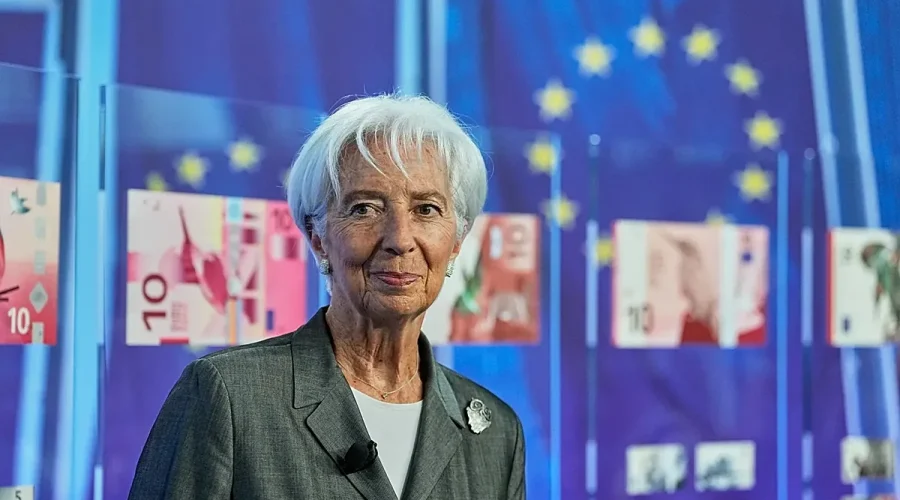
Usagevpn.com – The woman who has steered monetary policy for the eurozone since 2019 is reportedly being groomed to lead one of the globe’s most consequential policy gatherings. A Swiss-language daily disclosed over the weekend that European Central Bank president Christine Lagarde has been identified as a “putative candidate” to assume the presidency of the World Economic Forum, potentially at some point during 2027. The revelation, drawn from unnamed sources close to the forum’s governance structure, marks a significant shift in the trajectory of a career already spanning international finance, law, and public service.
The Succession Discussion
According to the Swiss report, the question of WEF leadership was placed on the agenda during a board meeting held near Geneva earlier in the week. Tharman Shanmugaratnam, who serves as president of Singapore and holds a seat on the forum’s governing body, is said to have chaired the succession conversation. He reportedly urged colleagues that the matter should be “resolved internally,” signaling a preference for consensus-building within the existing membership rather than an open external search.
Lagarde, who already occupies a seat on the WEF’s Board of Trustees, acknowledged the confidence placed in her by fellow trustees. She told colleagues she was “ready to serve” in the expanded capacity, per the Swiss publication’s account of the exchange. No formal vote or binding decision was recorded at that session; the board reportedly left the timing of any transition undecided.
Current Leadership and the Davos Question
The World Economic Forum, headquartered in Cologny, Switzerland, operates as a private foundation that convenes roughly 2,500 senior figures from government, business, academia, and civil society each January in Davos. Its current co-chairs are Larry Fink, chief executive of the American asset manager BlackRock, and André Hoffmann, vice chairman of the Swiss pharmaceutical giant Roche. Both men are expected to remain in their roles through the forum’s next annual gathering, which is scheduled for January of the coming year.
The Swiss daily noted that while the board had not fixed a date for Lagarde’s assumed transition, the practical question of who would preside over the upcoming Davos summit was effectively settled: Fink and Hoffmann would continue in that capacity. This arrangement preserves institutional continuity during what would be a sensitive handover period.
Lagarde’s ECB Timeline and the October 2027 Deadline
Christine Lagarde has held the ECB presidency since November 2019, succeeding Mario Draghi. Her eight-year mandate, the maximum permitted under the bank’s statutes, runs through October 2027. That fixed endpoint has made the question of her post-ECB activities a recurring topic in European policy circles for months. Speculation has intensified in recent weeks, partly because Lagarde herself has made remarks suggesting she might engage with France’s upcoming presidential election cycle.
In a July interview, however, she drew a clear line: she would not run for the French presidency herself. Her words, delivered with characteristic directness, underscored her continued identification with European institutional architecture rather than national partisan politics.
“I’m not a candidate for anything, but I’m very keen that Europe is protected, that Europe is the framework within which member states operate, including France.”
That statement, while closing the door on a presidential bid, left open the possibility of advisory or advocacy roles in the run-up to the French vote. A WEF presidency would sit comfortably within that space: a global platform where she could shape discourse on European cohesion, trade policy, and multilateral governance without holding an elected office.
Why the WEF Presidency Matters
The forum’s president wields considerable soft power. The role shapes the agenda of the annual Davos meeting, influences which governments and corporations receive invitations, and positions the holder at the center of informal diplomatic channels that formal institutions rarely replicate. Previous presidents have included figures such as Klaus Schwab, who founded the organization in 1971, and, more recently, the co-chair model that blends business and public-sector leadership.
For Lagarde, the move would represent a transition from the operational core of European monetary policy to a broader, more diffuse arena of global governance. It would also place her in regular proximity to heads of state, central-bank governors, and corporate leaders from every continent — a network she has cultivated over two decades at the International Monetary Fund, the French Ministry of Finance, and the ECB.
Institutional Silence
The ECB declined to comment on the Swiss newspaper’s account. The World Economic Forum, for its part, had not responded to requests for clarification at the time of publication. Both institutions have historically preferred to let governance decisions mature internally before making public statements, a practice consistent with the “resolved internally” framing attributed to Shanmugaratnam.
Should the board ultimately confirm the succession, Lagarde would become the first former central-bank governor to hold the WEF presidency in its modern era, and the first woman to occupy the role. The timing — overlapping with the final months of her ECB mandate and the lead-up to France’s next presidential contest — would make the transition one of the most closely watched leadership changes in European public life.
Related Reading
Frequently Asked Questions
What is ECB head Christine Lagarde ready to serve?
ECB head Christine Lagarde ready to serve is the main topic of this guide. The article explains the context, practical details, and next steps readers should understand.
Why does ECB head Christine Lagarde ready to serve matter?
ECB head Christine Lagarde ready to serve matters because readers are looking for a useful answer, not just a short summary. Good content should match search intent and help them decide what to do next.