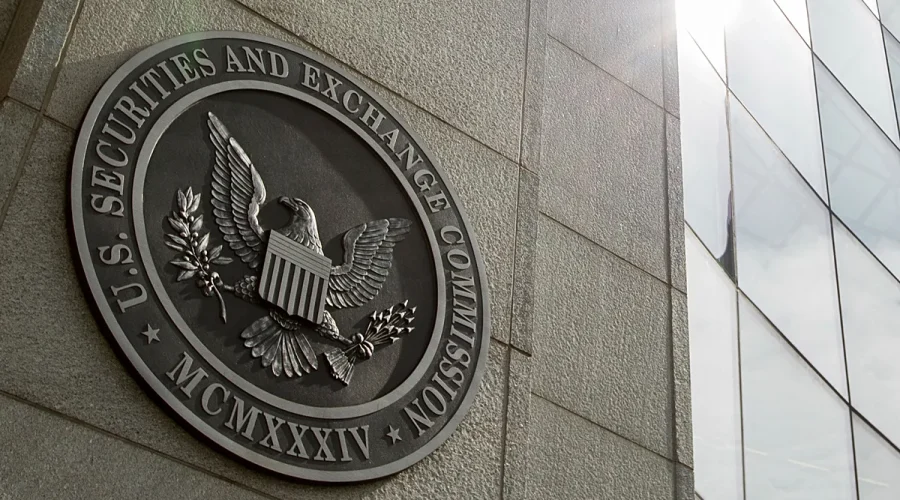
SEC Files Landmark Crypto Rulemaking, Offering Startups a Streamlined Path to Capital
Usagevpn.com – For years, digital-asset founders in the United States have faced a regulatory maze: the same registration burdens imposed on traditional public companies, applied to token sales and decentralized fundraising vehicles that operate under fundamentally different economic logic. On Tuesday, the Securities and Exchange Commission closed that gap — at least in part — by filing a formal proposal called “Regulation Crypto Assets.” The document marks the agency’s first dedicated rulemaking aimed squarely at crypto asset offerings, extending interpretive guidance the Commission had released back in March into binding regulatory architecture.
The practical effect is substantial. Qualifying issuers would be spared the full registration process that most public offerings demand, replacing dense legal filings with what the proposal terms narrative, principles-based disclosures. Investors would still receive meaningful information about risks, use of proceeds, and issuer obligations, but the format would shift away from boilerplate prospectus language toward plain-language explanations.
Two New Exemptions Reshape the Fundraising Landscape
The proposal’s core mechanism rests on two distinct exemptions, each calibrated to a different stage of a company’s life cycle.
The first, labelled the “startup exemption,” permits an issuer to raise up to $5 million (approximately €4.3 million) over a four-year window without registering the offering at all. For early-stage projects still validating their technology or building initial user bases, this removes the single largest cost barrier to accessing institutional capital.
The second, the “fundraising exemption,” scales up considerably: issuers may raise as much as $75 million (roughly €64.7 million) within any rolling 12-month period. The trade-off is transparency. Companies relying on this tier must publish financial statements and satisfy ongoing reporting obligations, ensuring that investors in larger raises receive the same periodic visibility they would get from a registered issuer.
Safe Harbour and State Preemption
Beyond the fundraising mechanics, the proposal introduces a conditional safe harbour with potentially far-reaching consequences. Once an issuer has completed — or permanently abandoned — the managerial efforts it originally promised investors, certain tokens could fall outside the legal definition of a security altogether. In effect, the rule acknowledges that a token whose underlying project is finished or abandoned no longer carries the same investment characteristics that triggered securities classification in the first place.
The filing also preempts conflicting state registration requirements for offerings conducted under either exemption. Issuers would no longer need to navigate 50 separate state securities regimes, a compliance burden that has historically pushed some digital-asset companies to incorporate or raise capital abroad.
Industry Reaction: Relief After Years of Uncertainty
Trade-association leaders responded quickly and warmly. Summer Mersinger, chief executive of the Blockchain Association, framed the move as the tailored regulatory clarity the sector had sought for years.
“This finally delivers the tailored regulatory clarity the sector has sought for years,” Mersinger said.
Cody Carbone, CEO of the Digital Chamber, echoed the sentiment while pledging his organization’s support for helping the industry expand domestically rather than migrating to more permissive jurisdictions.
SEC Chairman Paul Atkins characterized the package as a “minimum effective dose” of oversight — enough protection for investors, but leaving builders maximum room to innovate.
“A minimum effective dose” of oversight, Atkins described the package, protecting investors while leaving builders maximum room to innovate.
The Congressional Backdrop: CLARITY Act Still Stalled
The timing of the SEC’s filing is not accidental. Roughly a week and a half earlier, the US Senate departed Washington for its summer recess without advancing the Digital Asset Market CLARITY Act (H.R. 3633), the industry’s flagship legislative proposal. That bill would split oversight of digital assets between the SEC and the Commodity Futures Trading Commission, creating a two-agency framework analogous to the existing division between equities and derivatives regulation.
Senate Majority Leader John Thune had filed a cloture motion on the bill on 7 August, but lawmakers left before a vote could be taken. That procedural motion is scheduled to resurface on 15 September once senators return — a procedural hurdle, not a final passage vote. Atkins has argued on multiple occasions that only Congress can deliver a lasting, “future-proofed” framework capable of surviving changes in political leadership, and the Commission publicly reaffirms its support for the bill’s eventual passage.
Even so, with the legislative timetable slipping into autumn, the regulator appears to have concluded it could not wait indefinitely. Using authorities it already holds, the SEC has moved to provide the industry with a measure of near-term certainty while lawmakers prepare to resume debate next month.
What Happens Next
The proposal is far from final. Once published in the Federal Register, it will remain open for public comment for 60 days. Provisions could be amended, narrowed, or eliminated entirely before any final rule is adopted. Industry groups, state regulators, investor advocates, and academic commentators will all have the opportunity to file comments during that window.
For the thousands of digital-asset startups currently operating in a regulatory grey zone — raising capital under informal arrangements or structuring offerings to skirt registration requirements — the next two months will determine whether this proposal becomes a durable operating framework or merely another chapter in an ongoing negotiation between Washington and the crypto economy.
Related Reading
Frequently Asked Questions
What is SEC unveils new crypto rules hailed?
SEC unveils new crypto rules hailed is the main topic of this guide. The article explains the context, practical details, and next steps readers should understand.
Why does SEC unveils new crypto rules hailed matter?
SEC unveils new crypto rules hailed matters because readers are looking for a useful answer, not just a short summary. Good content should match search intent and help them decide what to do next.