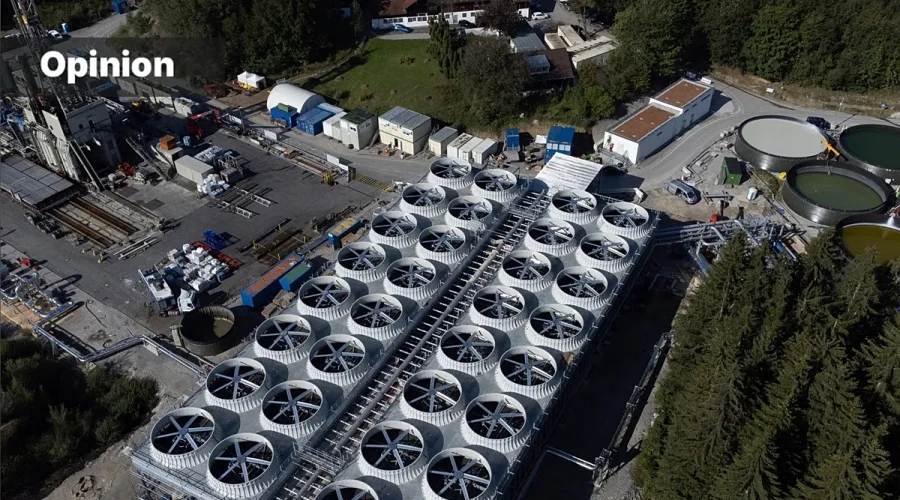
Europe’s Geothermal Gap: A Decade of Policy Silence While Rivals Build
Usagevpn.com – Households across the continent are once again watching their energy bills climb as the EU navigates its second major fuel-supply shock within four years. The pattern is familiar: imported fossil fuels, exposed to the swings of global commodity markets, translate directly into household pain. Yet the continent already possesses a vast, underexploited reservoir of clean, domestically generated electricity that could blunt precisely this vulnerability. That reservoir is geothermal heat, and the question facing Brussels is no longer whether the technology works, but why Europe has yet to commit to a coherent strategy for deploying it at scale.
What the Ground Actually Offers
Every kilometre of descent beneath the Earth’s surface brings a measurable rise in temperature. Geothermal engineering captures that warmth by drilling wells, circulating fluid, and either heating buildings directly or generating steam to drive turbines. For most of the twentieth century, the technique was viable only in narrow geological pockets where nature had already concentrated hot water or steam near the surface. That constraint is dissolving. Newer drilling methods and a fresh generation of plant design are widening the catalogue of suitable subsurface conditions dramatically, opening regions that were previously considered geologically inert.
The practical stakes are substantial. Enhanced geothermal systems — the next-generation variant that does not depend on naturally occurring hot aquifers — could deliver on the order of 300 terawatt-hours of electricity annually within the EU, roughly one-tenth of current continental demand. Projected generation costs sit below €100 per megawatt-hour, placing the technology squarely in competitive range with gas- and coal-fired plants. Because geothermal output is firm and dispatchable, it slots naturally alongside intermittent wind and solar, filling the demand peaks when those renewables dip. The complementarity is not theoretical; it is the core argument for treating geothermal as a structural pillar of the grid rather than a niche supplement.
The economic logic is already visible in national markets. In Spain, the rapid build-out of renewables over recent years severed the tight coupling between wholesale gas prices and retail electricity tariffs. During the latest supply shock, Spanish households avoided an estimated €10 per month on their power bills precisely because domestic generation had displaced imported fuel. Geothermal, scaled appropriately, would extend that insulation across the continent.
The Missing Plan
On 16 July, the European Commission released its Electrification Action Plan. The document labels geothermal an “underutilised resource” for clean electricity, heating, and cooling — language that, while welcome, stops short of operational commitment. What was expected to accompany that publication, a dedicated Geothermal Action Plan, never appeared. The plan had been formally requested by EU Energy Ministers and by the European Parliament more than two years ago. It was deferred repeatedly and has now vanished from the Commission’s published work programme entirely.
“The dedicated Geothermal Action Plan, requested by EU Energy Ministers and the European Parliament more than two years ago, has been postponed several times and has now disappeared from the Commission’s agenda altogether.”
The absence is not merely bureaucratic. Geothermal development carries a distinctive financing asymmetry: developers must sink millions of euros into exploratory drilling before the subsurface resource is confirmed. Until that confirmation arrives, conventional project finance is largely unavailable. The window between “we suspect there is heat down there” and “the bank will lend” is where most projects die. Targeted public policy — de-risking instruments, shared-data platforms, streamlined permitting — is the only realistic bridge across that gap. Without it, the technology remains a laboratory curiosity rather than a grid asset.
What Washington and Ottawa Have Already Done
A decade ago, the United States Department of Energy launched the FORGE programme, funding demonstration drilling for enhanced geothermal systems and publishing results openly. The agency subsequently set a national target of 60 gigawatts of geothermal capacity by 2050, with levelised costs projected to fall toward $45 per megawatt-hour. The design logic was explicit: public capital absorbs the risk of the first, hardest projects, then withdraws once the technology has proven itself. The state de-risks; it does not subsidise indefinitely.
The approach has borne commercial fruit. Fervo Energy, a US developer building on FORGE’s research base, completed its initial public offering in May of this year. The company is now publicly traded and has contracted to supply round-the-clock geothermal power to Google’s data-centre operations. Meta and other hyperscale operators are following with gigawatt-scale geothermal agreements aimed at powering artificial-intelligence workloads. A technology that the state helped validate is now being chased by private capital at speed.
Canada is pursuing a parallel trajectory. Alberta is constructing a public drilling test site accessible to any geothermal company seeking to validate subsurface conditions. This month, the province awarded a further grant to Eavor Technologies for its closed-loop system, which sidesteps the seismicity and groundwater-contamination concerns that have historically shadowed geothermal projects. Eavor was recently ranked second on TIME’s list of the world’s top greentech companies — a recognition that underscores how quickly the commercial landscape is consolidating around firms that moved early.
Europe’s Partial Engagement
Europe is not absent from the geothermal story. Eavor’s Bavarian facility, billed as the continent’s first commercial closed-loop installation, attracted €91.6 million from the EU Innovation Fund alongside additional financing from the European Investment Bank. Such cooperation is valuable and should continue. But a single flagship grant, however large, is not equivalent to the economy-wide de-risking architecture that both the United States and Canada have assembled. One-off project subsidies do not create an industry; they create a case study.
The gap between political recognition and commercial deployment is where Europe currently sits. The technology is proven. The commercial interest is demonstrable — hyperscale data-centre operators are signing multi-year offtake contracts. The geological opportunity across the continent is large and, thanks to modern drilling, far broader than the old hot-spring paradigm suggested. What remains missing is a sustained, coordinated policy framework: shared exploration data, standardised permitting pathways, public co-investment in early-stage drilling, and a clear cost-reduction trajectory analogous to the US 60 GW / $45-per-MWh target.
Every quarter that passes without such a framework is a quarter in which North American and Canadian firms accumulate operational experience, lock in supply contracts, and drive down unit costs through repetition. The EU’s second energy crisis in four years is a reminder that dependence on imported fuel is not a temporary inconvenience but a structural exposure. Domestic, firm, zero-carbon generation is the antidote. Geothermal is available now. The question is whether Brussels will treat it as a strategic priority or continue to file it under “underutilised resource” while the rest of the world builds.
Related Reading
Frequently Asked Questions
What is Euroviews Geothermal energy promises a domestic?
Euroviews Geothermal energy promises a domestic is the main topic of this guide. The article explains the context, practical details, and next steps readers should understand.
Why does Euroviews Geothermal energy promises a domestic matter?
Euroviews Geothermal energy promises a domestic matters because readers are looking for a useful answer, not just a short summary. Good content should match search intent and help them decide what to do next.