European Nations Mobilize as Wildfire Crisis Deepens Across the Continent
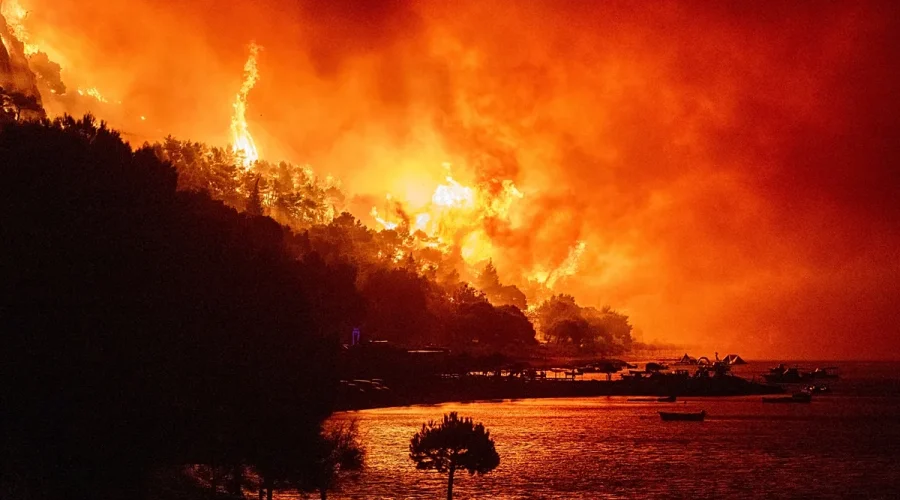
Usagevpn.com – Europe finds itself grappling with an intensifying wildfire emergency that has displaced thousands of residents and visitors while threatening critical ecosystems and infrastructure. The crisis unfolds against a backdrop of prolonged heatwaves and deteriorating drought conditions that have left much of the continent vulnerable to rapid fire spread. From the Atlantic coast of France to the Balkans, emergency services are working around the clock to contain blazes that have already consumed thousands of hectares of forest and agricultural land.
Southwestern France Battles Growing Inferno
The southwestern region of France continues to face significant challenges as a fire near the town of Luglon in the Landes department shows no signs of subsiding. Saturday saw the evacuation of an additional 100 people, including both local residents and holidaymakers, as flames pushed closer to populated areas. The fire, which first ignited on Thursday, has now consumed approximately 1,580 hectares of territory according to the Landes Prefecture’s latest assessment.
Fire officials described the situation as particularly active in the southeastern quadrant of the affected zone, near the village of Garein. A substantial contingent of 550 firefighters has been deployed to the area, with aerial support units preparing to resume their rotation pattern. The combination of ground crews and air resources represents one of the largest single deployments in the region this season.
Germany and Belgium Coordinate Cross-Border Response
Germany’s Eifel region has become another major flashpoint, with the Hurtgenwald area experiencing what officials believe to be the most extensive forest fire in the history of North Rhine-Westphalia state. At least 1,800 residents have been ordered to leave their homes as approximately 1,400 firefighters work to contain the rapidly expanding blaze.
The crisis has prompted Germany to request assistance from neighboring Belgium, where firefighters are simultaneously battling a separate fire in the Fagnes natural park near the shared border. That blaze, which began on Friday, has already consumed at least 16 square kilometers of forested land. Around 1,000 people have been evacuated from the affected areas in northeastern Spain’s Aragon region, where a fire has devastated more than 15,000 hectares. Firefighters report having halted the fire’s advance toward population centers, and meteorological forecasts indicate that temperatures may soon decline with the possibility of light rainfall.
Greece and the Balkans Face Multiple Threats
Greece has elevated its alert status as severe winds across various parts of the country have significantly increased the risk of new fire outbreaks. The Greek fire service reported that more than 50 agricultural and forest fires have erupted within a single 24-hour period, though the majority have been successfully contained.
In Croatia, emergency crews are engaged in operations on the island of Dugi Otok, where over 100 firefighters and two water-bombing aircraft are working to suppress flames. Earlier in the week, a separate fire on the Peljesac peninsula was brought under control through the efforts of 240 firefighters and three aircraft. Serbian authorities announced on Friday evening that they were responding to 25 simultaneous forest fires, with one particularly destructive blaze having devastated 25 square kilometers within the Deliblatska national park near Belgrade.
European Commission Mobilizes Resources
European Commission President Ursula von der Leyen addressed the escalating situation on Saturday afternoon, declaring that Europe remains on a “high wildfire alert” while noting mounting pressure on Eastern European nations. She emphasized that the bloc’s Copernicus Earth observation satellites are already providing critical support for mapping operations across Spain, Albania, Greece, France, Germany, and Serbia. The EU’s Civil Protection Mechanism is there when a country calls, providing coordinated assistance during emergencies that exceed national capacities.
The ongoing crisis highlights the growing frequency of extreme weather events across Europe, with scientists linking the intensification of summer fires to broader climate change patterns. The coordinated response involving satellite monitoring, cross-border firefighting teams, and the Civil Protection Mechanism demonstrates the continent’s commitment to managing these increasingly common disasters. As temperatures continue to fluctuate and wind patterns shift, emergency services across multiple nations remain on standby for further developments in this evolving situation.
Related Reading
Frequently Asked Questions
What is Wildfires continue to devastate Europe as thousands?
Wildfires continue to devastate Europe as thousands is the main topic of this guide. The article explains the context, practical details, and next steps readers should understand.
Why does Wildfires continue to devastate Europe as thousands matter?
Wildfires continue to devastate Europe as thousands matters because readers are looking for a useful answer, not just a short summary. Good content should match search intent and help them decide what to do next.