Europe Faces Unprecedented Heat as Millions Endure Extreme Temperatures
Usagevpn.com – A severe heatwave has gripped much of Europe this week, pushing temperatures to dangerous levels across multiple nations. From the Mediterranean coastlines to northern England, residents are experiencing some of the most intense summer conditions in recent memory. The continental crisis has already prompted emergency responses, including tourist evacuations in Greece and wildfire suppression efforts across several countries.
More than 135 million Europeans are currently facing temperatures exceeding 35 degrees Celsius, with projections indicating that approximately 340 million people—nearly three-fifths of the continent’s population—will experience readings above 30 degrees Celsius during this period. The situation is particularly acute in western and southern Europe, where infrastructure was not designed for such prolonged thermal stress.
Regional Impact Across the Continent
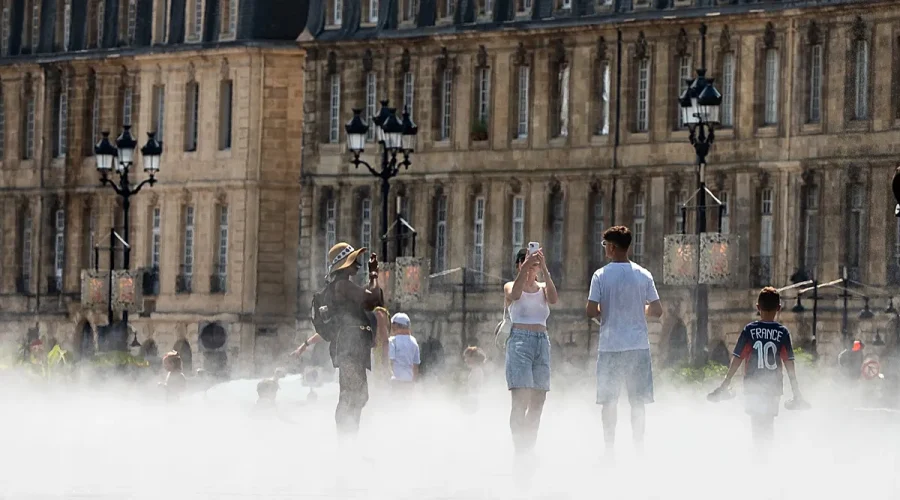
France has emerged as one of the hardest-hit nations, with meteorological stations recording a national high of 42.5 degrees Celsius in Chateaumeillant, located in the central portion of the country. The capital city of Paris reached 38 degrees Celsius, while extensive areas remain under official heatwave warnings. The French weather service has been monitoring conditions closely as the thermal anomaly continues to intensify.
Italy is experiencing comparable conditions, with roughly 29 million citizens affected by extreme heat. The western coastline, the Po Valley region, southern territories, and the nation’s islands are all experiencing elevated temperatures. Meanwhile, Spain’s Iberian Peninsula has seen approximately 25 million people endure readings of 37 degrees Celsius in central zones, according to the Aemet meteorological agency.
The United Kingdom is simultaneously navigating its warmest seasonal period on record. The Met Office confirmed this week that the nation is positioned to achieve its highest-ever summer temperatures, with forty separate locations across central and southern England registering 36 degrees Celsius or higher. This development carries significant implications for British infrastructure, which has historically experienced relatively mild summers.
Understanding the Data Behind the Crisis
The comprehensive analysis utilized by European meteorological organizations employs a sophisticated methodology that cross-references population density data with weather forecasting models. The Deutscher Wetterdienst, Germany’s national meteorological service, provides the foundational forecast model that enables these calculations. The system evaluates whether residents will experience temperatures above 30 or 35 degrees Celsius at any point throughout the day.
However, the methodology contains inherent limitations. The model operates with a spatial resolution of approximately 6.5 kilometers, which means it cannot fully account for urban heat-island phenomena—situations where metropolitan centers become substantially warmer than adjacent rural territories. This technical constraint has important implications for how accurately the data reflects conditions in densely populated cities.
As the model has a resolution of approximately 6.5 km it does not fully capture urban heat-island effects, when cities are significantly warmer than surrounding rural areas, David Jablonski of NGO Klimadashboard told AFP.
The Klimadashboard organization, an Austrian non-governmental entity, has independently verified these findings and maintains a European Heat Tracker website that documents ongoing conditions. Their analysis suggests that the current figures likely represent conservative estimates, particularly regarding urban populations where heat concentrations are most intense.
Climate Change and Continental Vulnerability
Scientists have increasingly attributed the intensification of European heatwaves to anthropogenic climate change. The continent has emerged as the fastest-warming landmass globally, yet many European nations have not adequately modernized their infrastructure to accommodate rising temperatures. This mismatch between climate reality and preparedness has created compounding challenges.
The consequences extend beyond immediate discomfort. Repeat heatwave events combined with persistent drought conditions have generated a historically severe summer characterized by widespread wildfires. These fires have contributed to thousands of fatalities across the continent, with northern Greece experiencing particularly dramatic scenes as hundreds of tourists were evacuated by boat from coastal resorts threatened by advancing forest fires.
Simultaneously, emergency crews in England’s West Midlands region have been battling blazes that are damaging residential properties amid drought conditions that have left vegetation exceptionally vulnerable to ignition. The interconnected nature of these crises—heat, drought, and fire—demonstrates how climate change creates cascading effects that strain multiple systems simultaneously.
Looking Ahead
As this heatwave continues to unfold, European governments and communities face mounting pressure to adapt. The data suggests that current conditions may represent only a fraction of what is to come, particularly given the projected underestimation of urban impacts. Energy grids, healthcare systems, and transportation networks across the continent are being tested beyond their historical design parameters, highlighting the urgent need for comprehensive adaptation strategies that address both immediate threats and long-term climate realities.
Related Reading
Frequently Asked Questions
What is Millions across Europe swelter through a new?
Millions across Europe swelter through a new is the main topic of this guide. The article explains the context, practical details, and next steps readers should understand.
Why does Millions across Europe swelter through a new matter?
Millions across Europe swelter through a new matters because readers are looking for a useful answer, not just a short summary. Good content should match search intent and help them decide what to do next.