European Nations Grapple with Intensifying Heatwave Pressures
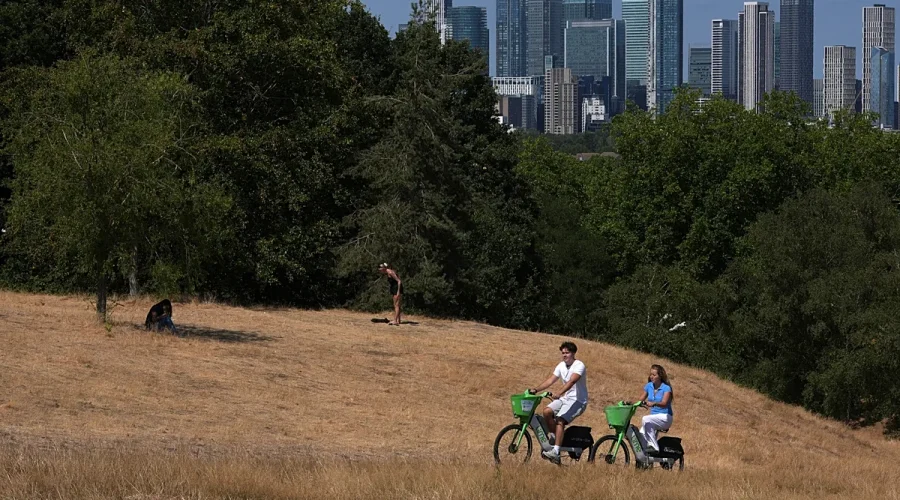
Usagevpn.com – Across western Europe, communities are confronting severe weather conditions that are testing infrastructure, public services, and economic stability. Britain and France stand at the forefront of this challenge as temperatures climb to levels that strain everyday operations. Meteorological predictions indicate central and southeastern England could see readings approach 38 degrees Celsius, narrowly missing the August benchmark established in 2003 at 38.5 degrees.
This marks the fifth occurrence of extreme heat in Britain this season alone. Officials from the national weather service noted earlier that maintaining average conditions through August’s remaining weeks would suffice to surpass last year’s record for the warmest calendar year on record. For a nation whose buildings and systems were not designed for such thermal extremes, recent weeks have proven particularly demanding. Air conditioning units remain uncommon in residential spaces, appearing primarily in commercial establishments and office environments.
Healthcare Systems Under Thermal Stress
Hospitals have experienced notable difficulties during this period. Medical professionals have reported instances where nursing staff members have fainted from heat-related exhaustion. The situation has prompted strong responses from healthcare leadership.
When nursing staff are collapsing, feeling dizzy, sick or even being admitted to the very hospitals they work in because their workplaces cannot handle the heat, it shows just how badly they are being failed.
Professor Nicola Ranger, who serves as both chief executive and general secretary of the Royal College of Nursing, emphasized these concerns. The comment highlights systemic vulnerabilities within healthcare facilities that were not constructed with extreme temperature scenarios in mind.
Drought Conditions and Water Management
A significant portion of Britain has now entered official drought status, creating additional pressure on water supplies. Households, agricultural operations, and environmental management systems must all develop strategies to address both immediate needs and longer-term requirements. These challenges exist within the broader context of human-driven climate change, which scientists attribute to increasing frequency and intensity of extreme weather events.
France has responded with comprehensive alert systems. Eighty administrative regions have been placed under orange-level warnings through Friday. Government projections suggest that consecutive extreme heat episodes throughout the summer could generate economic losses ranging from ten to fifteen billion euros. Only limited areas—including sections of the northeast, three departments in the Pyrenees mountain region, and Lozère and Haute-Loire under yellow alerts—remain outside the orange designation.
Temperature Peaks Across French Regions
French meteorological authorities estimate that this heatwave will reach maximum intensity on Thursday and Friday. The Centre-Val de Loire through Nouvelle-Aquitaine corridor will experience the most severe conditions, with temperatures potentially reaching between 38 and 40 degrees Celsius, occasionally exceeding these peaks. The Île-de-France region surrounding Paris will see readings approaching 38 degrees.
Water accessibility has emerged as a critical concern. Monique Barbut, the Minister for Ecological Transition, stated that maintaining drinking water supply remains the primary objective. Fifty French departments are currently experiencing strain on their water systems. More than forty thousand residents have already encountered tap water interruptions.
Europe’s Climate Vulnerability
The continent has emerged as the fastest-warming region globally. Many areas lack adequate preparation for increasingly common hot weather patterns. Extended periods of drought and wildfire activity have characterized this summer, contributing to thousands of fatalities across multiple nations. Scientific consensus attributes the growing severity of heatwaves to anthropogenic climate change.
Infrastructure adaptation represents an ongoing challenge. Many European buildings, transportation networks, and public spaces were designed for historical temperature ranges that are now being exceeded. The economic burden extends beyond immediate emergency responses to include long-term investments in cooling systems, water storage, and healthcare capacity. Communities must balance short-term mitigation measures with structural changes that will prove necessary as temperatures continue rising throughout the coming decades.
The current situation demonstrates how interconnected these challenges have become. Agricultural productivity faces threats from both heat and water scarcity. Tourism, a vital economic sector in many regions, experiences disruptions during peak summer months. Energy grids must manage increased demand for cooling while avoiding overloads. Each of these systems influences the others, creating cascading effects that require coordinated responses across government levels and sectors.
Looking forward, experts emphasize that individual heatwave events will likely become more frequent and more severe. The question is no longer whether Europe will face continued thermal challenges, but rather how effectively nations can adapt their systems to maintain functionality and protect vulnerable populations during increasingly extreme conditions.
Related Reading
Frequently Asked Questions
What is Europe facing strain on resources and services?
Europe facing strain on resources and services is the main topic of this guide. The article explains the context, practical details, and next steps readers should understand.
Why does Europe facing strain on resources and services matter?
Europe facing strain on resources and services matters because readers are looking for a useful answer, not just a short summary. Good content should match search intent and help them decide what to do next.