A Once-in-a-Lifetime Sky Event Approaches for European Viewers
Usagevpn.com – After Easter Island captivated observers with its October 2024 celestial display, attention now shifts to another corner of the globe. On Wednesday, August 12, 2026, skywatchers across Europe will have the opportunity to witness a remarkable astronomical occurrence. The moon will align precisely between our planet and the sun, projecting its shadow across a narrow corridor that includes portions of Greenland, Iceland, and northern Spain. While millions of residents in western Europe will observe a partial eclipse, those positioned within the path of totality will experience complete darkness during daylight hours.
The Journey of the Moon’s Shadow
The umbra, or the moon’s darkest shadow, will traverse an 8,260-kilometer route over approximately one and a half hours. Most of this journey unfolds across the relatively empty waters of the Atlantic Ocean. Beginning near the North Pole in Siberia, Russia, the shadow will track southward, with totality lasting as long as two minutes and eighteen seconds at its peak. This maximum duration will occur off Iceland’s western coastline before the shadow reaches Portugal and Spain, where the duration will have shortened to roughly one minute. The celestial spectacle concludes in the Mediterranean region.
For those fortunate enough to stand within the path of totality, the experience promises more than visual wonder. Daytime darkness will envelop the Iberian Peninsula alongside fragments of Greenland and Iceland. Observers can anticipate a noticeable temperature decline, a phenomenon that occurs as the sun’s warmth diminishes. Wildlife and avian creatures may also exhibit unusual behavior, mistaking the temporary darkness for nighttime and falling quiet.
British Viewers in for a Treat
Residents of the United Kingdom will not need to travel abroad to witness this event. The Royal Observatory Greenwich in London will organize a public viewing event from its terraces, offering live streaming of the phenomenon contingent upon favorable weather conditions. Jake Foster, an astronomer at the observatory, notes that British observers are positioned advantageously. “From here in the UK, we’re going to actually be very fortunate,” Foster explains. “We are seeing a partial eclipse, but it is a very strong partial, between 90 and 95%, depending on where you are in the UK.”
The timing adds additional appeal for UK viewers. The eclipse will coincide with sunset, creating what astronomers call the golden hour eclipse. The sun will appear low on the western horizon, providing dramatic photographic opportunities. However, those seeking the complete experience of totality must journey to Greenland, Iceland, or northern Spain. These locations will experience the moon’s shadow at its most intense, delivering full coverage of the sun.
The Science Behind the Spectacle
An eclipse occurs when a new moon passes between the sun and Earth, though this alignment happens only on rare occasions. The phenomenon is made possible by a remarkable coincidence in our solar system. Despite the sun being four hundred times larger than the moon, both celestial bodies appear nearly identical in size from Earth’s perspective. This visual parity results from the sun being approximately four hundred times farther away than the moon. This unique relationship allows the moon to nearly completely obscure the sun’s light during totality.
The shadow cast by the moon during an eclipse consists of two distinct regions. The umbra represents the area of total shadow where viewers experience complete darkness. The penumbra surrounds this region and produces a partial eclipse for observers within its boundaries. Understanding these zones helps explain why eclipse experiences vary so dramatically depending on location.
Historical Rarity and Future Expectations
Patience is required for those hoping to witness such events regularly. Spain’s most recent full solar eclipse, excluding the Canary Islands, occurred on April 10, 1912—just two days before the Titanic disaster. For any single location to experience a total solar eclipse more than once, observers may need to wait over two centuries. Partial eclipses occur with greater frequency, yet even these can prove rare depending on geographic position. A particular country or region might experience only a handful of partial eclipses within a decade.
Essential Viewing Equipment
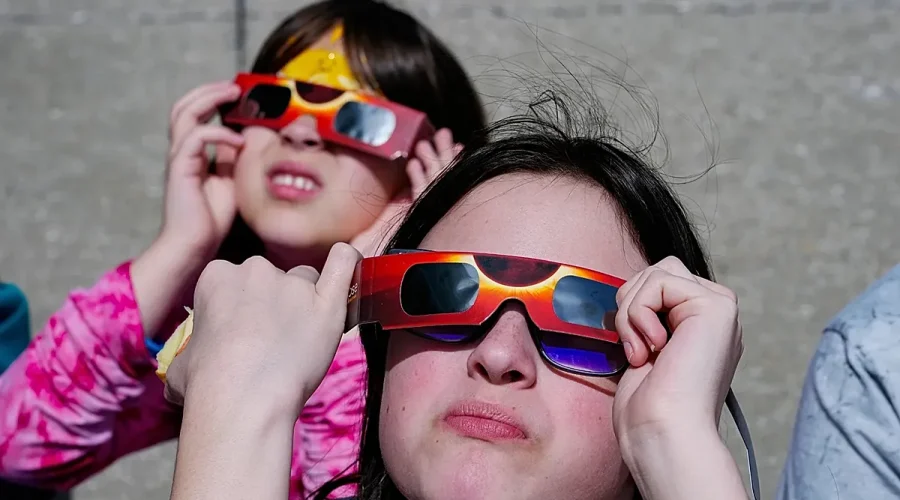
Observing this celestial event safely requires proper equipment. Solar eclipse glasses represent the most reliable method for direct viewing. These specialized eyewear pieces contain lenses that filter out 99.9999 percent of the sun’s radiation, rendering direct observation safe for human eyes. “The safest way to view the eclipse directly is with a pair of solar eclipse glasses,” Foster advises. “They have special lenses in them that block out 99.9999% of the sun’s light, only then making it safe to view.”
Consumers must verify that their eclipse glasses carry ISO certification, confirming they have passed rigorous safety testing protocols. Once certified, these glasses allow viewers to look directly upward at the sun throughout the eclipse without risk of damage. Even when only a sliver of sunlight remains visible, unprotected eyes can suffer harm from prolonged exposure.
While astronomers can predict these events with remarkable accuracy centuries in advance, eclipses continue to generate enthusiasm among both scientific communities and the general public. Across Europe, astronomy retailers report surging demand for eclipse viewing equipment as the August date approaches. For millions of people worldwide, this once-in-a-generation stellar spectacle represents an opportunity to witness one of nature’s most breathtaking displays—a reminder of our place within the cosmos and the precise alignments that make such moments possible.
Related Reading
Frequently Asked Questions
What is Europe readies for total solar eclipse?
Europe readies for total solar eclipse is the main topic of this guide. The article explains the context, practical details, and next steps readers should understand.
Why does Europe readies for total solar eclipse matter?
Europe readies for total solar eclipse matters because readers are looking for a useful answer, not just a short summary. Good content should match search intent and help them decide what to do next.